Why did the AGC withdraw corruption charges against Iswaran despite pursuing them twice?
The AGC reduced corruption charges against former Transport Minister S Iswaran, citing challenges in proving corrupt intent. This raises the key question: Why did the AGC press corruption charges twice if these evidentiary difficulties were known from the start, only to amend them at the last minute?


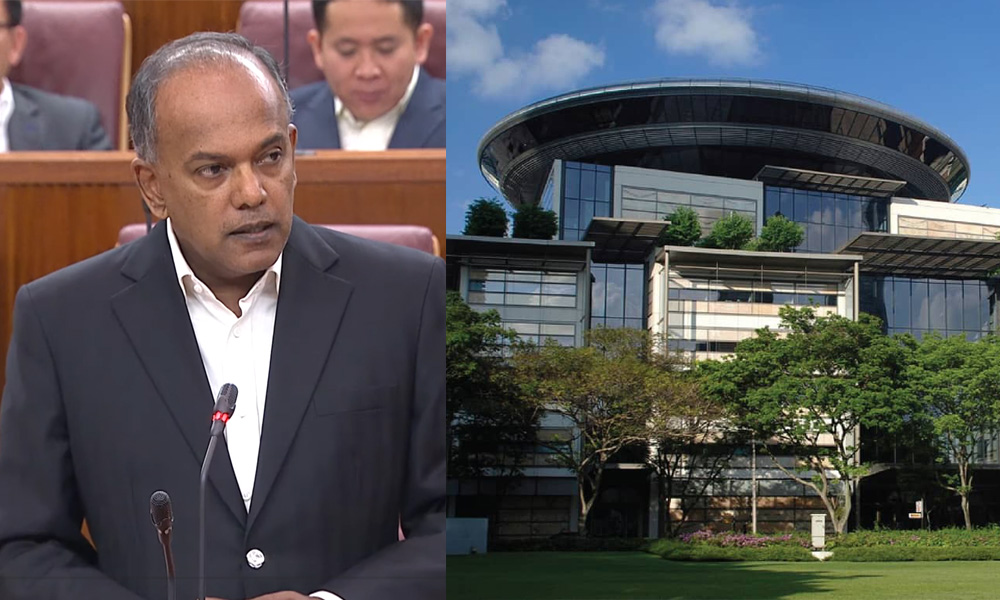
In an unexpected turn of events, the Attorney-General’s Chambers (AGC) reduced the corruption charges against former Transport Minister S Iswaran to lesser offences under Section 165 of the Penal Code just before what would have been a historic trial of a political officeholder.
Iswaran was initially charged in January 2024 for allegedly receiving gifts worth approximately S$384,000 from Ong Beng Seng in exchange for advancing Ong’s business interests, particularly related to the Singapore Grand Prix.
Additional charges followed in March 2024, accusing Iswaran of receiving valuable items—including whisky bottles, golf clubs, and a Brompton bicycle—from David Lum Kok Seng, managing director of Lum Chang Holdings.
These items, valued at approximately S$19,000, were linked to Iswaran’s role as Transport Minister, bringing the total value of gifts to over S$400,000 and the total number of charges to 35, including corruption and obstruction of justice.
However, just before the trial was set to begin, the AGC made a significant decision to amend the charges. The more serious corruption charges under the Prevention of Corruption Act were reduced to lesser offences under Section 165 of the Penal Code, which deals with public servants receiving valuable gifts without corrupt intent.
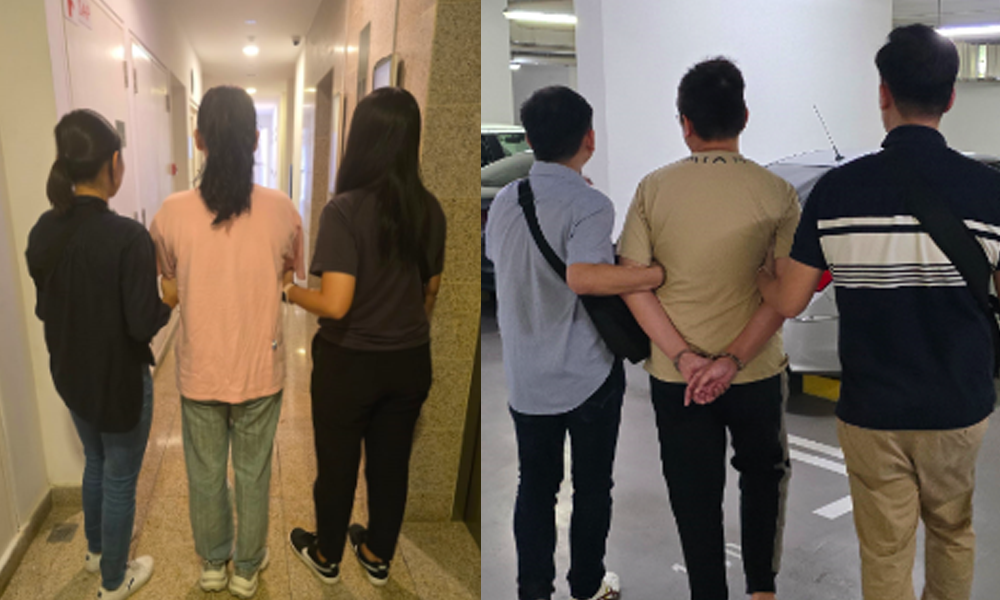
As a result, the corruption charges were effectively removed, and Iswaran pleaded guilty to the revised charges after months of maintaining his innocence.
In its statement to the media on Tuesday, the AGC cited significant challenges in proving the original corruption case beyond a reasonable doubt.
It stated that both Iswaran and businessman Ong Beng Seng would need to implicate themselves to establish corrupt intent, posing litigation risks.
While the AGC provided reasons for dropping the charges against Iswaran, it raises an important question: Why did the AGC press corruption charges under the Prevention of Corruption Act (PCA) not once but twice if these evidentiary challenges were known from the start?
The AGC’s rationale—difficulty in proving corrupt intent—should have been foreseeable when the charges were initially brought forward.
Ong and Iswaran, including Lum, all had a vested interest in denying the allegations, which would make conviction difficult. Nevertheless, the AGC proceeded with the charges twice, only to backtrack on the day of the trial itself, according to the prosecution, when asked in court by Justice Vincent Hoong.
If these concerns of litigation risks were apparent from the outset, why were the charges filed under the more severe PCA in the first place? Was this a mistake?
Apparently not, as Deputy Attorney General Tai Wei Shyong clarified in court that the corruption charges against Iswaran were not withdrawn but amended, and reiterated that there was a strong basis for why they were originally brought.
That begs the question: Why amend the charges then?
This puzzling approach mirrors the AGC’s handling of the Keppel Offshore & Marine (KOM) bribery case, where six senior executives were issued stern warnings but not prosecuted after five years of investigation.
Minister Indranee Rajah explained in Parliament that the AGC and the Corrupt Practices Investigation Bureau (CPIB) faced similar evidentiary difficulties, citing insufficient proof to establish guilt beyond a reasonable doubt.
The KOM case involved cross-border transactions, which authorities claimed made it difficult to secure witness testimony or documentary evidence that could hold up in court.
Despite a U.S. investigation resulting in a Deferred Prosecution Agreement (DPA) with Keppel admitting to the charges against it and a US$422 million fine, the AGC found that references to individual actions in the DPA were insufficient to support prosecution in Singapore.
Foreign witnesses allegedly refused to testify, and key individuals denied knowing that commissions paid were used as bribes.
Ultimately, the AGC issued stern warnings as an “in-between” measure, suggesting that while there was insufficient evidence for prosecution, the individuals involved were not entirely “off the hook.”
The similarities between the Iswaran case and the KOM scandal raise broader questions about the AGC’s consistency in applying its prosecutorial discretion. In both cases, the decisions to scale back or drop charges are said to be due to alleged insufficient evidence after lengthy investigations.
But shouldn't public prosecutions prioritize ensuring that justice is being sought by allowing the facts to be fully examined in court, even if securing convictions isn't guaranteed—especially to promote public awareness and reinforce Singapore's strong zero-tolerance policy on corruption?
In Iswaran’s case, the decision to amend the charges could be seen as a pragmatic move by prosecutors to avoid a lengthy and costly trial with uncertain outcomes. However, for the public, this creates a perception of inconsistency in how different cases are pursued.
This perception is reinforced by the AGC's decision to prosecute opposition leader Pritam Singh for allegedly lying under oath to a parliamentary committee, relying solely on the testimony of a former Member of Parliament who had confessed to lying.
Why does Singh's case appear more straightforward to convict than Iswaran’s, without similar evidentiary challenges, when the prosecution primarily relies on verbal testimony? In contrast, in Iswaran’s case, the gifts from Ong and Lum were undeniable and proven, yet the AGC chose to amend the charges due to difficulties in proving corrupt intent.
Iswaran is set to face sentencing on 3 October 2024, with the prosecution seeking 6-7 months of imprisonment while Iswaran's defence is seeking a maximum term of 8 weeks.
Regardless of the sentence, the fundamental question remains: Why did the AGC pursue corruption charges in the first place, only to drop them at the last minute, despite citing evidentiary concerns?