Court orders town councils in AHTC case to pay S$388,800 in cost and disbursement to WP leaders and defendants

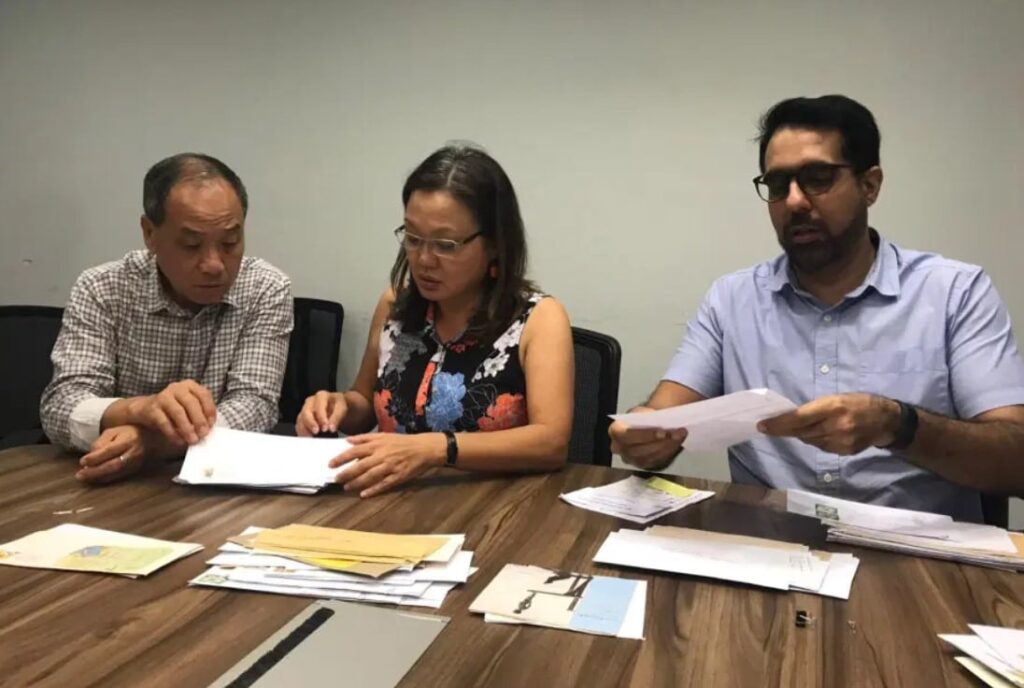
The lengthy civil suits alleging public fund misuse at Aljunied-Hougang town councils have come to an end with town council directed to pay S$388,800 in appeal costs to the defendants. \n \nEight defendants, including Workers’ Party leaders and former town officials, were part of these suits.
Featured Image
Comments
Google News

SINGAPORE: The recent development in the prolonged civil suits involving alleged misuse of public funds saw the two town councils, Aljunied-Hougang Town Council (AHTC) and Sengkang Town Council (SKTC), ordered to pay a total of about S$388,800 (US$292,000) in costs and disbursements for the appeals. These suits targeted eight defendants, including Workers' Party (WP) leaders Ms Sylvia Lim, Mr Low Thia Khiang, and Mr Pritam Singh, along with their former managing agent FM Solutions and Services (FMSS), and four other former town councillors or employees. The breakdown of the S$388,800 in costs and disbursements reveals that AHTC is required to pay S$176,241.11 for two appeals, while SKTC has to pay S$212,543.52 for three appeals to the town councillors, employees, and executives of FMSS. On Wednesday (29 Nov), the Court of Appeal released a comprehensive 38-page judgment, elucidating the reasons behind mandating the payment of costs by the two councils. The Apex court clarified that costs are typically granted to the prevailing party. In this instance, the town councillors and employees achieved substantial success in their appeals, effectively overturning multiple findings by the trial judge, leading to their entitlement to costs. Moreover, the five-judge panel, including Chief Justice Sundaresh Menon, Justice Judith Prakash, Justice Tay Yong Kwang, Judge of the Appellate Division Woo Bih Li, and Senior Judge Andrew Phang, noted that between AHTC and SKTC, SKTC experienced greater success in the appeals. The judges emphasized that the victorious party in legal proceedings holds the entitlement to recover the costs incurred from the unsuccessful party. Acknowledging that SKTC conceded that the town councillors, employees, and FMSS prevailed on more crucial matters, AHTC contended that it should receive the costs, asserting that the defendants hadn't substantially succeeded in their appeals. However, the court dismissed AHTC's claim of being the prevailing party in the appeals and therefore eligible for costs. Contrary to AHTC's argument, the court highlighted that most of the issues raised in the appeals did not favour AHTC. While AHTC did achieve some success against the town councillors and employees, establishing liability for certain serious breaches, it was evident that the defendants successfully overturned the trial court's rulings, as clarified by the Apex Court. The orders for costs have been issued approximately four months subsequent to the Court of Appeal's decision regarding the parties' accountability concerning the management of town council funds. The expenses pertaining to the actual trial have not been finalized yet. These costs will only be determined once the assessment of damages has been completed.

Court of Appeal holds Workers’ Party leaders Sylvia Lim and Low Thia Khiang liable for negligence; Pritam Singh cleared

The Court of Appeal has earlier ruled that the former town councillors and its employees of AHTC had acted in good faith when they awarded the contracts to their managing agent without an open tender. On 7 July this year, the apex court determined that Mr Pritam Singh, Mr Chua Zhi Hon, and Mr Kenneth Foo Seck Guan were not liable to AHTC for the control failures in the System. However, it found WP leader Sylvia Lim and former party secretary-general Low Thia Khiang liable for negligence in the AHTC payments process. This judgement has provided vindication for the Workers’ Party (WP) and its senior members from the various allegations thrown upon them since a suit was filed by an independent panel on behalf of the WP-run Aljunied-Hougang Town Council (AHTC) in 2017 to claim damages from them for breaching their fiduciary duties to the town council. An earlier judgement concluded that neither the Town Councillors nor the Employees owed fiduciary duties to AHTC or Sengkang Town Council after the Court of Appeal ruled that the former town councillors and its employees of AHTC, had acted in good faith when they awarded the contracts to their managing agent without an open tender. Breaking down the roles and responsibilities of the defendants, the Court extensively scrutinized their involvement in the case. “The amendments in respect of Mr Singh, Mr Chua, and Mr Foo were disallowed by the Judge because AHTC’s Statement of Claim did not allude to their roles in relation to the control failures in the System,” the judgement explained. The Court agreed with the trial judge’s decision, which led to the conclusion that AHTC did not provide sufficient evidence that these individuals had approved or authorized the System. Former AHTC Chairman, Ms Sylvia Lim, was found liable to STC in negligence for causing AHTC to award a contract to Red-Power Electrical Engineering Pte Ltd, having failed to discharge her burden of proof that she had acted in good faith when she chose not to renew the contracts with two other companies which offered the same services at significantly cheaper rates. On the same note, Mr Low and Ms Lim were found liable to AHTC for negligence in allowing control failures in the System to occur. The judgement also found Ms How Weng Fan, the managing agent director, and her late husband, Danny Low, liable for the same negligence. The Court of Appeal, in making these determinations, underscored its agreement with the Judge in rejecting attempts by AHTC to amend its pleadings after trial and before the Appeals were heard on the grounds that AHTC’s Statement of Claim did not adequately detail these individuals’ roles in relation to the control failures in the System. The judgement brought a complete reversal for FMSS, the company initially found by the lower court to be liable for dishonest assistance and knowing receipt in regard to the First Managing Agent (MA) Contract and the first Essential Maintenance Service Unit (EMSU) Contract. However, the Court of Appeal concluded, “In so far as the Judge found FMSS liable for dishonest assistance and knowing receipt with regard to the First MA Contract and the First EMSU Contract…those claims against FMSS must necessarily fail.” Significantly, the court resolved that FMSS is not liable to either AHTC or STC in any respect, contradicting the lower court’s judgment. The Court explained, “We have reversed the Judge’s conclusions on these points in their entirety, and FMSS is hence not liable to either AHTC or STC in any respect.” When it came to addressing the question of apportionment, the judgement was clear. It stated, “There is no need to ‘apportion’ liability owed to the plaintiffs, and this court only needs to find, at this stage, which defendant(s) are liable to which plaintiff(s) for which claim(s). Any issue of apportionment of damages should be dealt with at the assessment of damages stage.” The court in July this year determined that the costs of the trial should be decided by the trial judge after damages have been assessed, considering the trial judge is better placed to assess the costs in light of the decision in the Appeals and the actual damages that may be assessed in due course. This article was first published on Gutzy Asia.

Share This