Conflating compliance with support: a political habit worth revisiting
When people have no real alternative, their choices can’t be read as endorsement. Whether on TraceTogether or price of public housing, PAP must stop presenting constrained public actions as proof of support. Accountability demands better.
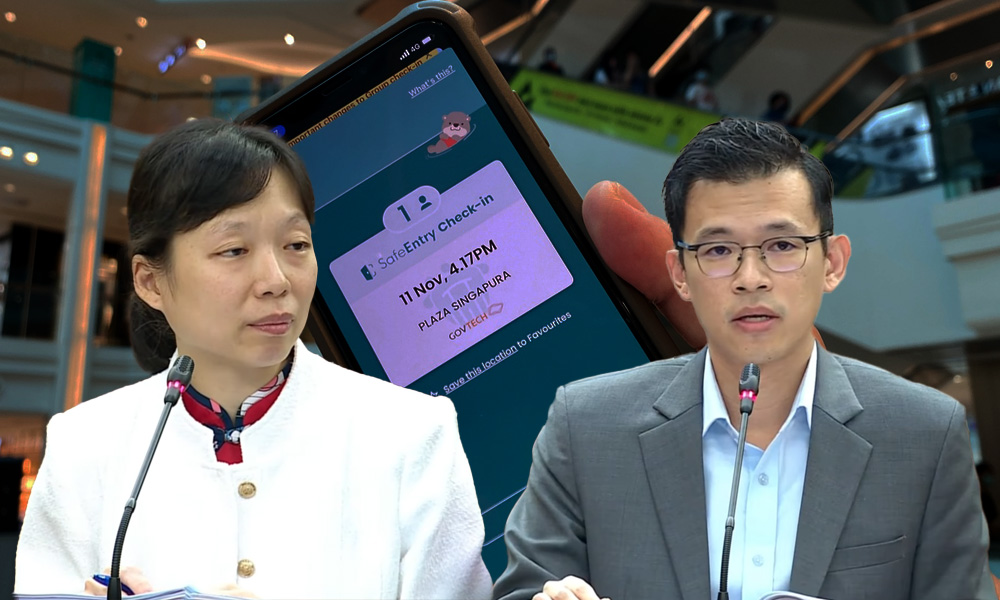

When Parliament debated legal amendments to the Public Sector (Governance) Act on 12 January 2026, Workers’ Party MP Kenneth Tiong raised a sharp reminder of a public trust breach: the 2021 TraceTogether data controversy.
This controversy began in June 2020, when then Minister-in-Charge of the Smart Nation Initiative Vivian Balakrishnan told Parliament that TraceTogether data would only be used for contact tracing in the fight against COVID-19. This assurance, made in Parliament, set public expectations that the app served a single public health purpose.
However, by October 2020, Balakrishnan became aware that this was not the full picture. TraceTogether data was in fact accessible to the police under the Criminal Procedure Code (CPC), which allows law enforcement to obtain data for criminal investigations. By that time, the police had already used TraceTogether data at least once.
The Government did not immediately update the public. Internal checks and Cabinet-level discussions took place in November 2020, but it was only in January 2021—after a Parliamentary Question filed by PAP MP Christopher de Souza—that the Government publicly confirmed the CPC’s applicability.
This revelation contradicted the earlier assurance, triggering widespread public backlash and concern over data privacy. Only then did Balakrishnan apologise in Parliament, acknowledging he had made a mistake and accepted full responsibility.
In response to MP Tiong’s reference to this sequence of events, Minister of State for Digital Development and Information Jasmin Lau said in Parliament on 12 January 2026 that the Government had addressed the matter openly and taken responsibility. She added that people continued using the app after the incident, suggesting this reflected public trust.
That claim deserves a closer look.
TraceTogether was compulsory for most daily activities—from entering malls to attending events—until 26 April 2022. Only after that date did most venues stop requiring vaccination-differentiated safe management measures, which had relied heavily on the app.
Until then, not using TraceTogether was not a meaningful choice. If citizens wanted to go about their lives, they had to comply. To cite usage during that period as proof of continued trust in the Government is misleading. The real test would be how many chose to continue using the app after it was no longer mandatory—a figure that Lau did not provide.
This is not a new rhetorical move from the People's Action Party (PAP). The use of constrained behaviour as political validation has a long history in Singapore.
Consider the remarks made by former Minister for National Development Desmond Lee in March 2025. Amid debates over housing affordability, Lee said that most new homeowners could service their HDB mortgages entirely using their CPF, with little or no cash. This, he argued, showed that public housing remained affordable.
Yet that logic falters under scrutiny.
In Singapore’s tightly regulated housing market, citizens cannot freely choose alternatives like renting long-term or living in different types of property without clearing significant regulatory and financial hurdles. Buying an HDB flat is not always an expression of affordability—it is often the only viable path to home ownership.
That people manage to pay their mortgage using CPF says more about constraint than comfort. Singaporeans have to buy homes, and often within a narrow band of eligibility and financing options. Their “choice” is not free from structural pressure.
Even Singapore’s historical path to independence bears the imprint of this approach. In the 1962 referendum on merger with Malaysia, the PAP Government presented three options—but all assumed some form of merger. There was no option for “no merger”.
Unsurprisingly, the choice the PAP preferred won.
Later, when Singapore was compelled to exit Malaysia in 1965, that original “mandate” for merger was still cited as a sign of public will—even though the circumstances had shifted dramatically.
This pattern—equating compliance or constrained behaviour with endorsement—erodes trust in political communication.
Singaporeans are pragmatic. They follow rules, adapt to shifting policies, and make decisions within the limits set by law, economics, and governance. But those decisions should not be weaponised as proof of belief or support.
If trust is to be earned and maintained, it cannot be inferred from usage statistics or mortgage servicing data. It must rest on transparency, accurate information, and meaningful public consent.
In the case of TraceTogether, the Government’s 2020 assurance in Parliament that data would be used only for contact tracing was later revealed to be incomplete. The admission came months later, after internal reviews and only following a question from a PAP MP—not as a proactive correction.
Even then, the messaging framed the shift as a clarification, not a reversal. Apologies came only after public backlash and legislative pressure. A Certificate of Urgency was used to amend the law swiftly—a sign of political damage control, not policy foresight.
That sequence matters. It suggests that accountability followed public reaction, not government initiative.
Returning to Lau’s comment on 12 January, the attempt to link app usage with trust recycles this problematic framing. Without acknowledging the constraints citizens faced, it misreads compelled compliance as voluntary confidence.
Trust is not measured by how well people follow rules they have no real way around. It is measured by how honestly and transparently those rules are communicated, and whether people believe those in power will act in good faith—especially when mistakes are made.
If the PAP wants to argue that Singaporeans trust its leadership, it should do so by pointing to clear examples of openness, responsiveness, and integrity—not by interpreting behaviour through a lens that blurs choice and necessity.