Privatised public services, poor outcomes: who answers when the mandate fails?
As SingPost hikes postage fees again, deeper questions emerge about Singapore’s corporatised public service model. With public funding but private governance, who is accountable when performance falters? The postal case is not isolated—it reflects a broader reckoning over how essential services are managed, and whether the public still has a say in outcomes that affect everyone.
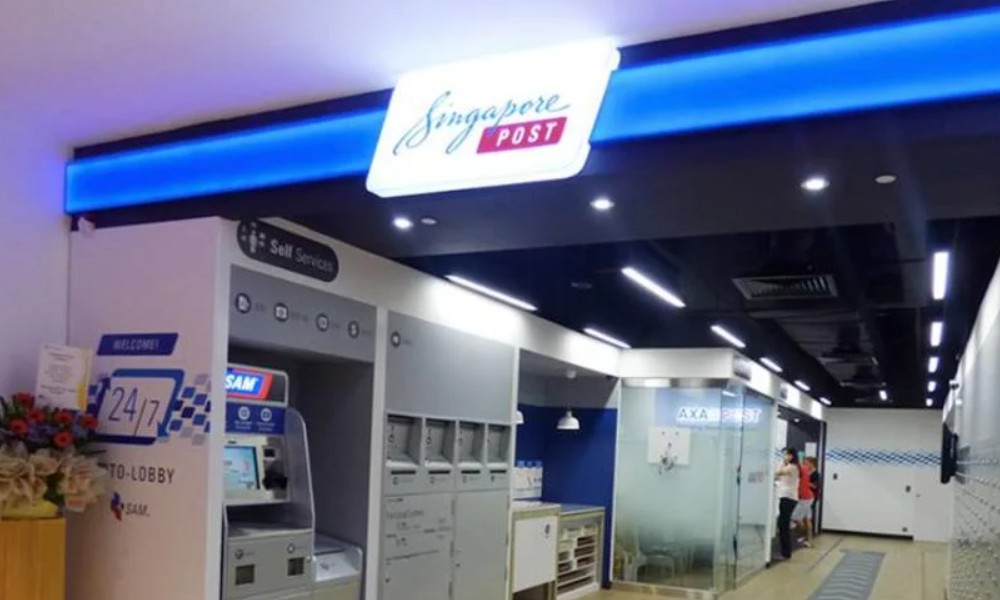

On 1 January 2026, the price of sending a standard letter in Singapore will rise by 10 cents to 62 cents.
This follows the 20-cent hike in October 2023—the largest in nearly a decade—and marks a cumulative increase of 100% since 2022.
SingPost has attributed these changes to “persistent structural decline” in mail usage and rising costs.
But these justifications now feel routine and, more importantly, inadequate in addressing a deeper, structural contradiction: is SingPost a public service or a profit-driven venture?
A pricing move that defeats its own purpose?
The move to increase prices may prove self-defeating. As more users—especially commercial entities—are burdened by the higher costs, they are likely to accelerate their shift to digital alternatives, further shrinking the very mail volumes that SingPost says it needs to protect.
The company has already acknowledged this tension.
In 2023, Senior Minister of State for Communications and Information Tan Kiat How stated in Parliament,
“There is no guarantee that the increase in postage rates will improve the financial position of SingPost.”
Yet the decision proceeded. And while households receive a symbolic offset—ten 51-cent stamps—it is commercial users, including SMEs and charities, who will bear the brunt.
The policy signal is clear: the average citizen is no longer the core concern. The postal service is pivoting away from its universal roots toward managing its commercial constraints. This shift undermines the very rationale of why a universal postal service should exist.
Broken assurances from 1992?
When SingPost was corporatised in 1992, Parliament was told it would be for efficiency and innovation—not profit alone. Then Minister for Communications, Mah Bow Tan, claimed, “The need for the postal authorities to innovate and compete... applies also in the case of the postal authorities.”
He assured Parliament that corporatisation would help postal services “take advantage of these changes and to compete in the same arena.”
But concerns were raised even then. MP Heng Chiang Meng warned, “Unlike the telecommunication services, the postal services are not a growth industry… Is there a need to corporatise postal services?”
Most damningly, he asked for safeguards: “It is important that, because of their public service role, this control should be imposed and firmly in place. The Government has control to ensure that the public service role will not be neglected.”
In hindsight, these warnings were prescient. The Government no longer exercises formal price control. Instead, IMDA now evaluates requests for price increases from SingPost—an arrangement that raises questions about whether the regulator is too reactive and commercially aligned to ensure real accountability to the public.
The circular logic of privatised monopoly
The broader issue is structural. SingPost is a public postal licensee tasked with universal service obligations. But it is also a publicly listed company accountable to shareholders. This dual mandate is not just in tension—it is proving untenable.
Profits from good years have gone to shareholders. Losses are now passed to consumers through higher fees. In FY2021/2022, SingPost’s post and parcel segment posted S$24.8 million in profit. A year later, a S$15.8 million loss triggered price hikes.
This oscillation leads to what many observers describe as a form of privatised gains and socialised cost—a model where profits are kept private, but losses are “corrected” through regulatory approval of consumer charges.
As Assoc Prof Jamus Lim pointedly noted in Parliament in 2023: “Given how large corporations and, more pertinently, the Government, are the primary users of postal mail, one is left to wonder whether this price hike does not amount to a tax of the Government on itself.”
Public transport: corporatised operators, publicly funded infrastructure
The contradictions seen in SingPost are mirrored in Singapore’s public transport model.
Take SMRT Corporation, established in 1987 as a government-owned operator of the MRT system. It was listed on the Singapore Exchange in 2000 to instil commercial discipline and attract private capital.
But by 2016, SMRT was taken private again by Temasek Holdings, citing the need for long-term planning and operational stability—priorities seen as incompatible with short-term market pressures.
Since then, SMRT has operated as a wholly owned government-linked company under the New Rail Financing Framework (NRFF). Under this model, the Land Transport Authority (LTA) owns and replaces all rail assets, collects fare revenue, and pays SMRT to maintain and operate the system, with performance assessed against contractual service standards.
While SMRT retains the appearance of a private operator, in substance, it functions more like a state-appointed service contractor. Its operations are underpinned by substantial and recurring public funding.
In 2024, then-Transport Minister Chee Hong Tat disclosed in Parliament that over S$2 billion in annual subsidies are provided to public transport—split evenly between trains and buses—to keep services affordable. In addition, the Government committed up to S$1 billion over five years to further support rail maintenance and technology upgrades under the NRFF.
In hindsight, the decision to corporatise SMRT has yielded limited gains in long-term transparency or accountability.
In fact, while listed on the Singapore Exchange, SMRT was subject to regular market disclosures and shareholder scrutiny. Since its delisting in 2016 and full ownership under Temasek Holdings, its financial and operational transparency has narrowed considerably.
It now occupies a structurally ambiguous role: delivering an essential public service with private governance, but without direct public oversight.
As a monopoly operator performing a core social function with minimal commercial risk, SMRT’s position raises fundamental questions about whether such functions should ever have been privatised in the first place—and what mechanisms remain to ensure public accountability.
In contrast, systems like Hong Kong’s MTR and Japan’s JR East operate on fully commercial terms. These companies own and invest in their infrastructure, and fund operations through diversified sources such as property development, retail, and advertising. They bear full commercial risk, offering a clearer alignment between governance, incentives, and outcomes.
By comparison, Singapore’s model couples public funding with private governance—without full transparency over revenue streams or cost recovery. For instance, it remains unclear how much SMRT and other operators earn from non-fare income sources such as station retail leases, property holdings, and advertising.
Without such disclosures, it is difficult to evaluate whether public subsidies are essential to operations, or simply underwriting costs while allowing operators to retain surplus from commercial channels.
Mediacorp: privatised but publicly funded
A similar pattern plays out in Singapore’s media sector.
Mediacorp, now the country’s dominant broadcaster, originated as Radio and Television Singapore (RTS) under the Ministry of Culture. In 1980, RTS became a statutory board—the Singapore Broadcasting Corporation (SBC)—intended to gain operational flexibility. It was later privatised in 1994 as the Television Corporation of Singapore (TCS) and restructured under the Mediacorp brand by 2001.
Despite its private status, Mediacorp remains heavily reliant on public funding. As disclosed in Parliament in October 2025, it receives approximately S$380 million annually to support its public service broadcasting mandate—covering multilingual programming, cultural content, and national interest news that may not be commercially viable.
However, while the funding comes from taxpayers, Mediacorp is a private entity owned by Temasek Holdings, and is not directly accountable to Parliament or the public. It does not publish detailed disclosures on the use of public funds, unlike statutory boards or ministries subject to parliamentary oversight.
In addition, the extent of Mediacorp’s revenue from advertising and sponsorship—potentially significant given its market dominance—is not publicly disclosed. This lack of transparency makes it difficult to assess how public funding complements, substitutes, or subsidises its commercial income.
This arrangement mirrors the structural tension seen in transport and postal services: the public pays for the mandate, but governance resides in a private corporate structure. Editorial decisions, resource allocation, and accountability for outcomes are shaped by commercial considerations, even as the organisation carries out a public service role.
The result is a diffusion of responsibility, where operators enjoy autonomy over content and direction, but without the direct accountability that typically accompanies public funding.
Accountability, transparency, or market optics?
In 2017, when asked in Parliament whether the Government would consider deprivatising SingPost due to performance issues, then Communications Minister Yaacob Ibrahim replied, “We have no reason to believe that deprivatisation will necessarily result in better outcomes and service quality.”
But the current reality shows that privatisation has not delivered superior outcomes either.
If anything, it has made public service delivery harder to evaluate. As SingPost’s CEO, board, and major shareholders navigate their own financial priorities, the public is left with price increases, questionable service standards, and little recourse.
Despite assurances of stringent service quality frameworks, IMDA has not publicly released independent customer satisfaction data, nor has it specified penalties or corrective actions when standards are breached.
Parliamentary questions as recent as 2024 reveal that the Government is still “working with SingPost to review” key service obligations—more than three decades after privatisation.
A moment for reckoning
Singapore must confront a hard truth about its approach to essential public services. What began as well-intentioned policy—corporatisation for efficiency—has drifted into a model where public money underwrites private governance, but no one is clearly accountable for outcomes.
The postal service is no longer just a legacy institution. It is a case study in what happens when public mandates are handed to corporate entities without the safeguards needed to ensure public interest remains paramount.
As the country navigates a broader digital transition, there is a real opportunity to rethink what universal service means in the 21st century. But that rethink must begin with clarity—not just on service delivery, but on values.
Should essential services be built for resilience and accessibility, or for profitability and efficiency? And if performance falters, who has the mandate—and the power—to intervene?
The lesson from SingPost extends far beyond the mailbox. It calls into question how Singapore defines, funds, and governs its most vital services—and what happens when the public is left with responsibility, but without recourse.