Refusal of Kenneth Tiong’s challenge exposes selective standards on foreign interference
In Parliament, Minister K Shanmugam demanded speed and clarity from Workers' Party on Noor Deros. When pressed to apply that principle to Critical Spectator’s foreign post framing WP’s move as Malay-versus-Mandarin politics, he declined to disavow it. The contrast may be defensible in law, but politically it risks appearing selective.


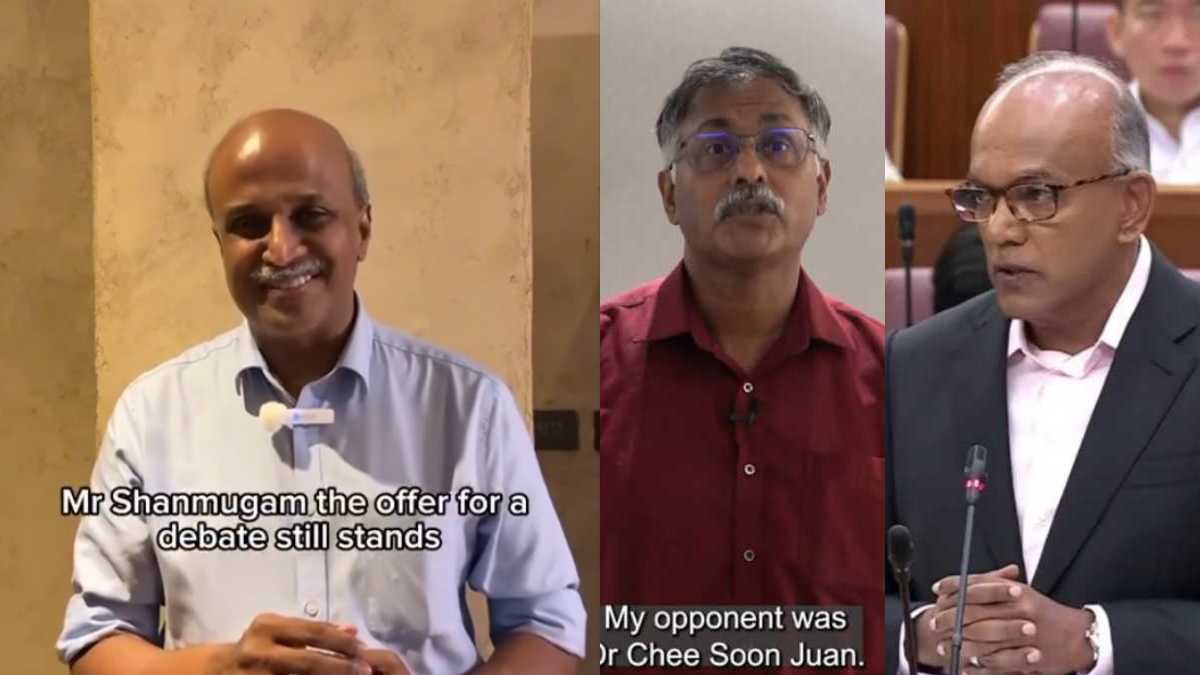
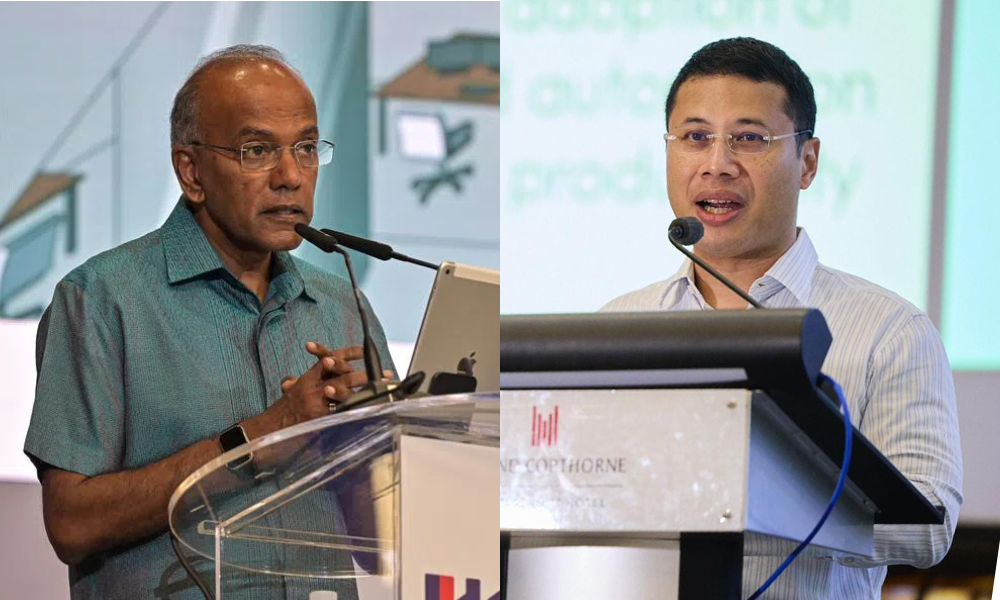
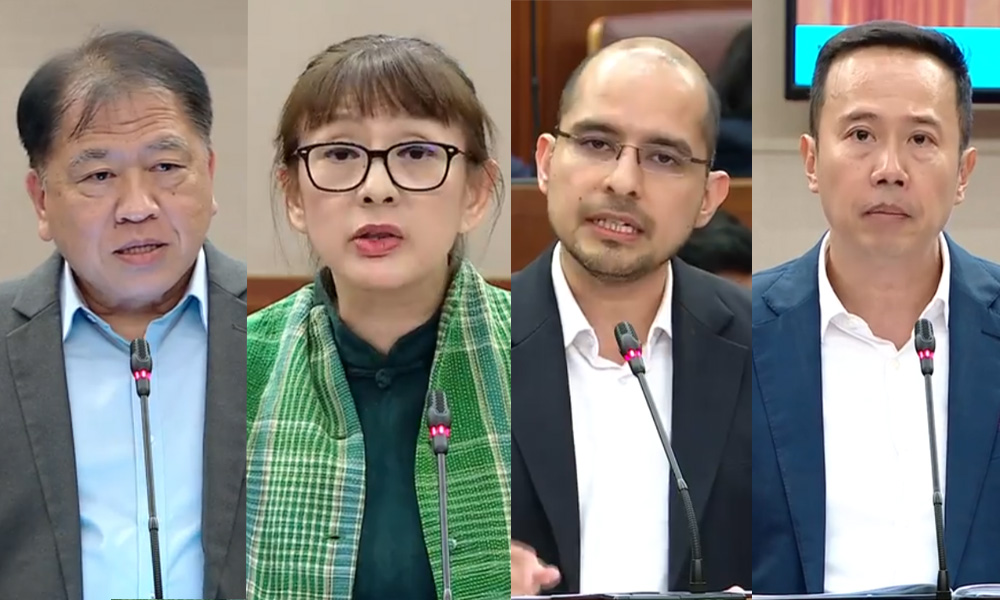
During a ministerial statement on race, religion and politics, Minister for Home Affairs and Coordinating Minister for National Security, K Shanmugam, demanded that the Workers’ Party (WP) should have immediately and unequivocally rejected the religiously framed endorsement made by Islamic preacher Noor Deros during the 2025 General Election. He criticised WP’s response as “ambiguous”, described its timing as delayed, and argued that its language lacked clarity — even though WP leader Pritam Singh had, by 26 April, already affirmed the party’s categorical rejection of foreign interference in local politics. However, when WP MP Kenneth Tiong pressed Shanmugam to apply the same standard — pointing to inflammatory, racially charged posts by Critical Spectator, a Facebook page run by Polish national Michael Petraeus known for staunchly supporting the PAP — the minister declined to disavow the platform or its posts. Instead, Shanmugam rebuked Tiong, saying: “I ask the member not to put words in my mouth.” He argued that Petraeus’ commentaries did not meet the threshold of foreign interference and that it was not the government’s role to respond to every foreign commentary. Yet this defence sits uneasily with Shanmugam’s earlier posture toward the WP’s handling of the Noor Deros episode, where he not only criticised the party’s tone and timing but also imputed intent — suggesting that WP’s less-than-immediate response was a deliberate political calculation to benefit from Malay-Muslim sentiment. If Tiong was accused of “putting words into the minister’s mouth,” then by the same measure, the minister himself had put intentions into the WP’s actions. The inconsistency exposed a deeper issue: the government’s willingness to infer motives from others while refusing to apply the same interpretive lens to itself. In that moment, Shanmugam’s strong rhetoric on political integrity and foreign interference unravelled, exposing a striking double standard.
The challenge from WP’s Kenneth Tiong
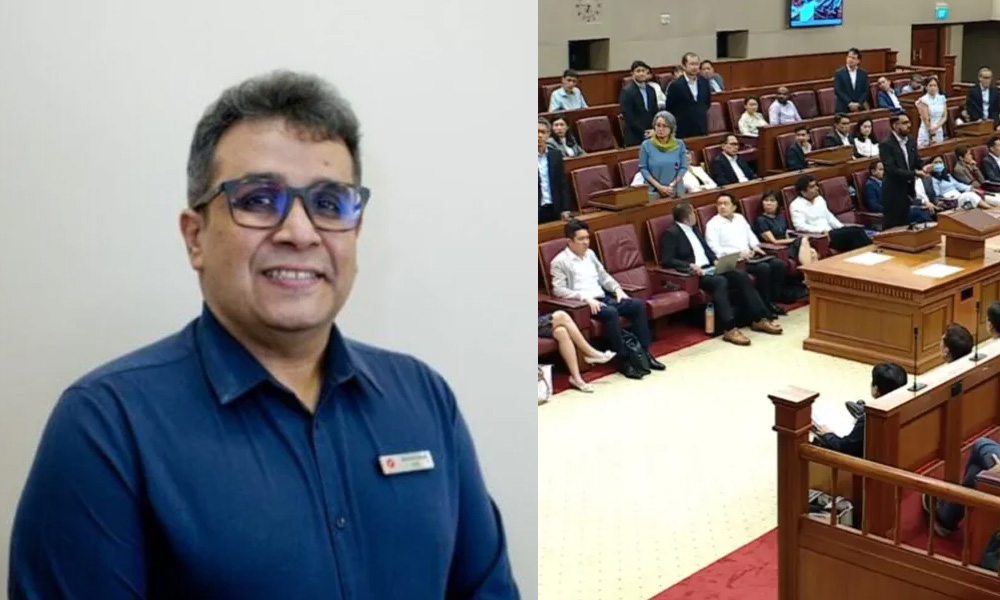
During the parliamentary exchange, Tiong challenged Shanmugam’s insistence that WP should have immediately disavowed Noor Deros’ endorsement of Faisal Manap. He pointed instead to Critical Spectator, a pro-PAP social media platform run by a foreigner, which had recently published a post accusing WP of “abandoning Muslim voters” and pivoting to Chinese-speaking constituents by appointing Eileen Chong as NCMP. Tiong’s question was direct: Would the PAP apply the same standard and categorically reject Petraeus’ conduct and commentary? Shanmugam’s response — that Petraeus’ actions did not constitute interference — left that question effectively unanswered.The minister’s defence: “It’s just commentary”
Shanmugam downplayed the comparison. He argued that Petraeus was simply one of many foreign commentators and likened his posts to those from The Economist or The New York Times. “Michael Petraeus is not the only person who is a foreigner who runs commentaries, sometimes for the government, sometimes against the government,” he said. “That doesn’t amount to, within the definition, interfering with our local politics.” He added that unless there was a specific attempt to influence elections, the government had no reason to act. But this position contradicts Shanmugam’s own past statements — particularly those made in 2019 — and disregards Petraeus’ documented record of inflammatory political commentary in favour of the ruling party.2019 vs 2025: A standard that shifts
In September 2019, Shanmugam castigated The Online Citizen for carrying pieces by foreign writers—highlighting a Malaysian based in Shah Alam—and asked: “Who controls her? Who pays her? What is her purpose?” He warned that readers might assume such work was by a Singaporean. Yet in subsequent court proceedings (Lee Hsien Loong v. Terry Xu), it was confirmed under oath that the writer’s role was limited to rewriting under Xu’s direct editorial oversight. By contrast in 2025, Critical Spectator—run solely by Polish national Michael Petraeus, with no editorial oversight—published highly charged posts portraying the PAP as uniquely competent while casting WP’s NCMP selection as an ethnic pivot to woo Mandarin-speaking voters. That is identity-bloc framing, the very politics Shanmugam says would send Singapore “down a one-way street to ruin.” When pressed in Parliament to apply the same yardstick, he declined to disavow the rhetoric, describing it as mere “commentary.” If foreign-authored content on a local site merited alarm in 2019, then a foreign partisan’s identity-loaded interventions in 2025 should, at minimum, draw a clear repudiation. Otherwise, the rule reads less like a principle and more like a posture.GE2020: A warning unheeded
While Shanmugam denies knowledge of any attempts to interfere in Singapore’s elections, this is not the first time Petraeus’ content has raised concerns over possible intervention. During the 2020 General Election, Xu filed a police report against Critical Spectator, citing posts that appeared to breach election laws by attacking opposition candidates and endorsing government policies—even as Petraeus publicly acknowledged he was not a Singaporean. Among the posts, Petraeus:- Attacked WP candidate Raeesah Khan over her past social media comments;
- Compared public reactions to Khan and PAP candidate Ivan Lim;
- Argued for a GST hike, stating he “could not stay silent” about the political direction.