SMRT says TEL suspended for 30 minutes after signalling fault on 17 September peak hour
SMRT suspended Thomson-East Coast Line services for 30 minutes on 17 September after a signalling fault. The disruption lasted more than two hours, sparking commuter frustration over delays, crowded buses, and criticisms that updates understated the severity of the breakdown.
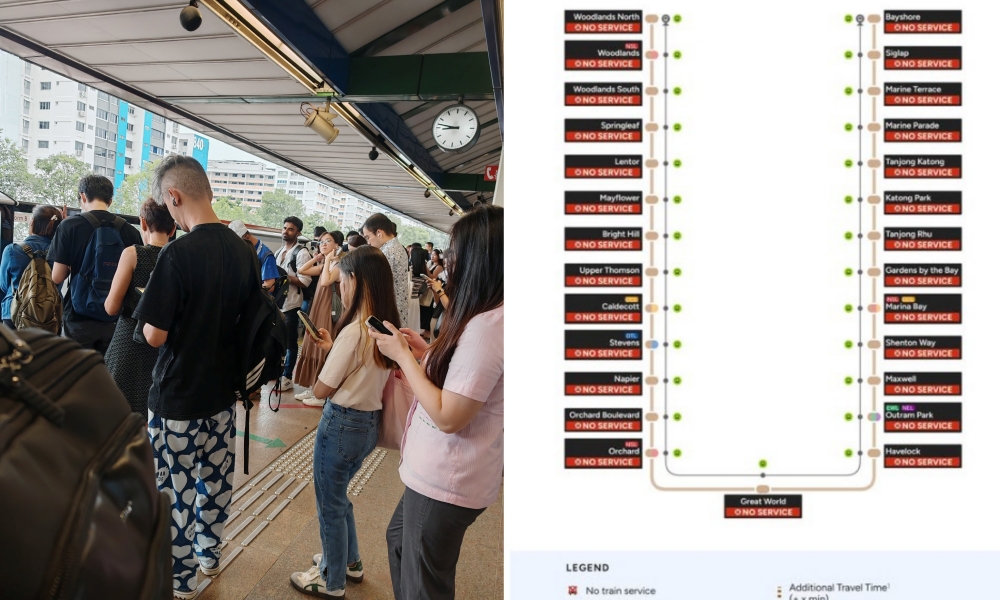

Train services on the Thomson-East Coast Line (TEL) were disrupted on the morning of 17 September 2025 after a signalling fault occurred at about 7.10am. SMRT confirmed that services were suspended for about 30 minutes to reset the system, though full recovery only came after more than two hours.
SMRT Trains president Lam Sheau Kai said in a Facebook post at 9am that the suspension was necessary to restore operations. He apologised for the inconvenience caused to commuters.
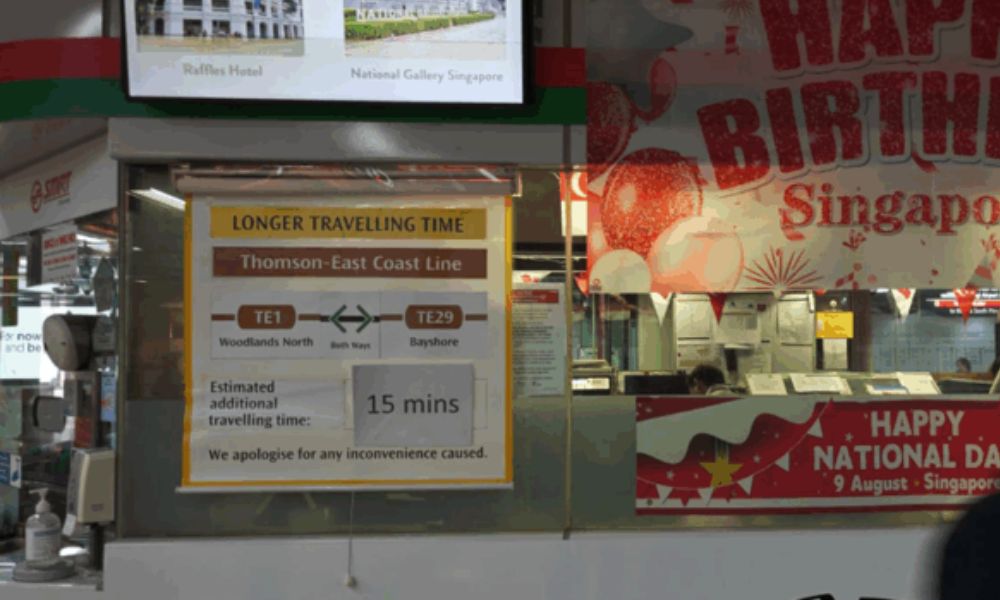
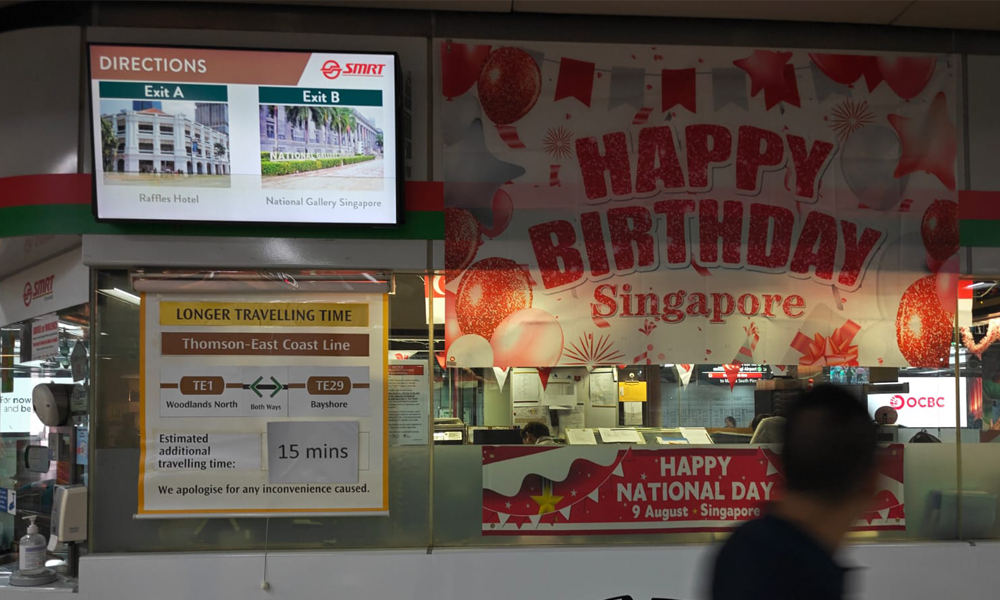
The operator first alerted commuters at 7.29am via X and Facebook, advising an additional 15 minutes of travel time, even as trains continued running. At 7.55am, SMRT announced that free regular bus services were available between Woodlands North and Bayshore, signalling a broader disruption.
At 8.29am, the operator confirmed a full suspension of TEL services to facilitate recovery. Trains began resuming progressively at 8.38am, and by 8.54am SMRT declared that services between Woodlands North and Bayshore had fully resumed.
Despite official accounts, many passengers reported issues beginning earlier than 7.10am.
Some said problems were apparent from 6.30am, with trains stalled or moving slowly.
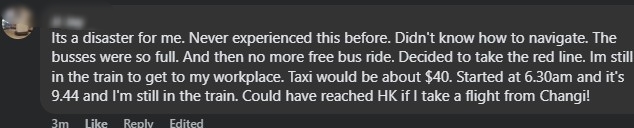
A commuter wrote on Facebook: “It’s a disaster. Never experienced this before. The buses were so full, and then no more free bus ride. I’m still in the train, and it’s already 9.44am. Taxi would cost about S$40.”
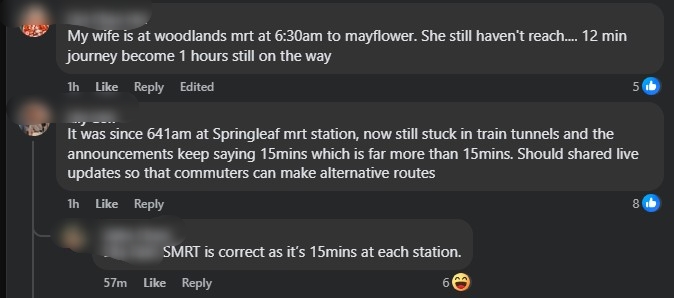
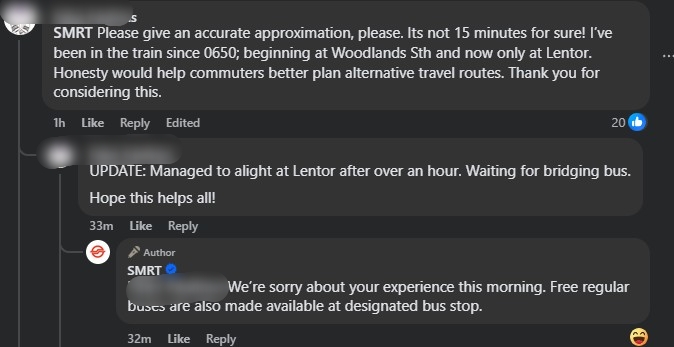
Another commuter said they boarded at Woodlands South at 6.50am and reached Lentor only an hour later.
Others reported being stuck at stations for prolonged periods, with one noting that a short journey from Woodlands to Mayflower took more than an hour.
Many criticised SMRT’s early communication, accusing the operator of downplaying the severity of the fault.
Several comments said the initial message of a 15-minute additional travel time misled passengers, leaving them unprepared for the scale of the disruption.
One commuter remarked that “rather than 15 minutes, we were stuck in stations for about that period instead.”
The incident also reignited broader debates about the reliability of Singapore’s MRT system.
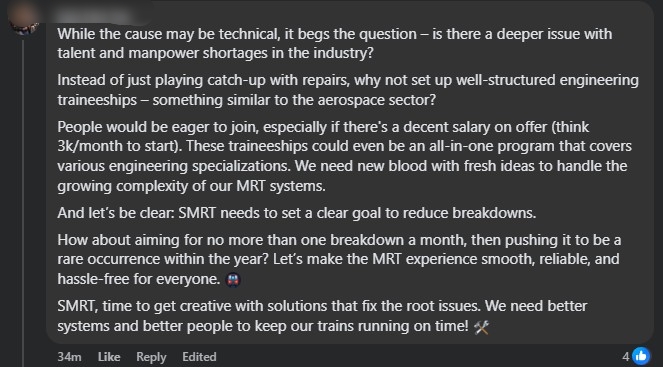
Some commentators questioned whether the fault pointed to deeper issues such as manpower shortages in engineering and maintenance.
Suggestions included establishing structured engineering traineeships similar to those in the aerospace sector, with competitive starting salaries of about S$3,000 per month, to attract new talent into rail system management.
Proposals also called for SMRT to set measurable performance goals, such as limiting major breakdowns to no more than one a month, with the longer-term aim of making them rare.
Recent Spate of Disruptions
The Thomson-East Coast Line, which is still undergoing phased openings, is one of Singapore’s newest MRT lines.
It links residential estates in the north to the central business district and is expected to eventually extend to the east coast.
The incident marks the second disruption within 12 hours.
On the night of 16 September 2025, a fault in the power supply system had affected services across six stations on the East-West Line.
Earlier, services on the Punggol LRT were disrupted for about three hours on Saturday morning (13 Sep) after a system fault prevented trains from being launched from the depot.
On 12 August, a power fault caused a five-hour disruption to the Sengkang–Punggol LRT, while another on 15 August disrupted services for more than three hours across all 29 stations on the network.
The problems were not limited to the Punggol line.
On 2 September, a train fault on the North–South Line caused a 25-minute delay between Woodlands and Yishun stations.
Earlier, on 6 August, the East–West Line suffered a five-hour breakdown.
In July, the Thomson–East Coast Line experienced an hour-long disruption due to a signalling fault, and the Bukit Panjang LRT saw two suspensions in the same month caused by power problems.
Acting Transport Minister Jeffrey Siow has acknowledged growing public concern, describing the series of incidents as disappointing.
Writing on Facebook on 6 August, he said that Singapore’s transport operators “can and will do better”.
He also stressed that the “One Transport family” would continue working to strengthen the reliability of the rail system.