Pawnshop loans rise to a record S$884 million as gold prices soar and economic stress deepens
Singapore pawnshops disbursed S$884 million in loans in June 2025, a 29% increase from the previous year, driven by record-high gold prices and rising financial stress, according to data from the Singapore Department of Statistics.
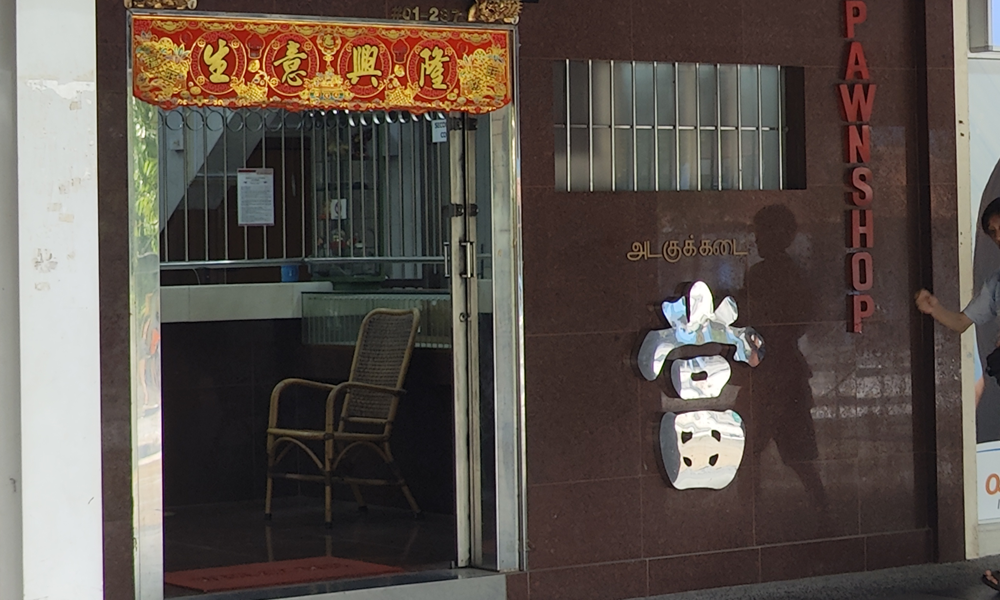

The total value of loans disbursed by Singapore pawnshops reached a record S$884 million in June 2025—a 29 per cent increase compared with the S$686.4 million recorded in June 2024. This figure, published by the Singapore Department of Statistics, is nearly double the S$467 million issued in June 2020 during the Covid-19 pandemic. The number of pledges received rose in tandem, from 316,916 in June 2024 to 341,490 in June 2025, reflecting an 8 per cent year-on-year increase. This marks a significant shift from June 2020, when pledges stood at 323,549. These figures point to troubling signals within the broader economy. While the volume of loans has grown nearly 90 per cent since 2020, the number of pledges has increased by just over 5 per cent. This suggests that individual loan amounts have increased substantially—driven likely by surging gold prices—implying heavier reliance on asset-backed short-term credit. According to The Straits Times, Lim Chun Seng, Group General Manager of MoneyMax Financial Services, said: “The rising price of gold is one key factor driving the increase in pawnshop loans,” noting that spot gold prices rose from over US$2,300 per ounce on 30 June 2024 to more than US$3,200 on 30 June 2025. On 2 September 2025, spot gold prices reached a high of over US$3,500 per ounce. As reported by The Straits Times, this surge is attributed to gold’s traditional role as a safe-haven asset during economic uncertainty. Pawnshop operators confirmed that as gold prices rise, customers are able to obtain larger loans using the same items as collateral, especially gold jewellery. The Straits Times cited Brian Lan, spokesperson for Fund Express, who said: “They tell us that the business environment is tough now, with high rentals and more businesses shutting down. The market sentiment is quite bad.” Fund Express, which operates six pawnshops in Singapore, serves a clientele of small business operators, including hawkers, shop owners and contractors. Lan added: “They may need cash flow to tide them over, but they find it hard to get loans from banks.” He shared that a client operating a mini-mart recently pawned around S$40,000 worth of gold jewellery to support business needs. Retail chains such as ValueMax and MoneyMax, each operating over 50 outlets locally, are among the largest players in the industry. As of 1 September 2025, there were 241 registered pawnshops in Singapore, according to the Registry of Pawnbrokers. Yeah Lee Ching, Managing Director of Retail and Trading at ValueMax Group, told The Straits Times: “When the economy weakens, the number of pawners tends to rise slightly as many rely on pawning to ease temporary cash flow shortages.” Yeah further observed a rise in pledges of luxury items, stating: “We have seen a steady increase in the number of clients pawning luxury watches from brands such as Rolex, Patek Philippe and Audemars Piguet.” She added that ValueMax also accepts silver bars, old currency notes, and luxury handbags from brands like Hermès and Chanel in near-new condition. Yeah noted: “Pawnbroking offers a quick and hassle-free way to obtain cash using one’s personal assets. Unlike other forms of borrowing, pawn loans come with no late fees or administrative charges, making them cost-effective for smaller sums.” For example, a S$1,000 pawn loan typically incurs a maximum monthly interest of S$15. The Pawnbrokers Act 2015 caps monthly interest rates at 1.5 per cent. The Straits Times also spoke to clients from varying backgrounds. A 35-year-old Indonesian domestic helper shared that she needed urgent funds and turned to pawning. Another client, a 65-year-old retired worker known only as Mr Chong, said: “It is not easy to borrow money from your own family, much less your friends… So when my finances are very tight, I would go to the pawnshop to pawn my gold jewellery.”
📊 Pawnshop loan disbursements: 2022 to mid-2025
| Year | Period Covered | Loan Value (S$ million) | Notes |
|---|---|---|---|
| 2022 | Full year (Jan–Dec) | 6,841.5 | Baseline post-Covid year |
| 2023 | Full year (Jan–Dec) | 7,544.8 | Gradual increase observed |
| 2024 | Full year (Jan–Dec) | 8,239.3 | Highest recorded annual total |
| 2025 | Jan–June only | 5,043.0 | Already 61% of 2024 total |
📊 Singapore pawnshop loan disbursements, Jan–June 2025
| Month | Loan Value (S$ million) |
|---|---|
| January 2025 | 790.7 |
| February 2025 | 812.3 |
| March 2025 | 843.8 |
| April 2025 | 846.9 |
| May 2025 | 865.3 |
| June 2025 | 884.0 |
| Total | 5,043.0 |