Canopy Hawkers Group responds to KF Seetoh’s claims over storage fee and charity meal clauses
Canopy Hawkers Group has clarified that Bukit Canberra hawkers are charged S$70 for permanent cabinets or shelves, not temporary delivery baskets. KF Seetoh shared an invoice showing the charge, which the operator confirmed was for a temporary occupation licence linked to a permanent fixture.


The operator of Bukit Canberra Hawker Centre, Canopy Hawkers Group, has clarified its policy on storage space fees following public criticism from veteran food critic KF Seetoh, who alleged that hawkers were being charged to use simple delivery baskets behind their stalls.
Speaking to CNA on 12 August, managing director Joey Tan said the S$70 monthly charge, before Goods and Services Tax (GST), applies to hawkers who want to install permanent storage fixtures such as cabinets or shelves behind their stalls. The arrangement is formalised through a temporary occupation licence (TOL) issued for the duration of the hawker’s lease.
Tan stressed that leaving items temporarily — such as blue baskets containing overnight deliveries — in the space behind stalls does not incur any charge. He said the fee was introduced after hawkers themselves requested to install permanent storage units in these areas.
“Last time we told them, even if your delivery comes, please put it properly because there are rats, there are pests. Food may be contaminated,” he said. “So we did advise our tenants, if you want, maybe you can consider this [cabinet option].”
According to Tan, Canopy Hawkers Group secured the necessary permits before allowing hawkers to install permanent fixtures, and began charging tenants who opted for such installations. He emphasised that the scheme was optional.
KF Seetoh’s allegation and supporting documents
The dispute began on 4 August when KF Seetoh claimed that hawkers were being charged S$70 per month to leave baskets at the back of their stalls for suppliers to place goods. He said this practice applied even when the baskets were used simply for holding deliveries before operating hours.
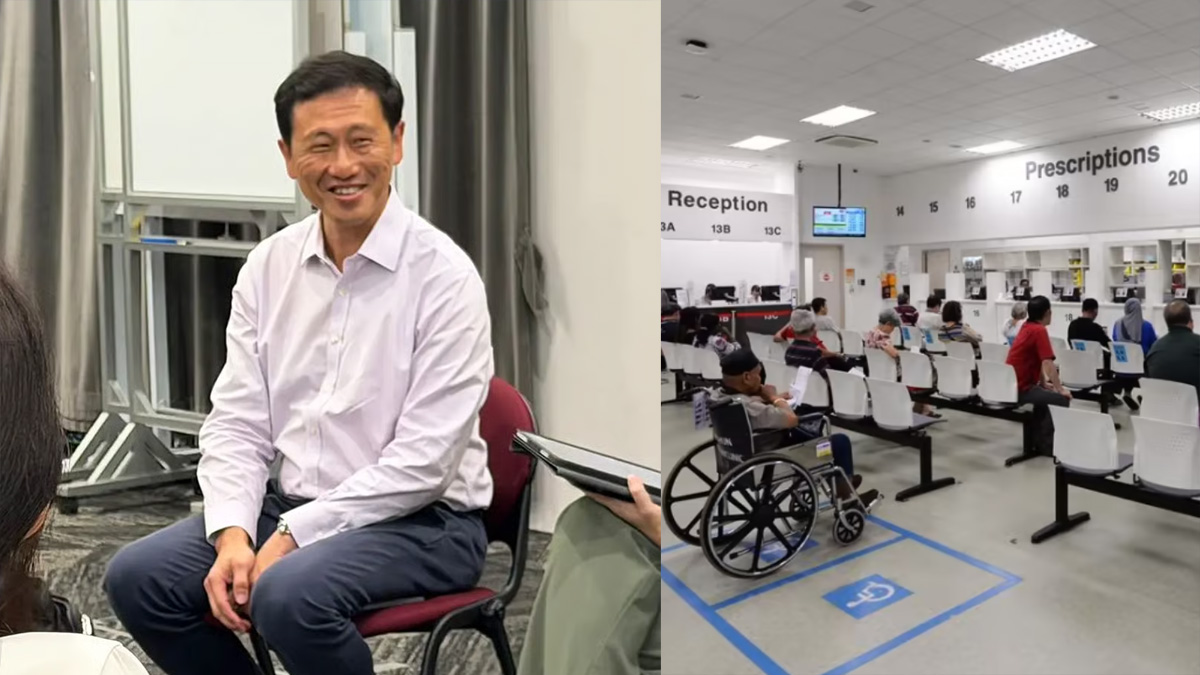
Minister for Health Ong Ye Kung responded on 11 August, stating there was “no practice of charging” hawkers for the use of blue baskets.
On 12 August, Seetoh posted further evidence on Facebook, including an invoice showing a S$70 charge labelled “Backyard Cluster” with a reference to a TOL. He also uploaded a screenshot of a WhatsApp conversation with a hawker confirming the fee, and a rental receipt breakdown showing the charge.
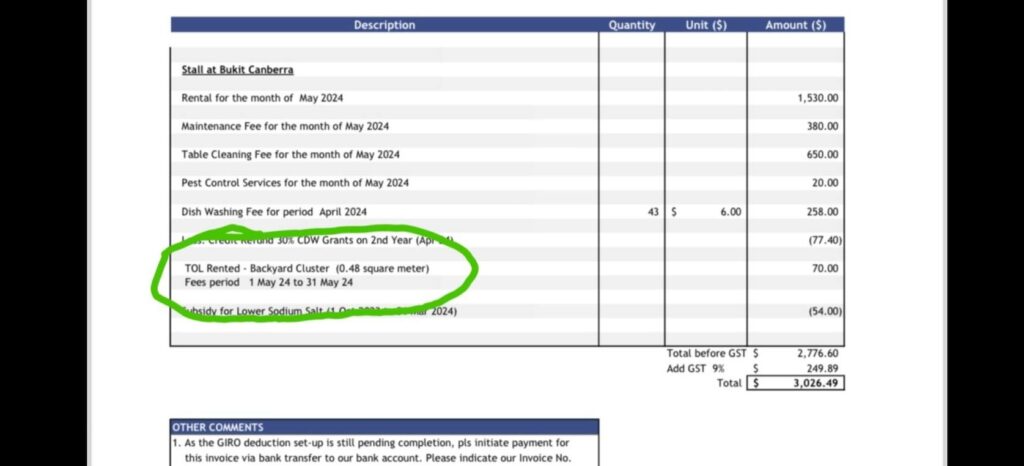
Seetoh explained that the space — measuring about 0.48 square metres — was used by hawkers for deliveries or, in some cases, for permanent cabinets. He argued that operators should only impose fees for fixed storage units, not for the simple act of holding goods temporarily.
“If you use that space, whether for blue box supply deliveries or place a cabinet for storage (some sharper hawkers do that), it’s chargeable and it’s what was corresponded with the hawker,” he wrote.
“They should just charge for storage cabinets, not for a blue box, be fair.”
Canopy Hawkers Group’s response
In its comments to CNA, Canopy Hawkers Group did not dispute that the hawker cited by Seetoh had paid the S$70 fee. However, the group maintained that the payment was for the use of the space as a permanent storage area with a cabinet, not for temporary deliveries in blue baskets.
Tan reiterated that hawkers who simply left items temporarily behind their stalls — such as overnight deliveries — would not be charged. The TOL fee applied only when the space was effectively converted into a dedicated, enclosed storage area for the lease duration.
The group said the initiative was partly motivated by hygiene concerns, noting that unsecured items left in open baskets or on the ground attracted pests. By encouraging the use of enclosed cabinets, the operator aimed to maintain cleanliness and reduce the risk of contamination in food preparation areas.
Free meal clauses in contracts
Alongside his storage fee claims, Seetoh also renewed criticism of clauses in Socially Enhanced Hawker Centre (SEHC) tenancy agreements that require hawkers to provide free meals to low-income residents.
According to Seetoh, the contracts he reviewed required hawkers to provide 30 meals per month under a Customer Relationship Management initiative, and another 30 under a “Pay-It-Forward” programme. The wording used “shall”, which he argued made the obligation legally binding even if not enforced.
“It may not be enforced, but they are at the mercy and grace of the operators. It’s not stated that no punishment is meted if they fail to do so,” Seetoh wrote.
“Charity meals, if voluntary, should not be in the contract.”
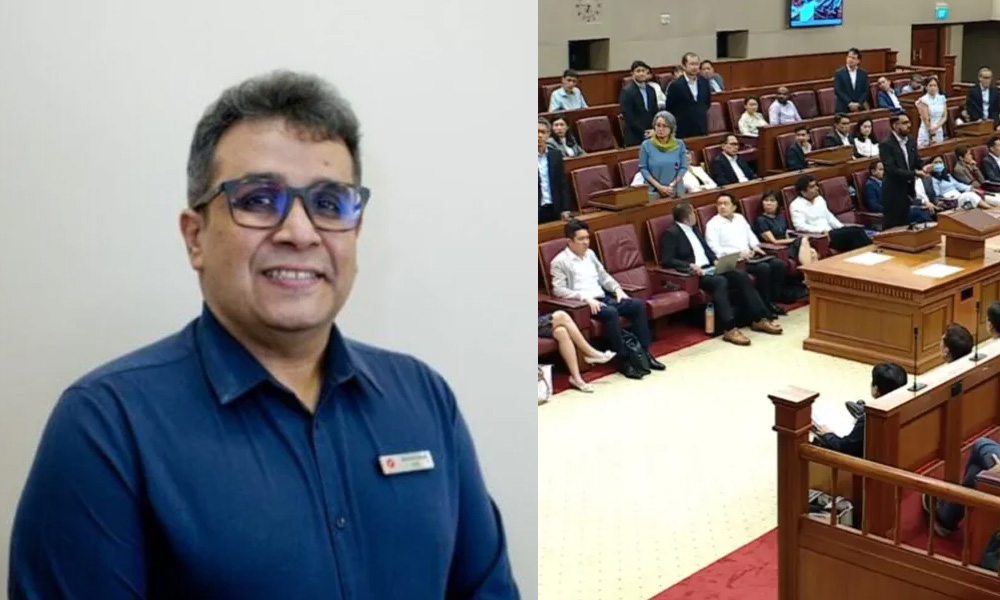
He noted that the matter had been raised in Parliament last year, and warned that such contractual obligations could harm Singapore’s hawker culture by increasing operational pressures.
Minister Ong’s clarification and operator’s position
Minister Ong clarified on 11 August that the charity meal requirement had been revised from 30 meals per month to 100 meals over the course of a three-year lease.
He stressed that the programme had not yet commenced, was not enforced with penalties, and was designed as a voluntary initiative to encourage hawkers to contribute to the community.
Tan confirmed to CNA that the scheme has not yet started. He did not comment directly on Seetoh’s view that the clause should be removed from contracts, but defended the idea of hawkers giving back to the community when possible.
Continued disagreement over principle
While the Canopy Hawkers Group’s explanation directly addressed the storage fee claims, it did not resolve the disagreement with Seetoh.
The operator drew a clear distinction between charging for permanent fixtures and charging for temporary deliveries, whereas Seetoh’s concern lay in the fact that the space — regardless of its purpose — was tied to a charge in the example he cited.
Similarly, on the free meal clause, the group and Minister Ong both highlighted the voluntary and unenforced nature of the scheme, while Seetoh argued that the very presence of such a clause created unnecessary pressure and potential for future enforcement.