Concerns grow over rise in foreign player quota in Singapore Premier League
From 16 August, SPL clubs can field seven foreign players per match—the highest ever. While the FAS says the move boosts competitiveness, critics warn it could limit local talent development and deepen youth-to-senior gaps. Experts urge structural reforms instead of relying on quota expansions.
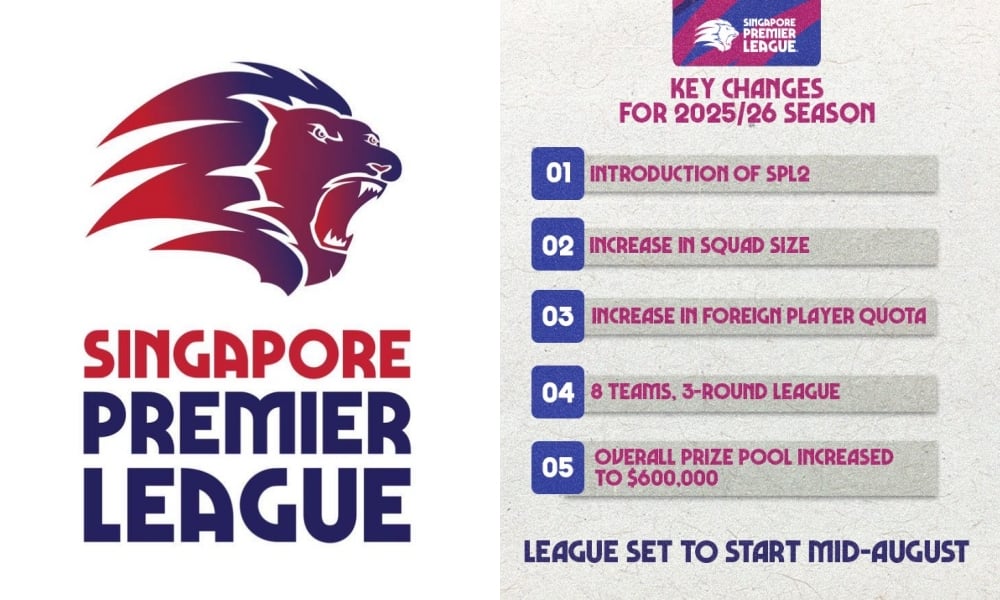

On 2 July 2025, the Football Association of Singapore (FAS) announced a set of sweeping changes to the Singapore Premier League (SPL), including an increase in the foreign player quota from six to seven per match.
This marks the highest number of foreign players allowed in the league since its inception in 1996.
The move is part of FAS's broader strategy to enhance the SPL's competitiveness and attract more spectators and investment.
The changes will take effect from the new season beginning on 16 August.
Increased incentives and new league structures introduced
In addition to the player quota, the FAS announced the total prize money for the league will more than double, rising to S$600,000.
A new reserve league, SPL2, will also be introduced with the aim of nurturing young footballers.
The SPL will now consist of eight teams, following Brunei DPMM FC’s withdrawal from the league in May.
While these reforms are positioned as steps to revitalise local football, the decision to raise the foreign player quota has sparked considerable debate among football fans, former professionals, and local stakeholders.
Public and expert reactions reflect concern over local talent
Many netizens and commentators voiced concern that the rise in foreign players may come at the expense of local talent, reducing meaningful game time and stifling youth development.
One Facebook user and entrepreneur questioned whether the move truly addressed the root causes of the domestic talent shortage, asking, “Will this be enough to sustain professional football in Singapore?”
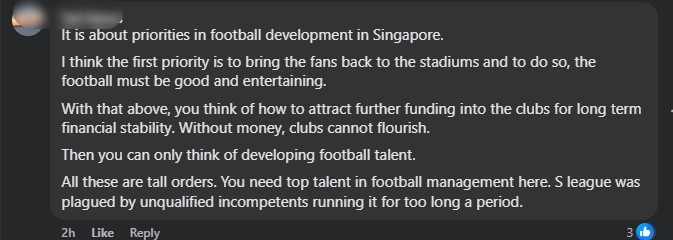
A widely held view expressed in comments on The Straits Times and CNA platforms was that football development in Singapore requires a more fundamental overhaul.
Commenters stressed the importance of first bringing fans back to the stadiums through entertaining football, followed by ensuring long-term financial stability for clubs, and only then focusing on youth development.
One commentator wrote, “You need top talent in football management here. The S.League was plagued by unqualified incompetents running it for too long.”
Mixed views on foreign players' benefits
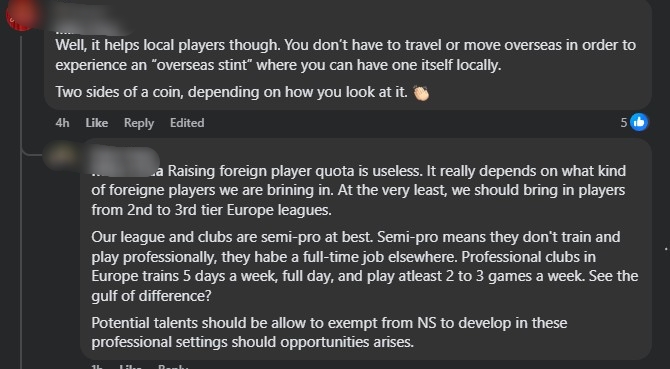
Some users defended the foreign player increase, suggesting it could raise the standard of competition and benefit local players through exposure to higher-quality opposition.
Others felt it could simulate an “overseas stint” experience without players having to leave Singapore.
However, these arguments were met with scepticism.
One user pointed out that the impact depends on the quality of foreign players brought in, advocating for talent from second- or third-tier European leagues.
He criticised the semi-professional nature of local clubs, noting that unlike European teams which train full-time and play several times a week, SPL players often balance football with full-time jobs.
He argued for exemptions from National Service (NS) for promising players, allowing them to fully commit to a professional football career.
Suggestions for community-focused alternatives
Beyond criticism, some proposed alternative approaches.
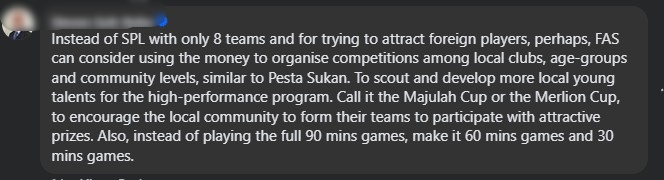
One idea was to use the additional funds not to import more foreign players but to organise community-based competitions such as a Majulah Cup or Merlion Cup.
These could be aimed at local clubs, age-group teams, and community organisations to scout and develop young talents in a more inclusive and grassroots-driven manner.
Adjustments such as shorter match formats—60 or 30 minutes—were also suggested to encourage broader participation.
Former players and coaches warn of long-term damage
In response to CNA's queries, former professional footballer and coach Shasi Kumar expressed concern that the increased quota could demoralise young players.
He questioned whether parents would still encourage their children to pursue football, given shrinking opportunities for locals in the professional scene.
He also cited a growing gap between under-21 teams and the senior level, noting that many youth players “fall by the wayside.”
He called for clearer, more inspiring messaging for young athletes in national programmes like the National Development Centre and Unleash the Roar.
Instead of expanding foreign slots, he suggested reducing them to four.
Richard Harcus, formerly with Balestier Khalsa, highlighted that foreign players often occupy pivotal roles such as striker and central defender.
This, he warned, could limit local players’ growth in those positions and ultimately undermine national team development.
Rhysh Roshan Rai, a former player and football commentator, emphasised that the quality of playing time matters.
He noted that younger players risk missing out on critical match experience that helps them grow and gain confidence.