Trump’s sweeping tax and spending bill stalls in US House as Republican rebels dig in
US President Donald Trump’s landmark tax and spending bill faced unexpected resistance in the House of Representatives on 3 July, as Republican leaders struggled to unify their party amid deep divisions over the bill’s massive cost and severe cuts to social programmes.
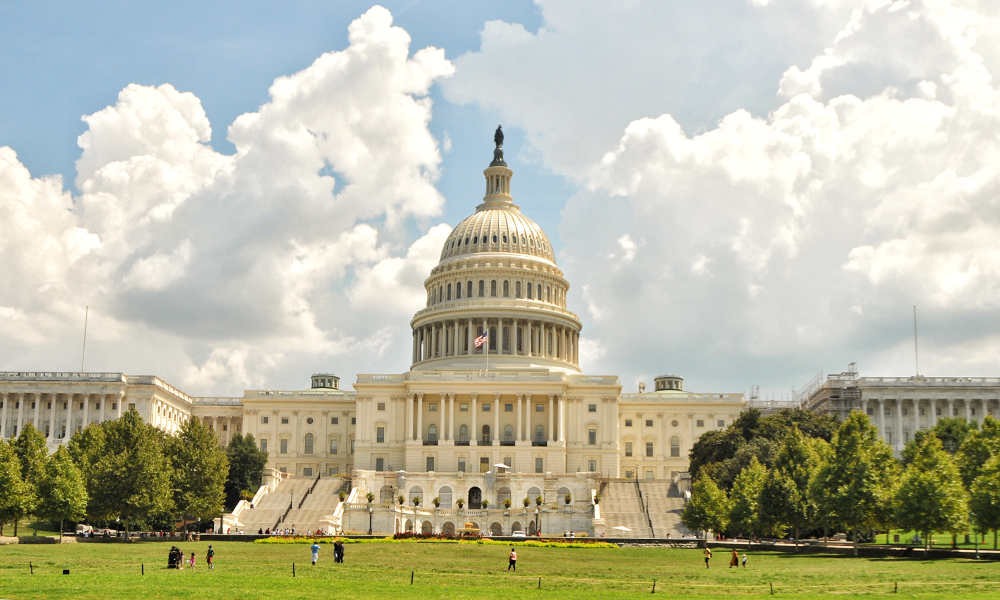

US President Donald Trump’s signature tax and spending bill was thrown into uncertainty on 3 July, as Republican leaders in the US House of Representatives scrambled to overcome a last-minute rebellion within their own ranks. The legislation, dubbed the “One Big Beautiful Bill” by Trump, had already cleared the Senate on 2 July by the narrowest of margins after a flurry of amendments pushed it further to the right. However, final approval in the House has proven far more contentious than Republican leaders anticipated. At the centre of the standoff is a group of Republican lawmakers deeply concerned about the bill’s fiscal impact. According to the Congressional Budget Office, the bill would add an estimated US$3.4 trillion to the nation’s US$36.2 trillion debt over the next decade. The bill extends Trump’s 2017 tax cuts, commits US$4.5 trillion to military expansion and immigration enforcement, and enacts deep cuts to Medicaid and other safety net programmes. Critics argue it represents a significant shift of resources from low- and middle-income Americans to the wealthy. House Speaker Mike Johnson had kept a crucial procedural vote open for over seven hours, hoping to sway holdouts. The vote eventually passed 220-212 along party lines, indicating potential progress, but was not enough to guarantee final passage. Several Republicans, known as fiscal hawks, remained opposed to the bill due to its high cost and what they see as insufficient spending cuts. Representative Andy Harris of Maryland, a leading figure in the Freedom Caucus, reiterated his firm opposition, stating that he did not believe the votes existed to pass the bill in its current form. President Trump has actively intervened, summoning dissenting Republicans to the White House and posting urgent appeals on social media. “What are the Republicans waiting for? MAGA IS NOT HAPPY, AND IT’S COSTING YOU VOTES!!!” he wrote on his Truth Social platform just after midnight on 3 July. Despite this, five Republican lawmakers defected during a subsequent procedural vote, blocking immediate advancement of the bill. Johnson can only afford to lose three votes given the slim 220-212 majority, highlighting the precarious position Republican leaders face. House Democrats have uniformly opposed the bill, criticising its large tax cuts for the wealthy and severe reductions to social services. House Minority Leader Hakeem Jeffries described the bill as a “disgusting abomination” that would worsen inequality and harm vulnerable Americans.
Analyses suggest up to 12 million people could lose health insurance, with some estimates indicating as many as 17 million affected. Additionally, rural hospitals are expected to face closures, raising alarms among lawmakers representing rural districts. The legislation also includes controversial provisions such as the removal of green energy tax credits for firms with ties to China and a US$5 trillion increase to the national debt ceiling. Trump had set a self-imposed deadline of 4 July to sign the bill into law, a goal now in serious jeopardy. Any further changes by the House would require a fresh Senate vote, almost certainly derailing that timeline. House Majority Whip Tom Emmer expressed cautious optimism on 2 July, telling reporters that progress was being made. However, as midnight passed, no breakthrough had been achieved. Democrats have vowed to use the bill as a central campaign issue in the 2026 midterm elections, portraying it as a betrayal of working-class Americans. Republican leaders now face the dual challenge of uniting their own members and defending the bill’s sweeping measures to a sceptical public.