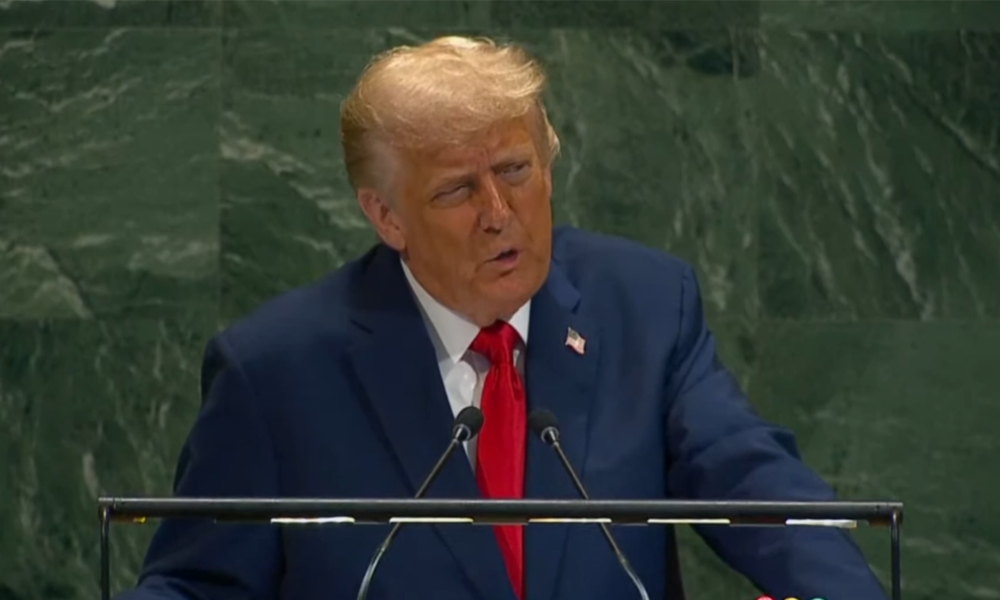
Behind Trump’s border rhetoric: immigrant raids power profits and $1-a-day labour at private detention centres
As Trump ramps up deportations, internal data shows most ICE detainees have no serious criminal record. Yet private prison firms profit by detaining them and assigning facility labour—cleaning, cooking, maintenance—at just US$1 a day. The practice raises serious legal and ethical concerns beneath the administration’s tough-on-immigration narrative.
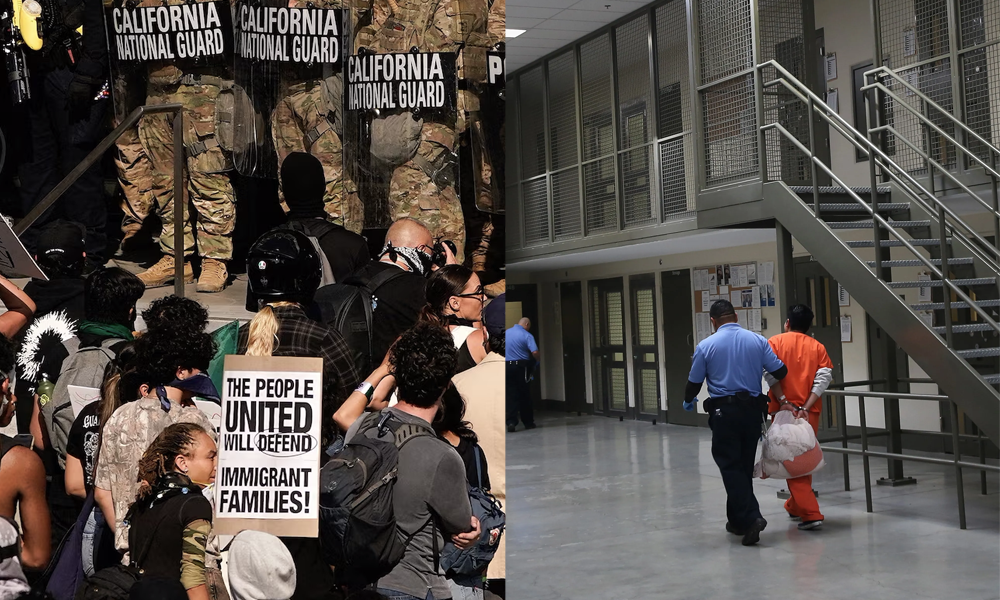

President Donald Trump’s federal deployment of 4,000 National Guard troops and 700 U.S. Marines to quell immigration-related protests in Los Angeles is facing mounting legal scrutiny, as a federal appeals court on 19 June allowed him to retain temporary control over California’s National Guard amid a lawsuit challenging the legality of his actions.
The 9th U.S. Circuit Court of Appeals extended a stay on U.S. District Judge Charles Breyer’s earlier ruling that Trump had unlawfully federalised the state’s National Guard on 7 June without coordinating with Governor Gavin Newsom.
Breyer noted that the conditions required under federal law for such a move—such as a rebellion against federal authority—did not exist.
The deployment was triggered by growing unrest over the Trump administration’s expansive immigration crackdown, particularly ICE raids that have led to the detention of tens of thousands of immigrants, the majority of whom have no serious criminal records.
Internal Immigration and Customs Enforcement (ICE) data obtained by CNN shows that over 75% of the 185,000 immigrants detained in fiscal year 2025 had no criminal convictions beyond immigration or traffic-related offences. Fewer than 10% were convicted of violent crimes, such as murder, assault or rape.
Despite this, Trump and top administration officials have painted the crackdown as a necessary public safety measure.
Homeland Security Secretary Kristi Noem stated on Fox News, “In L.A., what we have been going after is the worst of the worst. They are murderers. They are people who have been perpetuating assault and trafficking human beings.”
Trump echoed similar sentiments, calling the operation “a national emergency” and ordering ICE to “do all in their power to deliver the single largest Mass Deportation Program in history.”
However, these statements are contradicted by government data and court documents, which point to a system that disproportionately targets nonviolent immigrants—many of whom have lived in the United States for years—and detains them in privately run facilities that profit from their labour.
Private detention’s rising profits
More than 90% of ICE detainees are housed in facilities operated by private corporations like GEO Group and CoreCivic, according to ICE data from June 2023.
These companies hold lucrative federal contracts and are central to the administration’s expansion of detention capacity.
GEO Group, which operates the Northwest ICE Processing Center in Tacoma, Washington, employed detainees to cook, clean, and perform maintenance tasks—labour for which they were paid US$1 per day.
In 2021, a federal jury ruled that GEO had violated Washington’s minimum wage law and ordered the company to pay US$17 million in back wages and US$6 million in additional penalties.
GEO has refused to pay, instead appealing the decision. The case is now before the 9th Circuit and may reach the Supreme Court.
The company argues that federal immigration authority supersedes state labour laws and that their federal contracts require only a minimum wage of US$1 per day.
GEO’s gross profit from the Tacoma facility alone was estimated at US$20 million annually. A company spokesperson stated in legal filings that GEO could pay the judgement “twenty times over,” but warned that complying with state minimum wages would jeopardise the facility’s operating model.
Deteriorating conditions inside
Following the court ruling, GEO paused its Voluntary Work Program at the Tacoma facility, which had relied on detainee labour to sustain daily operations.
With detainees unable to work, the company brought in contracted cleaners—but according to detainees and advocacy groups, the facility’s sanitation and service quality plummeted.
“Dinner used to be at 5. Then 6. Now it’s 9,” said Maru Mora Villalpando, founder of the activist group La Resistencia, which is in regular contact with detainees. Others have reported unsanitary food, overcrowding, and a lack of access to basic hygiene products due to the loss of commissary income.
Eva Bitran of the ACLU of Southern California reported that recent ICE raids in Los Angeles swept up individuals with no prior criminal records, including a mother who has lived in the U.S. for 26 years and a father of three U.S. citizen children with a pregnant wife.
“We are seeing huge amounts of people with no prior contact with the criminal or immigration system picked up,” Bitran said. “It is very contrary to the story that the secretary is telling.”
Public messaging and political pressure
While ICE press releases frequently feature immigrants accused of serious crimes, CNN found that these cases represent a small minority. Critics argue this discrepancy between data and messaging is deliberate, aimed at manufacturing public support for policies that enrich private corporations.
Some Republicans have joined calls for more transparency. Six GOP House members from the Congressional Hispanic Conference recently demanded a detailed accounting from ICE, warning that “pursuing individuals with a clean record” diverts resources from targeting actual threats to national security.
Conditions inside detention centres have worsened amid rising detainee numbers and suspended work programmes. But efforts to oversee these facilities are being stymied at the federal level—even for members of Congress.
Nonetheless, Trump’s administration has pressed ahead, dramatically increasing ICE capacity. The Associated Press reported that ICE issued no-bid contracts to companies like GEO and CoreCivic to reopen closed facilities and prepare for a threefold increase in daily arrests.
Tom Homan, former ICE director and now Trump adviser, defended the contracts as cost-saving, saying private facilities “allow higher quality and lower cost than the government can provide.”
In a significant development, the U.S. Department of Homeland Security (DHS) has issued new internal guidelines that restrict congressional visits to immigration enforcement sites.
The updated policy, issued this month, grants ICE broad discretion to deny or cancel visits by senators or representatives to its detention centres.
This move follows multiple incidents in which Democratic lawmakers were barred from accessing ICE facilities—or, in some cases, briefly detained while attempting oversight visits.
Legally, federal law prohibits DHS from obstructing members of Congress from entering any facility used to detain or house immigrants. Under this statute, lawmakers do not need to provide prior notice for such visits, although their staff may be required to give 24 hours’ notice.
However, the new DHS guidelines claim that this law does not apply to ICE field offices, despite the fact that immigrants are frequently detained there before being transferred to formal detention centres. ICE now requests that members of Congress give at least 72 hours’ notice before visiting any such facility.
A system built for profit
Financial records show that private prison firms have thrived under Trump. GEO Group’s stock value surged after Trump’s re-election and in anticipation of increased federal contracts. The company’s annual revenue exceeded US$2.4 billion in 2024.
Lauren-Brooke Eisen of the Brennan Center for Justice notes that many ICE contracts include guaranteed minimum bed quotas, meaning taxpayers pay whether or not detainees are present. This arrangement incentivises large-scale raids to fill beds and keep revenue flowing to contractors.
“There’s a perverse incentive to keep these facilities full,” Eisen said. “The companies only get paid when beds are filled.”
Many immigrant advocates argue that this system is not about safety, but about sustaining a profitable business model built on detaining low-risk individuals and exploiting their labour.
“This is a country built on immigration,” said Sui Chung of Americans for Immigrant Justice. “Portraying immigrants as criminals and terrorists is both inaccurate and dangerous. The real crisis is how we are treating people once they’re detained.”
Legal battles ahead
As Trump battles legal challenges over the use of military forces to suppress dissent and states push back against the use of unpaid immigrant labour, the future of America’s immigrant detention infrastructure is at a crossroads.
The 9th Circuit’s final ruling on National Guard control and the Tacoma labour case will carry significant consequences.
Should courts rule against the administration, private prison firms may be forced to either hire external workers or comply with state labour laws—dramatically altering the economics of immigration detention.
What remains clear is that behind the political theatre of border security lies a network of federal contracts, corporate profits, and detainee exploitation.
While Trump asserts he is protecting American jobs and safety, his policies appear to be delivering steady returns—for the private prison industry.