NParks and ICA: 42 animal smuggling cases in 2024, 8 more detected in 2025 so far
Singapore detected 42 animal smuggling cases in 2024 and eight more in early 2025. NParks and ICA are intensifying enforcement, citing severe animal welfare issues, and urging the public to avoid unlicensed pet sources to curb illegal wildlife trade.

Singapore authorities uncovered 42 cases of animal smuggling in 2024, with another eight incidents recorded between January and April 2025, according to a joint statement by the National Parks Board (NParks) and the Immigration & Checkpoints Authority (ICA).
The cases involved both domestic pets and wildlife species, many of which are protected under international conservation treaties.
One of the most serious cases in 2024 involved a man who attempted to smuggle 58 Indian star tortoises while transiting through Changi Airport in August.
These tortoises are listed under Appendix I of the Convention on International Trade in Endangered Species of Wild Fauna and Flora (CITES), which bans international trade of the species except under exceptional circumstances.
The offender was sentenced to 16 months’ imprisonment.
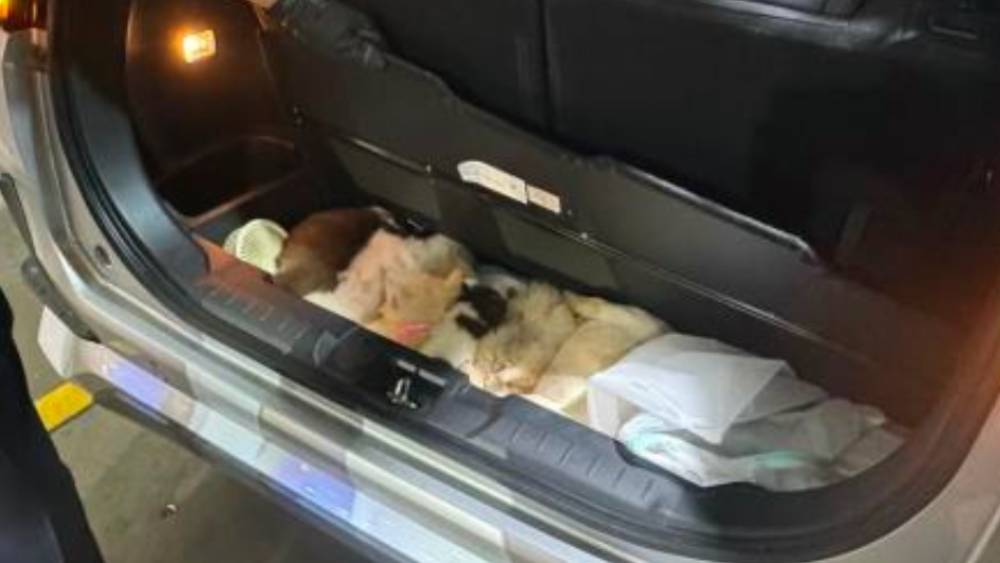
In another case, a Malaysian man tried to smuggle seven puppies and one kitten through Woodlands Checkpoint.
The animals had been hidden in a modified car boot compartment.
Tragically, six of them later died after contracting Canine Parvovirus.
He was sentenced to 44 weeks’ jail.
Separately, a man was caught with a live Asian arowana at Tuas Checkpoint and sentenced to nine months’ imprisonment.
The arowana—also listed under CITES Appendix I—was intended for delivery within Singapore.
Investigations revealed that the man had smuggled arowanas on at least ten previous occasions.
So far in 2025, the eight uncovered smuggling cases involve a mix of dogs, cats, and wildlife, including species protected under CITES.
Investigations into these cases are ongoing, according to NParks and ICA.
NParks and ICA emphasised that smuggled animals are often subjected to inhumane conditions, including cramped and poorly ventilated enclosures.
Some animals are sedated to suppress movement and noise during transportation, leading to health issues, injuries, or death.
Detection Through Technology and Training
ICA officers are trained to detect suspicious behaviour and vehicles, and are supported by advanced technologies such as mobile x-ray scanners, which help uncover hidden compartments in vehicles.
Intelligence analysis is also used to flag vehicles for checks, even if there are no visible signs of illegal activity.
NParks noted that these capabilities have strengthened efforts to intercept smuggling attempts at land checkpoints.
Online and Offline Wildlife Trade Also Targeted
Beyond physical borders, NParks actively monitors online and offline markets.
Over the past two years, operations across more than 30 locations in Singapore led to the seizure of over 240 wildlife specimens.
Some offenders had advertised exotic animals—prohibited as pets or for sale in Singapore—on platforms such as Telegram.
Many of the seized animals were protected under CITES.
NParks and ICA reiterated the Government’s “zero-tolerance stance” on illegal pet and wildlife trade.
A whole-of-government, multi-pronged approach is in place, involving cooperation with local law enforcement, international partners, and civil society groups.
Public Urged to Adopt Responsibly
Authorities called on the public to avoid supporting illegal animal trade.
Potential pet owners are urged to adopt animals from welfare groups or purchase only from licensed pet shops.
“Pet owners, businesses and the public have a part to play and a shared responsibility to safeguard animal health and welfare by not contributing to the demand for illegally imported animals,” NParks stated.
The agency also warned that animals sold through unlicensed sources or social media platforms may pose public health risks and fail to meet basic welfare standards.
Members of the public with information about illegal pet trade or smuggling activities are encouraged to report via the NParks website at www.avs.gov.sg/feedback or call the Animal Response Centre at 1800-476-1600.
Under the Animals and Birds Act, first-time offenders who import animals or birds without a licence may face a fine of up to S$10,000, imprisonment of up to 12 months, or both.