Faishal Ibrahim condemns Critical Spectator post for downplaying Palestinian suffering
Acting Minister-in-charge of Muslim Affairs Faishal Ibrahim has condemned remarks by Facebook page Critical Spectator as “gravely concerning” and “divisive”, defending former president Halimah Yacob and urging unity amid the humanitarian crisis in Gaza.


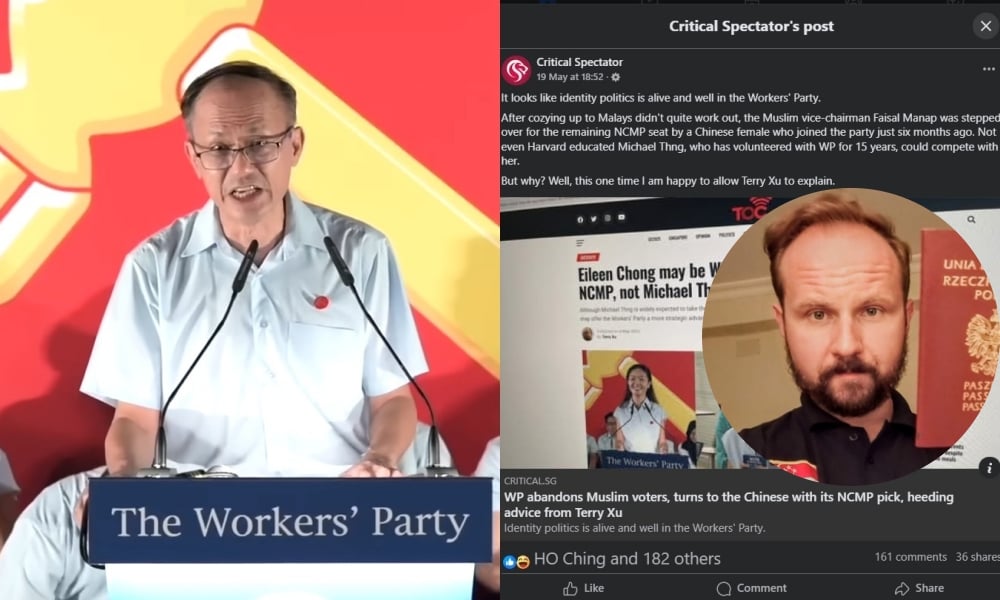
Acting Minister-in-charge of Muslim Affairs Faishal Ibrahim has sharply criticised comments made by the Facebook page Critical Spectator, saying they "minimise the suffering of Palestinians" and risk fuelling division in Singapore’s multicultural society. The senior minister of state issued his statement on 23 May, the same day he was sworn in as a Cabinet member. He expressed deep concern over the remarks made by Critical Spectator, which is run by Polish national Michael Petraeus. The post, published on 23 May, was a response to a Facebook statement by former president Halimah Yacob. In it, Halimah had described Israel’s blockade of Gaza as a "humanitarian catastrophe" and warned that silence in the face of such actions amounted to complicity. Petraeus, commenting via Critical Spectator, responded by accusing Halimah of selective outrage, claiming she had failed to comment on crises in Sudan, Yemen, Libya, or Myanmar. He went as far as to say Halimah was "complicit in the starvation of 3 million children in Sudan" due to her silence on those matters. Associate Professor Faishal strongly defended Halimah’s position and character, calling her "a deeply respected national figure" whose concerns reflected the compassion and moral courage of many Singaporeans. "While it is valid to draw attention to suffering in other parts of the world, we should reject any statement that minimises the suffering of Palestinians," he stated. He also stressed the importance of maintaining unity in Singapore, warning that divisive rhetoric, whether from local or foreign sources, must not be allowed to undermine the mutual respect in society. "In times like these, we need more understanding, not division," he wrote. "We must never allow dismissive or divisive rhetoric to erode the mutual respect and unity we have worked so hard to build." Prof Faishal reiterated that the Singapore government has consistently advocated for a humanitarian ceasefire, protection of civilian lives, and support for the Palestinian people's right to a homeland. He further noted that many in Singapore’s Muslim community and across other communities feel deeply about the ongoing crisis in Gaza and continue to express solidarity with those affected. In the original post by Halimah, she had said: “Keeping quiet makes us complicit in the violations of international humanitarian laws and encourages similar aggressions elsewhere. Our world is all the poorer for it.” Petraeus took issue with the idea of complicity by silence, arguing that Halimah had not made similar statements about other humanitarian crises. He accused her and global media outlets of prioritising Palestinian suffering over other global tragedies, claiming, “Out of all of the victims of wars and disasters in this world, they deserve the least of our attention, support or even talk.” Petraeus also contended that the suffering in Gaza was self-inflicted, blaming Palestinian support for Hamas as the root of the crisis. He contrasted this with crises in countries like Sudan and Yemen, where he argued the victims were more clearly innocent.