Malaysia to send delegation to United States by end-April for talks on new 24% tariffs
Malaysia will dispatch officials to Washington by the end of April to address the newly imposed 24% US tariff on certain Malaysian goods, aiming to avoid retaliation and seek mutual understanding, says Finance Minister II Datuk Seri Amir Hamzah Azizan.
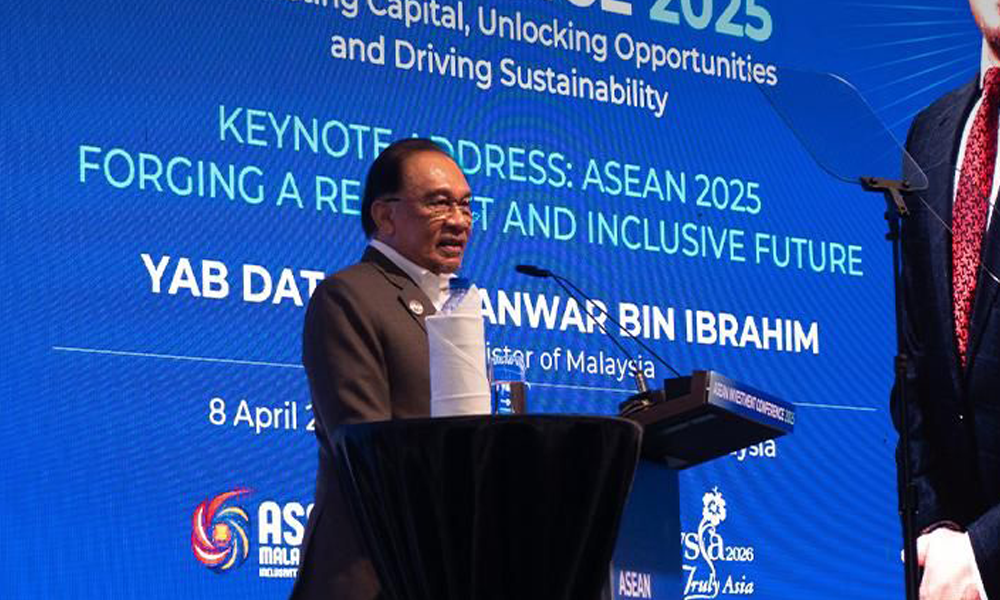

Malaysia will send a delegation of senior officials to the United States by the end of April to engage in discussions regarding new US tariffs targeting Malaysian goods, Finance Minister II Datuk Seri Amir Hamzah Azizan confirmed on 8 April 2025.
Speaking on the sidelines of the Asean Investment Conference 2025 in Kuala Lumpur, Amir Hamzah urged calm over the issue and emphasised the government’s intention to manage the matter diplomatically and constructively.
“We will go to the United States to discuss in the right way to have a better understanding and to find a better outcome,” he said, stressing that the visit aims to position Malaysia's trade narrative positively.
The 24% import tariff, set to take effect on 9 April, was announced by US President Donald Trump on 3 April. It is part of a broader policy targeting nations with significant trade surpluses with the United States.
While not all Malaysian exports are subject to the new duties, the affected segments have prompted urgent bilateral and regional responses. The move impacts not only Malaysia but also other Asean nations with similarly significant trade relationships with the US.
Prime Minister Datuk Seri Anwar Ibrahim, speaking at the same conference, announced that Malaysia, as the current Asean chair, would coordinate a regional approach to the tariffs and lead efforts to engage US policymakers.
“There may be limited room to revisit the underlying intent, but there is still scope for adjusting the policy’s implementation,” said Anwar in his opening speech at the Asean Investment Conference.
He warned that the global trading system is facing extraordinary pressure, adding, “We are witnessing the fraying of the global order. Therefore, Asean must rely more on itself.”
In recent days, discussions have already begun at the regional level. On 7 April, US Treasury Deputy Assistant Secretary for Asia Robert Kaproth met with Asean finance and central bank officials during the US Treasury-Asean Finance and Central Bank Deputies’ Meeting.
According to a post by Malaysia’s Finance Ministry on social media platform X, the meeting allowed Asean officials to raise concerns in a closed-door setting with US representatives.
Although tariffs were not officially on the agenda, they became a central topic during the 12th Asean Finance Ministers’ and Central Bank Governors’ Meeting, which commenced the same day.
Amir Hamzah indicated that Malaysia does not plan to introduce retaliatory tariffs. Instead, it will prioritise diplomacy, trade diversification, and stronger cooperation within Asean.
“Sometimes you need a trigger and this is a trigger,” he said, referring to the tariffs as a catalyst for deeper regional collaboration and the search for new trade partners.
He added that despite the varying levels of development and tariff exposure among Asean countries, the bloc remains united in its commitment to free trade.
Malaysia’s stance reflects a strategic preference for stability and dialogue amid an increasingly volatile global economic environment.
According to US authorities, the tariffs form part of a reciprocal trade policy intended to address trade imbalances. However, some industry analysts have warned of possible disruptions to global supply chains and additional pressure on emerging economies.
The planned visit by Malaysian officials to Washington will aim to limit the potential economic fallout and reinforce Malaysia’s commitment to cooperative international trade.
Further statements are expected from both governments in the coming weeks as dialogue progresses.