Death toll from Myanmar earthquake rises to 694 as rescue operations continue across region
The death toll from the 7.7 magnitude earthquake in Myanmar on 28 March has surged to 694, with more than 1,670 injured. The disaster caused widespread destruction, with damage reported as far as Thailand and China. Aid efforts are underway amid ongoing aftershocks and civil conflict.
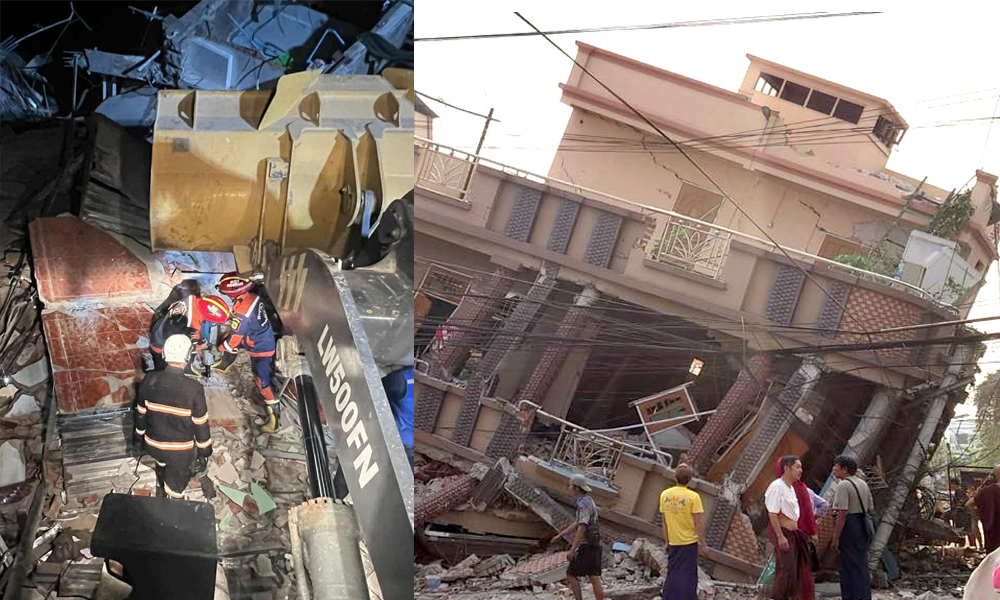

A devastating 7.7 magnitude earthquake struck central Myanmar at 12.50pm local time on 28 March 2025, killing at least 694 people and injuring more than 1,670, according to a statement by Myanmar’s ruling junta on 29 March.
The earthquake caused extensive destruction across the country and was felt in several neighbouring nations.
The epicentre was located just outside Mandalay, Myanmar’s second-largest city, which has a population of approximately 1.5 million.
The United States Geological Survey (USGS) reported a shallow depth of 10 kilometres, contributing to the extensive surface-level destruction.
The USGS estimated that the final death toll may exceed 10,000, with many buildings in densely populated areas near the epicentre collapsing.
Early estimates from the military government had not included figures from Mandalay, which has since been confirmed as one of the hardest-hit areas.
In addition to structural damage, religious and historical sites were also affected. In Mandalay, the New Masoeyein Monastery collapsed, and the Ava Bridge partially fell into the Irrawaddy River.
In Pindaya, around 70 miles from the epicentre, multiple century-old stupas were damaged.
Widespread damage was reported in Myanmar’s capital, Naypyitaw, and in five other regions, prompting the military government to declare a state of emergency.
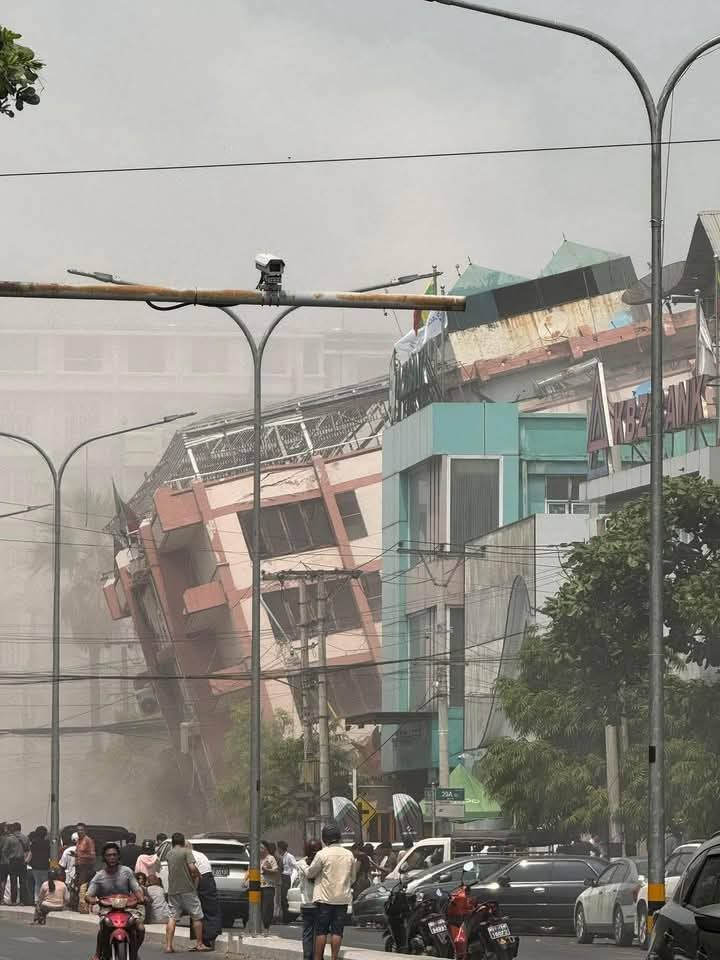
The government appealed for international assistance, stating its willingness to cooperate fully with foreign aid agencies.
General Zaw Min Tun, a spokesperson for the junta, announced that Myanmar would welcome humanitarian aid and that arrangements were being made to coordinate support with international agencies.
The United Nations allocated US$5 million for initial relief efforts. UN Secretary-General António Guterres confirmed that emergency support was being mobilised to assist affected communities.
In Thailand, the effects of the earthquake were also deadly. A 33-storey government building under construction in Bangkok collapsed, killing at least eight people and leaving dozens more missing.
Authorities believe the missing individuals are part of a 320-person construction crew. Prime Minister Paetongtarn Shinawatra declared Bangkok an area of emergency and advised residents to evacuate tall buildings amid ongoing aftershocks.
The earthquake was felt in Bangladesh, southern China, and Vietnam. Chinese state media reported injuries in the border town of Ruili, although precise figures were not released.
Hospitals in Mandalay struggled to cope with the surge in casualties.
At Mandalay General Hospital, medical staff ran short of basic supplies such as cotton swabs, and patients were treated outdoors under extreme heat, some still connected to IV drips and oxygen tanks.
Communication outages have hampered coordination of relief, with internet and phone lines disrupted in several affected areas.
Myanmar’s healthcare system, already under strain due to ongoing civil conflict, was further overwhelmed. The country remains one of the most dangerous places globally for health workers, with the military government having cracked down on the medical community since seizing power in 2021.
International aid efforts are underway. China, Russia, India, and Malaysia have all dispatched rescue teams and supplies. India sent medical teams and essential supplies, while Russia deployed 120 rescue workers.
Malaysia confirmed it would send 50 personnel to assist operations in worst-hit areas.
Despite the response, many affected communities remain inaccessible due to collapsed infrastructure, ongoing conflict, and limited resources. The Myanmar junta currently controls only around 20 percent of the national territory, complicating aid delivery.
In Mandalay, residents spent the night on the streets, too fearful to return home amid ongoing aftershocks. Others slept in cars or temporary shelters.
The psychological toll of the disaster has deepened an already dire humanitarian crisis, with nearly 20 million people previously estimated to lack sufficient food or shelter.
Myanmar lies in a seismically active region where the Indian and Eurasian tectonic plates converge.
This quake is among the most powerful in Southeast Asia in the past century.
By comparison, a 6.8 magnitude earthquake in eastern Myanmar in 2011 killed more than 70 people.
The situation remains fluid, and authorities continue search and rescue efforts in both Myanmar and Thailand.
Officials caution that the full scale of damage and loss may not be known for days, particularly in remote and conflict-affected areas.