Netizens react as Minister Grace Fu compares S$18 pasta to S$5 hawker wanton mee
"$20 pasta vs. $5 wanton mee?" Minister for Sustainability and the Environment Grace Fu’s remarks spark debate, but netizens say hawker rental costs—not just food prices—are the bigger problem.
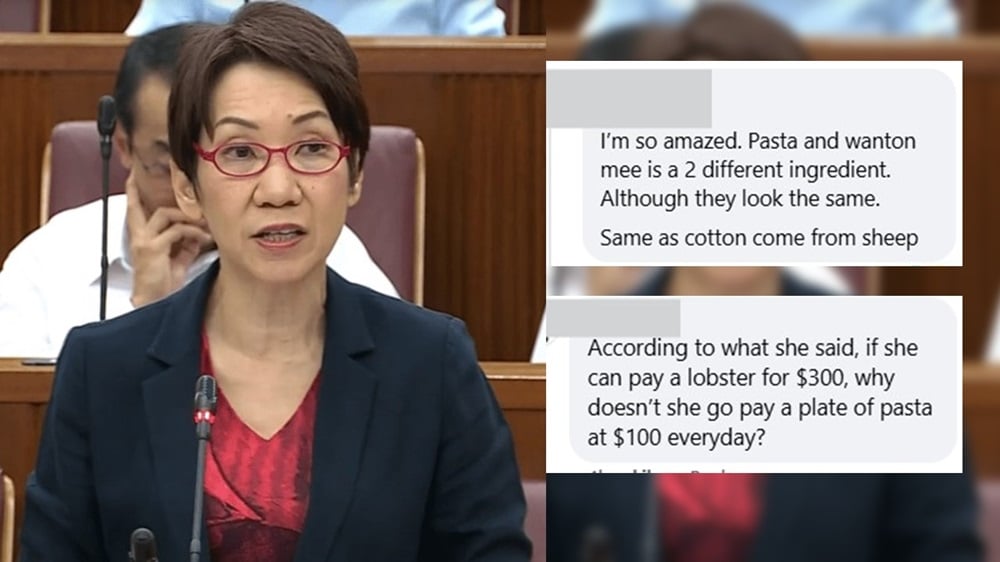

Minister for Sustainability and the Environment Grace Fu said on 25 March that people are willing to pay $18-$20 for pasta at restaurants, but are not as willing to spend $5 on wanton mee from a hawker.
Fu made the remarks during an interview with CNA, where she discussed how Singapore could sustain its hawker trade, noting that younger generations are less inclined to enter the industry.
One of the ways the minister suggested is to "really treat our hawkers better" by recognising the value of their food.
"Is there a way for us to share a bit more with the food cost? I always think that if you're prepared to pay S$18 S$20 for a pasta, why are you not prepared to pay S$5 for a wanton mee?" she asked.
Fu noted that hawkers find it difficult to increase their prices, because consumers continue to expect cheap meals from hawker stalls despite increasing operational costs.
She underscored the need for an equilibrium between patrons, hawkers, and the government--suggesting that all three parties should have a shared understanding of their roles in sustaining the hawker trade.
"What's the role of the patrons? What's the role of the government in providing facilities like this? What's the role of hawkers in providing affordable, tasty, delicious food? I think this has to come to equilibrium that's acceptable to all three parties," she said.
Fu also pointed out that while hawkers do adjust their food prices, such changes only happen once every five to ten years.
High rental costs 'kill hawkers'
Netizens commenting on CNA's video criticised the minister's remarks, with many arguing that the focus should be on rental costs rather than how much consumers are willing to pay.

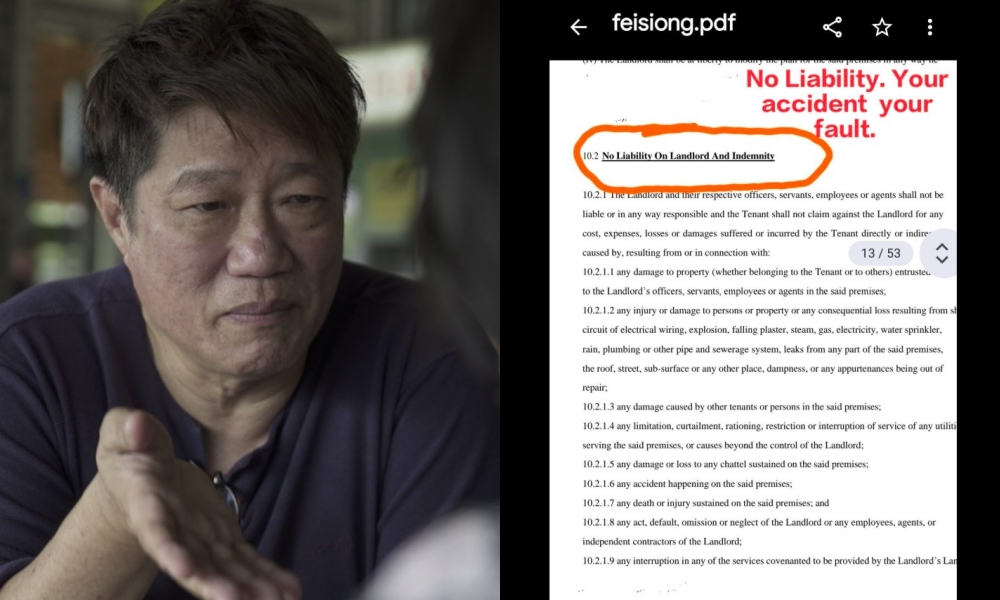
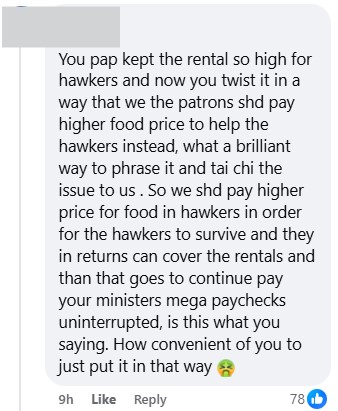
A commenter wrote that the real issue facing hawkers is the high rental costs. The user criticised Fu for trying to shift responsibility onto patrons by suggesting they pay higher food prices to support hawkers.
"So we shd pay higher price for food in hawkers in order for the hawkers to survive and they in returns can cover the rentals and that goes to continue pay your ministers mega paychecks uninterrupted, is this what you saying," the user wrote.
One commenter argued that high rental costs are the main reason hawkers struggle, pointing to the many closed stalls in coffee shops.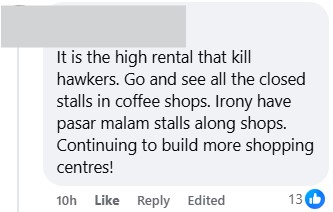
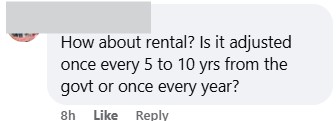
One user took aim at Fu's remarks that hawkers don't often adjust food prices. The user asked if rental costs are also adjusted every five to ten years or if they increase every year.
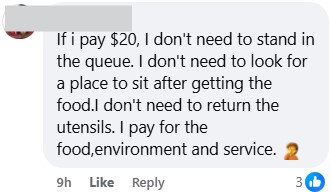
Pasta vs Wanton Mee
One commenter highlighted the differences between paying $20 for pasta and buying hawker food, noting that consumers are willing to pay such prices at restaurants not just because of the meal, but also the dining experience—such as skipping queues and getting table service.
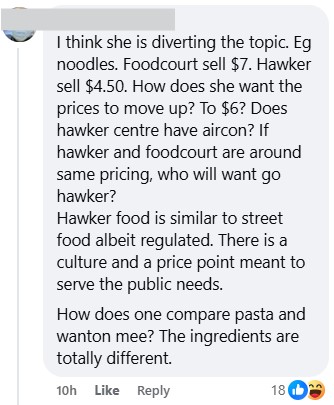
One commenter wrote that the minister was diverting the topic, pointing out that hawker stalls do not offer the same amenities as food courts.
The user also questioned the minister's comparison of wanton mee and pasta, given that the two dishes use different ingredients, which affect their overall cost.
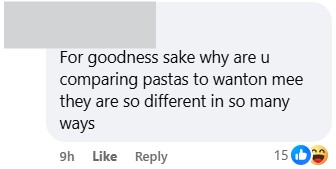
Another user asked why the minister compared pastas to wanton mee, saying "they are so different in so many ways."
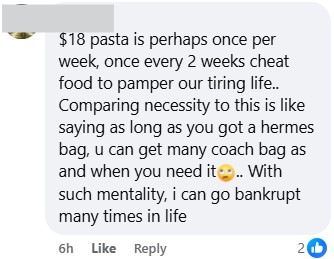
One user commented that spending $18 on pasta is an occasional indulgence rather than a daily expense and should not be compared to hawker food.
"Comparing necessity to this is like saying as long as you got a hermes bag, u can get many coach bag as and when you need it," the user wrote.
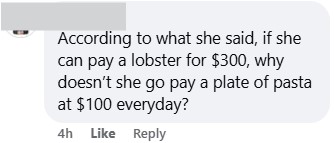
One user questioned the minister’s logic, arguing that by the same reasoning, if someone can afford a $300 lobster, they should also be willing to pay $100 for a plate of pasta every day.
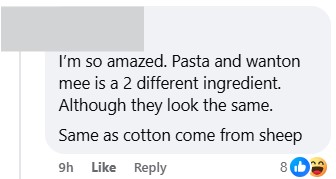
Another commenter said they were "amazed" by the minister's logic in comparing pasta to wanton mee, as the two dishes are made from entirely different ingredients.
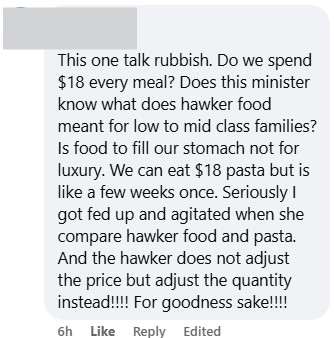
One commenter stated that hawker food is meant for low- to middle-income families as an affordable daily necessity, "not a luxury" like pasta.
"We can eat $18 pasta but is like a few weeks once. Seriously I got fed up and agitated when she compare hawker food and pasta," the user wrote.
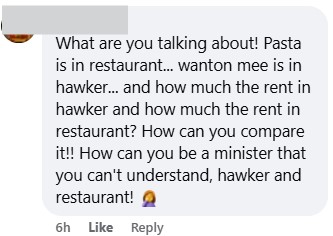
One commenter criticised the minister’s comparison between restaurant and hawker food, questioning how she could overlook the big difference in rental costs between the two.
'This is not a game of cards, this is our lives"
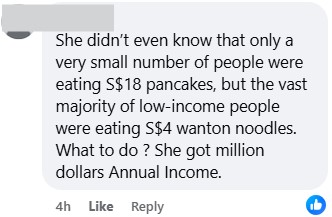
Some commenters pushed back against Fu's question about why some people are unwilling to pay S$5 for wanton mee, arguing that the issue is not a matter of choice but affordability.
They asked if the minister had ever considered that some people may have tight budgets and that not everyone could afford $5 wanton mee.
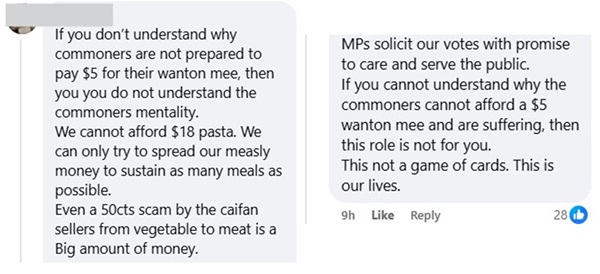
One commenter criticised the minister for not understanding the struggles of lower-income individuals, pointing out that, unlike those who can afford S$18 pasta, they have to stretch their "measly money to sustain as many meals as possible."
"If you cannot understand why the commoners cannot afford a S$5 wanton mee and are suffering, then this role is not for you," the user wrote. "This not a game of cards. This is our lives."
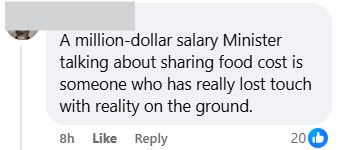
Some commenters said that Fu's suggestion for consumers to share the burden of rising food costs showed that the minister "has really lost touch with reality on the ground."