The illusion of uncertainty: What ST won't say about the GE timeline
ST’s latest report speculates on a possible May election, yet its own newsroom should already have clues—reporters' leave for April and May has been withheld. Rather than engaging in speculation, why not just state the facts? The public deserves transparency, not vague ‘expert’ guesswork.
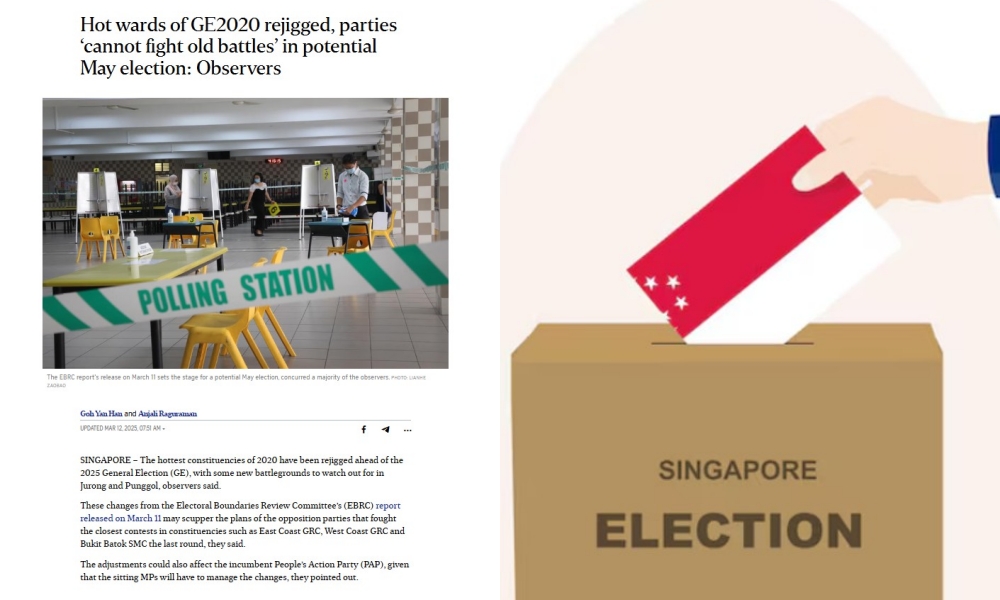

The Straits Times’ (ST) latest report, "Hot wards of GE2020 rejigged, parties ‘cannot fight old battles’ in potential May election: Observers," reeks of deliberate obfuscation and media conditioning.
It is absurd that the paper pretends to analyze expert speculation on an election timeline when the newsroom itself likely holds the clearest indicator of when the polls will be held—whether their leave has been blocked.
If, as ST’s so-called experts suggest, a May election is on the horizon, then surely by now, newsroom staff would already know if their leave in that period has been denied.
Any journalist worth their salt would realize that election season means being on standby.
So why does this report dance around the issue instead of acknowledging the obvious?
TOC has already heard from reporters in mainstream media that their leave has been withheld for the period of April and May.
Rather than engaging in this pantomime of uncertainty—parading 'expert opinions' about when Parliament might be dissolved—ST could simply state whether its own reporters have had their leave applications rejected or put on standby.
That would offer a far clearer signal than all this speculative posturing.
But of course, doing so would expose the artificial nature of this ‘guesswork.’
The media’s role in such instances is not to genuinely inform, especially considering that SPH Media Trust is being funded by the government to the tune of S$900 million over five years, but to gradually prepare the public for what is already known in certain circles.
The repeated references to ‘historical trends’ and ‘expert guesses’ are merely part of the ritual of soft-conditioning—easing citizens into the reality of a snap election, while feigning ignorance of the actual decision-making process already in motion.
This charade is dishonest. It insults public intelligence by pretending that even the most well-connected reporters remain in the dark.
The truth is simpler: if an election is imminent, newsrooms would have been briefed.
And if they truly wanted to serve the public interest, they would drop the act and be upfront about it.