Students condemn police raids over Gaza memorial as intimidation; SPF says actions were lawful and necessary
Several students have condemned police raids on their homes over a Gaza war memorial, calling them intrusive and intimidating. They alleged a lack of prior notice, privacy violations, and device seizures. The police defended their actions as lawful, stating that investigations were necessary under the Public Order Act.

The homes of several university students were reportedly raided by police on 27 February as part of an ongoing investigation into a “no-person” memorial held for victims of the Gaza war.
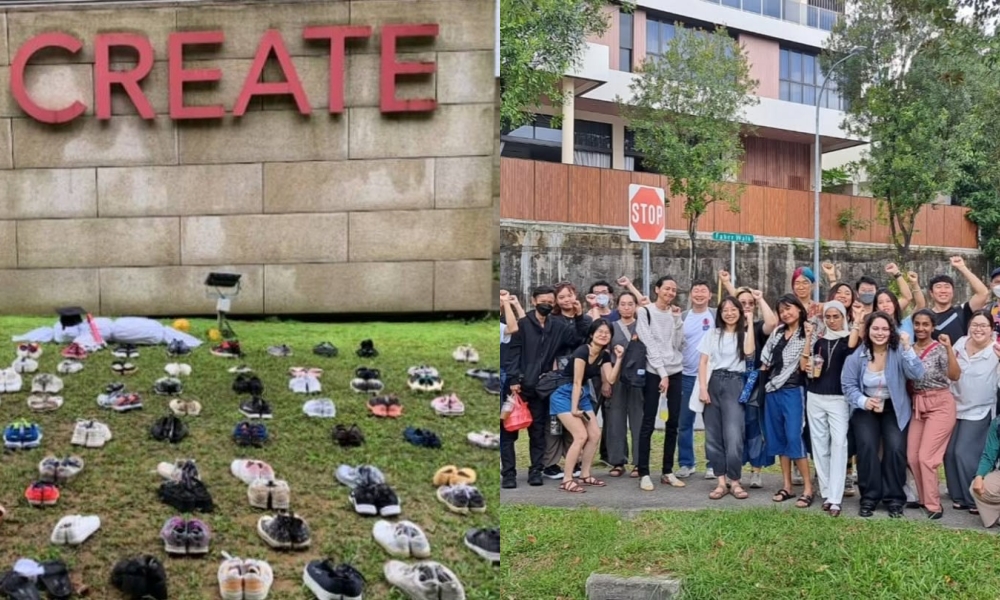
The memorial, organised by the student group Students for Palestine Singapore, took place on 13 January outside the Campus for Research Excellence and Technological Enterprise (CREATE) building.
It featured 124 pairs of shoes and a white burial shroud displayed in a photograph, symbolising lives lost and calling for justice.
According to an Instagram post by the group on 27 February, police officers from Clementi Division arrived unannounced at the homes of six students and alumni between 7-8 am.
View this post on Instagram
Police confirm investigations, defend actions
In response to media queries, the Singapore Police Force (SPF) confirmed on 7 March that they visited the residences of six individuals aged between 21 and 28 on 27 February to investigate their alleged involvement in the memorial, which they described as a “staged memorial”.
The police clarified that:
- Three individuals who were at home preferred to have their statements recorded at their residences.
- One individual requested to be interviewed the following day, and this was conducted on 28 February at Clementi Police Division.
- Two others were not available, and a written notice was issued for them to attend an in-person interview at Clementi Police Division the next day.
SPF confirmed that both individuals complied and attended the interview on 28 February.
Regarding the seizure of devices and clothing, the police stated that communication devices believed to contain evidence related to the offence and clothing suspected to have been used in the incident were taken.
"This is done in many investigations, because such devices often contain relevant evidence," SPF explained.
The police also noted that a report had been lodged over the 13 January incident and emphasised that while individuals are free to express opinions, public assemblies require a police permit under the Public Order Act 2009.
SPF confirmed that no permit was obtained for the vigil, which involved no people, and investigations are ongoing into potential offences under Section 16 of the Public Order Act.
Under the Criminal Procedure Code 2010, SPF stated that the police have the authority to conduct searches and inspect devices linked to an offence as part of standard investigation procedures.
Seizure of personal belongings raises concerns
Despite the police’s justification, the affected students claimed that the manner of the searches was intrusive and intimidating.
According to the student group’s statement, three to four officers were present at each location, conducting searches and seizing personal devices and clothing.
"The officers insisted on entering and searching their homes, and even seized their devices. From what we know, at least one person's clothes, four phones, and two laptops have been confiscated, along with their SIM cards. Furthermore, an individual's social media accounts have been suspended," the group claimed.
They described the police response as disproportionate, stating: "This reeks of an attempt to intimidate students into silence, and we condemn the police’s disproportionate response to students’ act of grief."
The students also highlighted the disruption caused by the raids, particularly during mid-term season.
"It is mid-term season, an intense period of the school calendar as students work on multiple assignments. One of them even had an exam today."
"Losing their devices means losing their files, contacts, and data, including information crucial for final-year projects. How are students supposed to strive for 'academic excellence' when they cannot contact their group mates, cannot access their learning materials, and cannot continue their work?"
They questioned the legality of the searches and the lack of access to legal rights during police interviews.
Additionally, they criticised Singapore’s continued diplomatic ties with Israel, citing ongoing violence in Gaza.
Student accounts raise further concerns over police conduct
Two students subjected to the raids have shared detailed accounts of the incident, raising concerns about police conduct, lack of prior notice, and invasion of privacy.
First student’s account
One of the students subjected to the raid has shared a detailed account of the incident, raising concerns about police conduct, lack of prior notice, and invasion of religious privacy.
According to the student, police officers arrived at her home at approximately 7:45 am without prior calls or notifications. She recounted being abruptly woken up by her mother, who informed her that police officers from Clementi Division were at the door.
She requested to reschedule the interview due to prior commitments, but while one officer initially agreed, another—taking orders via phone or walkie-talkie—insisted that the interview proceed immediately.
Under the CPC and Public Order Act, police officers have broad investigative powers, including entering premises, conducting searches, and seizing evidence without prior notice or a warrant under specific conditions, as shared with the media in its statement.
However, the student raised concerns about how these powers were exercised, particularly regarding privacy and religious sensitivities.
She stated that she was still groggy when the questioning began, noting that she did not initially realise the officers’ lanyards acted as warrants. Officers reportedly showed her two photographs and a blog post, questioning her about them.
During the questioning, she reportedly commented, "How is this (the shoe post) any different than what happened in Germany? We learned about the Holocaust, and yet we are letting this happen in real time. I get it, you guys are working and trying to understand, but who are you guys protecting?"
She further alleged that the police proceeded to search her room without explaining the need for a raid. At the time, her sister was still asleep. Despite her request to wake her sister up, officers allegedly entered the room, exposing her sister—who wears a hijab—to male officers while she was not covered.
"I was enraged at this fact mainly because we don the hijab. No opposite gender is allowed to see us without the hijab except for close relatives," she stated.
The student also reported that her phone and laptop were confiscated. When she asked to message her friends and manager to inform them of the situation, an officer reportedly responded with a snide remark, "What? You have something to hide ah?"
She was eventually given Investigation Officer (IO) Song Wei Jie's contact details and told to request numbers through him. She questioned why the officers could not provide the numbers on the spot.
Additionally, she raised concerns over male officers accessing her phone’s gallery, which contained personal photos of herself and her family without their hijabs. While a female officer was reportedly present, the male officer dismissed her discomfort, saying, "Ya, she will be looking at it with me."
She concluded her account by stating, "I get that they are doing their jobs since they have to answer to the higher-ups, but a little heads-up would be good, and at least respecting my religion by not looking at my photos of me not wearing hijabs."
Second student recounts early morning police raid and intimidation
Another student subjected to the 27 February police raids has shared their experience, highlighting concerns over lack of prior notice, intimidation tactics, and uncertainty over legal rights during questioning.
According to the student, police arrived at their home at approximately 7:20 am, ringing the doorbell repeatedly while they were still asleep. Upon opening the door, the student was met with officers who immediately entered the home, sat at the dining table, and began setting up their computers and documents. The student was told that they could only eat after the questioning was completed, leaving them feeling pressured and disoriented.
The student stated that no explanation or warrant was provided before officers proceeded to search their room. When they asked why their phone and hat were being seized, police simply responded that the items were "needed for the investigation" but did not provide further clarification.
The student was questioned on the spot, with officers asking where they were on the day of the memorial, what they were carrying, what they were wearing, and who they were with. However, they noted that they were unaware of their legal rights during the questioning, which left them uncertain about how to respond.
When the student attempted to withhold answers by stating "no comment," officers allegedly threatened them with obstruction of justice—a claim the student later realised was false.
Public support and police investigation
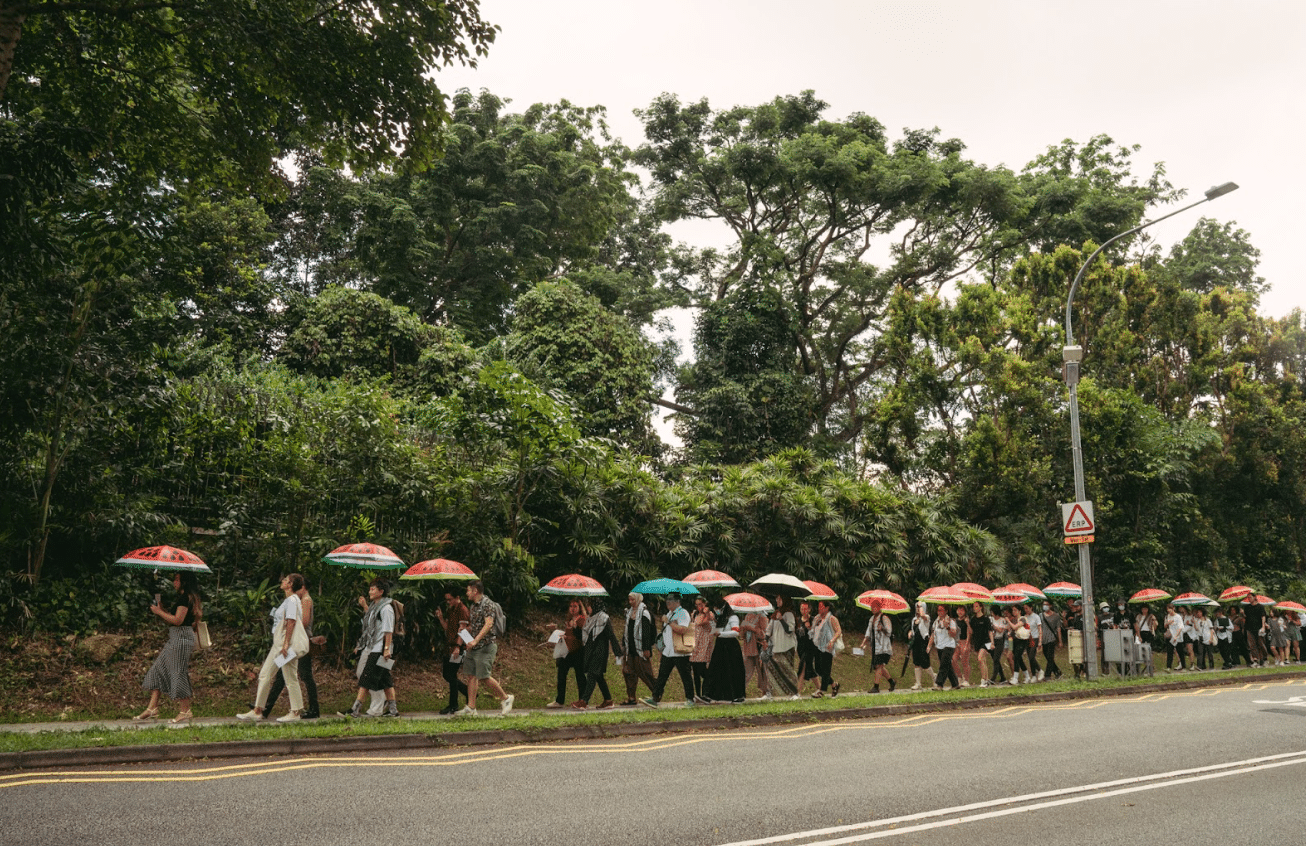
On 28 February, another Instagram post from the group showed photos of at least 32 members of Singapore’s civil society gathering at Clementi Police Division Headquarters in support of three students and alumni who were called in for questioning.
The group expressed frustration over the state’s use of public resources to investigate students while maintaining diplomatic ties with Israel.
They reiterated their belief that they had a right to mourn the loss of Palestinian lives.
Students for Palestine Singapore previously explained that the memorial was held outside the CREATE building because it houses a research alliance with the Hebrew University of Jerusalem.
The group claimed the university “vocally and financially supports the genocide in Gaza.”
Following the 13 January memorial, the police issued a reminder that public assemblies in Singapore are regulated under the Public Order Act 2009.
Under the law, organising or participating in a public assembly without a permit is an offence.
View this post on Instagram
While the police have provided justification for their actions, the incident has raised broader concerns over law enforcement powers, the handling of peaceful demonstrations, and the rights of individuals under investigation.
At the time of publication, the Ministry of Home Affairs (MHA) and the SPF have not responded to TOC's queries regarding the concerns and allegations raised by the students.
Mass Gathering of Limo Drivers at Changi
In another news, while the police are investigating six students for their involvement in a silent “no-person” vigil featuring only shoes and a burial shroud, they have concluded that a gathering of about 50 premium taxi drivers at Changi Airport did not constitute an offence.
Shin Min reported that on the morning of 13 February, over 100 drivers staged a strike by refusing to pick up passengers at Changi Airport to protest a new minibus service that they claimed was affecting their earnings.
However, the authorities deemed it a “pre-planned dialogue” rather than an illegal assembly.
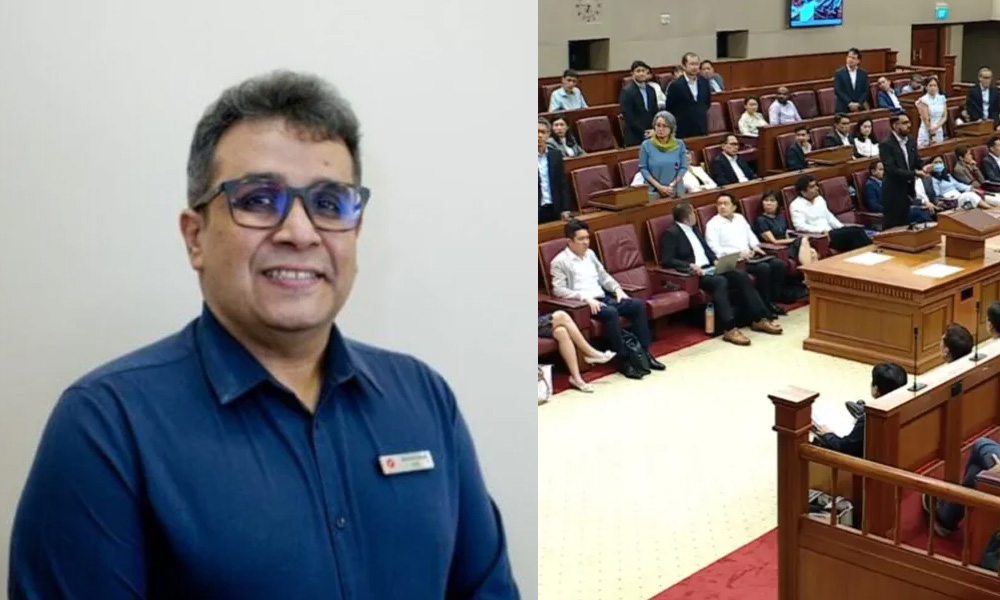
Home Affairs and Law Minister K. Shanmugam confirmed in Parliament on 4 March that no law-and-order issues had arisen from the mass gathering, and the police would not be pursuing further investigations.