Trump imposes sweeping tariffs on Mexico, Canada, and China, sparking global retaliation
US President Donald Trump has imposed a 25% tariff on Mexico and Canada, along with doubling tariffs on Chinese imports. The move, aimed at curbing fentanyl flow, has sparked retaliatory measures from affected nations. Economists warn of rising prices and trade war risks amid already high inflation.
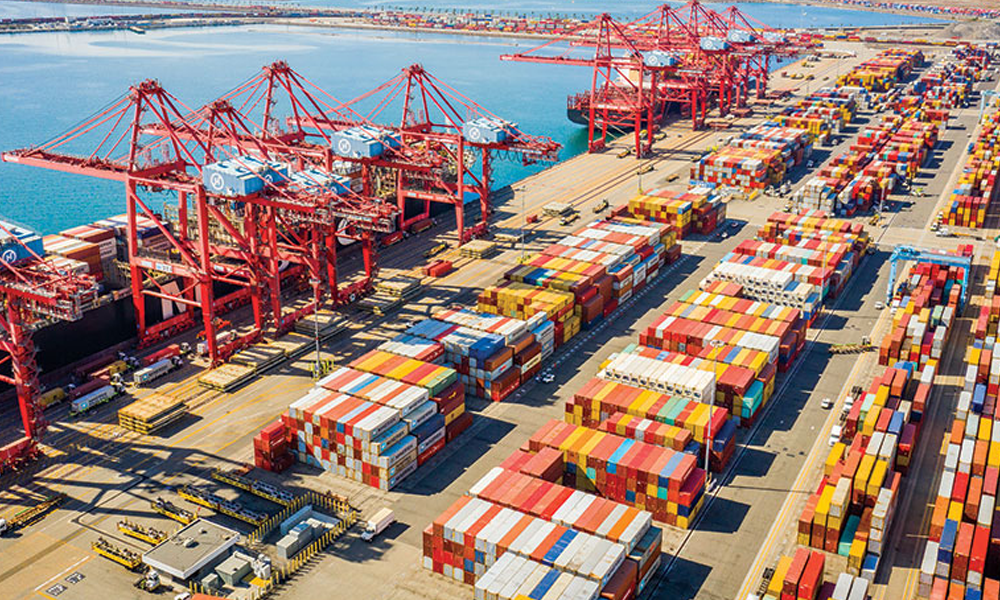

US President Donald Trump’s decision to impose a blanket 25% tariff on imports from Mexico and Canada took effect on Tuesday, alongside a doubling of tariffs on all Chinese imports from 10% to 20%.
The tariffs, according to the Trump administration, are intended to curb the flow of fentanyl into the United States.
However, the move has triggered immediate retaliatory measures from affected nations, raising concerns of a trade war and worsening economic conditions for American consumers.
The tariffs come at a time when inflation remains a pressing concern in the United States. With over 40% of all imported goods coming from Mexico, Canada, and China, the cost of fresh produce, vehicles, electronics, and other essential goods is expected to rise significantly.
While energy-related imports from Canada, including crude oil, will face a reduced tariff of 10%, most other goods will be subject to the full 25% tax.
Retaliatory actions from China, Canada, and Mexico
China responded on Tuesday by imposing a 15% tariff on key US agricultural exports such as chicken, wheat, corn, and cotton.
Additionally, a 10% tariff was placed on sorghum, soybeans, pork, beef, seafood, and dairy products. Further measures included an export ban on dual-use technology for 15 American companies, including drone manufacturer Skydio, and a halt on US lumber imports.
Speaking at a press briefing, Chinese Foreign Ministry spokesperson Lin Jian declared that China would “fight till the end” if the United States continued its tariff policies.
“The Chinese people have never feared coercion or bullying,” Lin stated, warning that US pressure tactics were a miscalculation.
Canadian Prime Minister Justin Trudeau also announced countermeasures, implementing an immediate 25% tariff on C$30 billion (US$20.7 billion) worth of US goods, with an additional C$125 billion (US$86.2 billion) in tariffs set to follow in 21 days.
Trudeau criticized Trump’s decision, stating, “This is a very dumb thing to do. We two friends fighting is exactly what our opponents around the world want to see.”
He also warned of non-tariff retaliatory actions and vowed to challenge the US measures at the World Trade Organization and under the United States-Mexico-Canada Agreement (USMCA).
Ontario Premier Doug Ford took an even stronger stance, threatening to cut off energy supplies to the United States.
“If they want to try to annihilate Ontario, I will do everything, including cut off their energy, with a smile on my face,” Ford stated, noting the eastern US’s reliance on Canadian energy.
Mexico, too, is preparing countermeasures. President Claudia Sheinbaum announced she would impose retaliatory tariffs on US imports and implement non-tariff measures, with details to be revealed on Sunday.
“No one benefits from this decision,” she said at a press conference, emphasizing that the new tariffs would hurt businesses and consumers in both countries.
Economic impact and concerns over inflation
Trump’s decision to impose tariffs comes at a precarious time for the US economy.
Recent data from the Bureau of Economic Analysis indicates that consumer spending unexpectedly fell in January, while inflation remains persistently high.
Consumer confidence has also dropped sharply, with January’s decline marking the biggest start-of-year fall since 2009.
The tariffs could further increase inflationary pressures by raising prices on essential goods.
Trump’s claims that foreign exporters bear the cost of tariffs have been widely disputed by economists, who point out that importers—often US businesses—are the ones who pay the tariffs and typically pass the cost onto consumers.
The automotive industry has already felt the impact, with stocks of major global carmakers dropping sharply. Germany’s Volkswagen saw a nearly 4% decline, while Stellantis, the maker of Chrysler and Jeep, fell by nearly 7%.
Tiffany Smith, vice president for global trade policy at the National Foreign Trade Council, expressed concerns over the tariffs’ impact on cross-border cooperation.
“Imposing tariffs on Canada and Mexico threatens to chill a collaborative effort to strengthen our shared border and risks starting a trade war with America’s closest trading partners,” Smith said.
While she acknowledged the need to address illicit activity at the border, she warned that tariffs could undermine US economic growth by increasing costs for businesses and consumers.
More tariffs to come?
The latest round of tariffs may only be the beginning. Trump and his administration have indicated that further measures are on the way.
Steel and aluminium tariffs are set to take effect on 12 March, followed by dollar-for-dollar reciprocal tariffs on 2 April. Trump has also hinted at additional tariffs on agricultural imports to boost domestic sales, a move expected to go into effect in early April.
The decision to investigate Canadian lumber tariffs could further escalate tensions.
While Trump has long argued that the US does not need Canadian lumber, imposing tariffs on it could drive up the cost of new homes—one of the key inflationary pressures affecting American families.
As the trade tensions escalate, it remains to be seen whether negotiations will ease hostilities or whether the global economy will face an extended period of economic uncertainty.
With the US economy already showing signs of strain, the impact of Trump’s tariff policy will be closely watched in the coming weeks.