UN human rights chief highlights worsening crisis in Myanmar
United Nations High Commissioner for Human Rights Volker Türk has described Myanmar’s human rights situation as one of the worst globally. He detailed escalating violence, displacement, and economic collapse, urging international action, including an arms embargo and sanctions, to address the crisis.


United Nations High Commissioner for Human Rights Volker Türk has warned that Myanmar’s human rights situation remains one of the worst in the world, with escalating violence, mass displacement, and economic collapse.
Speaking at the UN in Geneva, Türk urged international intervention, including an arms embargo and targeted sanctions, to prevent further suffering.
Türk reported that 2024 saw the highest number of civilian deaths since the military coup in 2021. At least 1,824 people were killed last year, including 531 women and 248 children, with the real number likely higher due to limited access to conflict areas.
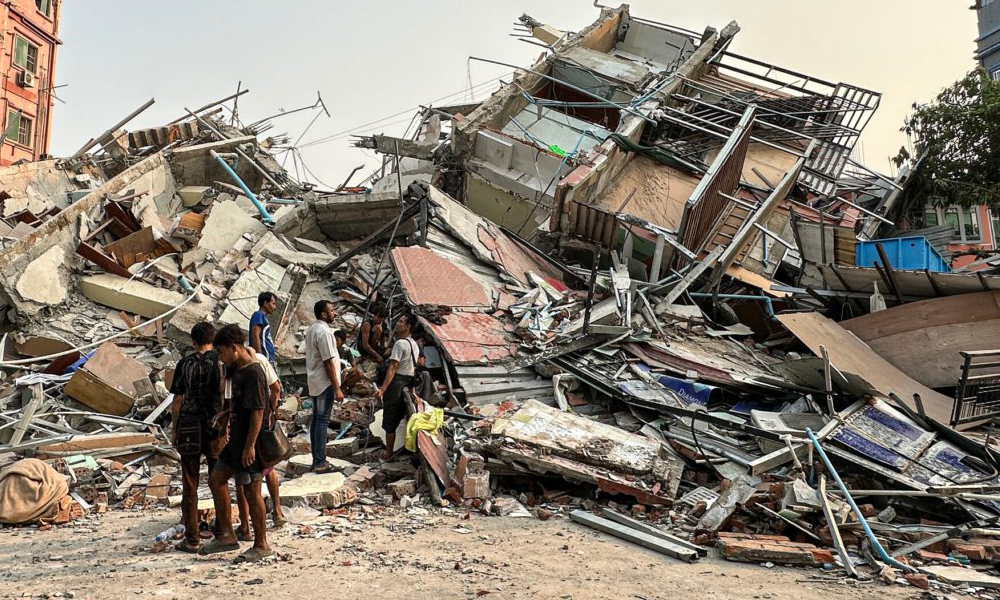
Most deaths resulted from indiscriminate airstrikes and artillery shelling by the military, which targeted civilians, schools, places of worship, and healthcare facilities.
The humanitarian crisis is severe, with 15 million people facing hunger, and up to two million at risk of famine. Over 3.5 million people are displaced, and 20 million require humanitarian aid.
Food shortages are worsening, with agricultural productivity dropping by 16% since 2021 and rice prices soaring by 47% in some regions.
Türk also highlighted extreme brutality by the military, including beheadings, torture, executions, and the use of human shields.
Civilians in conflict zones, such as Sagaing Region, suffered devastating attacks, including airstrikes and mass killings. In one incident in Budalin Township, at least 25 civilians were killed, and 1,000 houses burned in a single day.
The crisis is particularly dire in Rakhine State, where fighting between the military and the Arakan Army has caused thousands of civilian deaths and widespread displacement.
The Rohingya community remains especially vulnerable, facing continued persecution. In one incident in January, at least 40 civilians were killed, and 500 houses burned in Kyauk Ni Maw fishing village.
Tens of thousands of Rohingya fled to Bangladesh in 2024, despite the border closure. More than 8,000 people fled by sea, an 80% increase from 2023, with at least 650 dying en route.
Food production in western Rakhine is projected to meet only 20% of local needs by mid-2025, raising concerns of famine.
The economic situation is deteriorating, with Myanmar’s GDP shrinking by 17% since 2020. Inflation is projected to reach 30% in 2025, and three-quarters of the population live at or below the poverty line.
Organised crime has flourished, making Myanmar the world’s largest hub for drug production and cybercrime operations.
Türk condemned the military’s forced conscription policy, which has led to arbitrary arrests and disappearances. Men aged 18-35 and women aged 18-27 face a constant risk of being drafted.
Many young people are fleeing the country, increasing their vulnerability to trafficking and exploitation.
The UN official also cited growing international legal action against Myanmar’s leadership. In November, the International Criminal Court (ICC) sought an arrest warrant for military chief Min Aung Hlaing for crimes against humanity related to the Rohingya crisis.
An Argentinian court also issued an arrest warrant against him and other officials for their role in the 2017 violence. Meanwhile, 11 countries have joined The Gambia’s case against Myanmar at the International Court of Justice (ICJ), alleging genocide.
Türk urged stronger global action, including an arms embargo and sanctions on jet fuel and dual-use goods. He called for enhanced support for ASEAN efforts and cross-border humanitarian aid.
Emphasising the need for a political solution, he stressed the importance of including the National Unity Government, ethnic armed groups, women’s groups, and civil society in peace efforts.
He concluded by warning that funding cuts could severely impact Myanmar’s humanitarian response and urged the international community to prioritise addressing the crisis.