Sun Xueling: Difficult to track and distribute recovered scam funds due to commingling and crypto use
Responding to WP MP Gerald Giam's proposal for a scam victim restitution fund in Parliament on 28 February, Minister of State for Home Affairs Sun Xueling highlighted operational challenges in tracking and distributing recovered scam proceeds. She noted that seized funds are often mixed with other crime proceeds, cryptocurrency complicates tracing, and scammers could exploit restitution schemes.
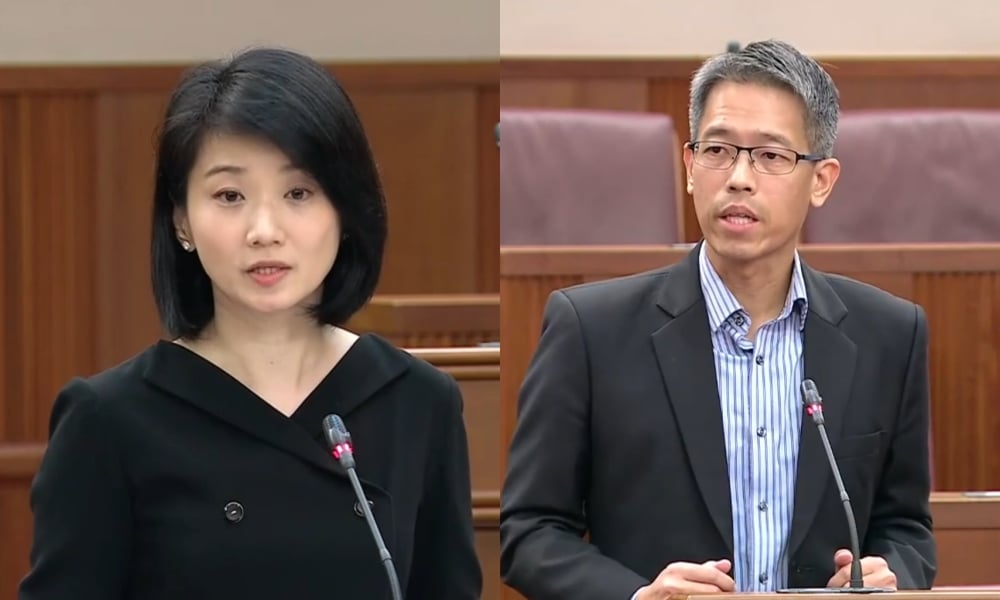

SINGAPORE: While the Singapore government is considering various proposals to help scam victims recover their lost funds, Minister of State for Home Affairs Sun Xueling highlighted that it is operationally challenging to apportion and track the amount of scam proceeds returned to victims or forfeited to the state.
She explained that seized proceeds are often co-mingled with those from other criminal activities, such as unlicensed money lending. Additionally, seized funds may not directly correspond to crimes committed in the same year.
"It would also be resource intensive, given the high volume of scam cases," Sun added.
Sun was responding to a parliamentary question filed by Workers' Party MP Gerald Giam on Friday (28 February).
Giam asked about the percentage of financial crime cases where confiscated assets are returned to victims, the proportion of seized scam proceeds forfeited to the state, and measures in place to ensure victims receive restitution before funds are transferred to the Government's Consolidated Fund.
In response, Sun explained that the Police freeze bank accounts and seize assets suspected to be proceeds of crime while investigating financial crimes.
They examine bank transaction records to determine ownership and may retain seized property for ongoing investigations or court proceedings.
If the assets are not needed, the Police apply to the Court for their return to rightful owners.
If ownership cannot be determined, a notice is published in the Government Gazette, and if no claims are made within six months, the assets are forfeited to the State.
Gerald Giam Proposes Restitution Fund for Scam Victims Using Confiscated Crime Proceeds
Giam followed up by asking whether a Government Gazette notice had been published to invite potential victims to submit claims for the recently reported S$3 billion money laundering case, and if not, when it would be published.
He also questioned whether the Government had considered establishing a scam victim restitution fund, financed by confiscated proceeds from money laundering cases, to compensate local scam victims for their financial losses.
In response, Sun acknowledged that details of the S$3 billion money laundering case were case-specific and suggested that Giam file a separate parliamentary question for further details.
On the proposal for a scam victim restitution fund, she stated that various proposals were under consideration but pointed out several operational challenges.
Challenges in Identifying Victims Due to Co-mingled and Untraceable Scam Proceeds
These include difficulties in identifying rightful claimants, as recovered funds are often mixed with proceeds from other crimes, making it hard to determine which victims should be compensated.
Sun added that in cases involving cryptocurrency, the use of cryptocurrency tumblers and mixers makes it "very, very difficult" to trace a recovered dollar to a specific victim.
"As a result, it is going to be very difficult to determine, within a consolidated fund, which victim actually has a rightful claim to the recovered monies," she said.
Sun further highlighted that scam and cybercrime victims in Singapore lost a total of S$1.1 billion in 2024, but only S$182 million had been recovered, meaning that the number of victims far exceeded the available funds, leading to only partial compensation.
"There are going to be far more claimants for the monies than there are actual proceeds recovered," she said.
She also raised concerns that scammers could exploit a compensation scheme by recruiting money mules to falsely claim restitution.
Despite these challenges, she agreed in principle that efforts should be made to recover and compensate victims.
cases involving unlicensed money lending.