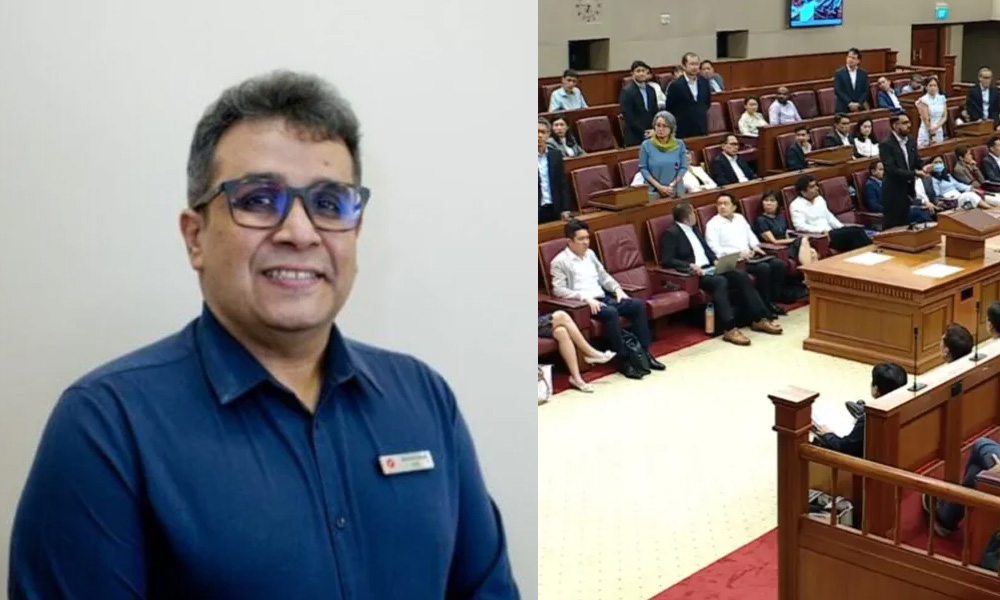
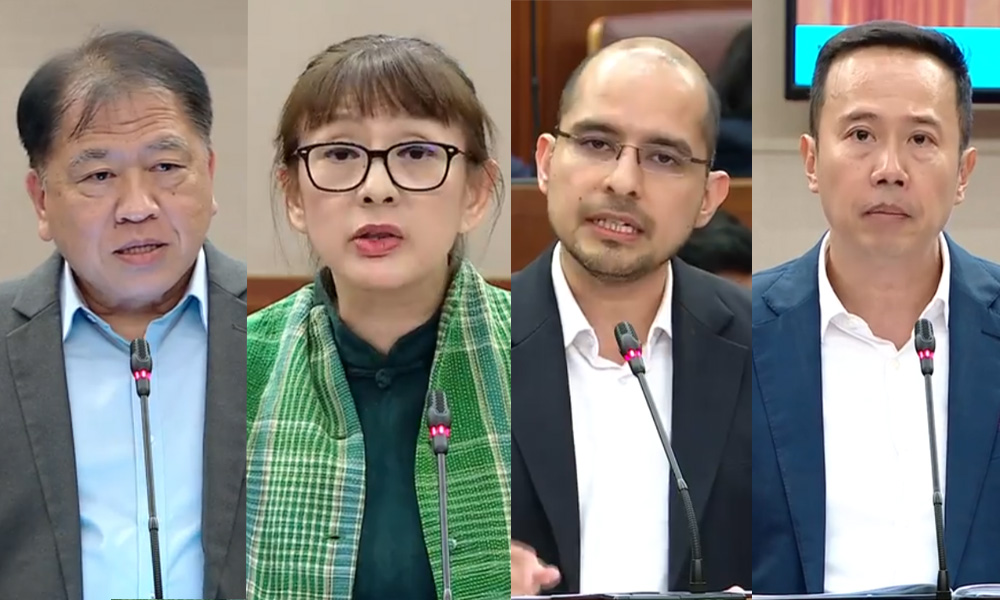
Red Dot United’s Ravi Philemon warns of impending jobs crisis, calls for universal cash transfer
Red Dot United Secretary-General Ravi Philemon has warned of a severe jobs crisis driven by automation and AI. He criticised government retraining efforts and advocated for a universal cash transfer to support vulnerable workers. His remarks highlight growing concerns over employment stability in Singapore.
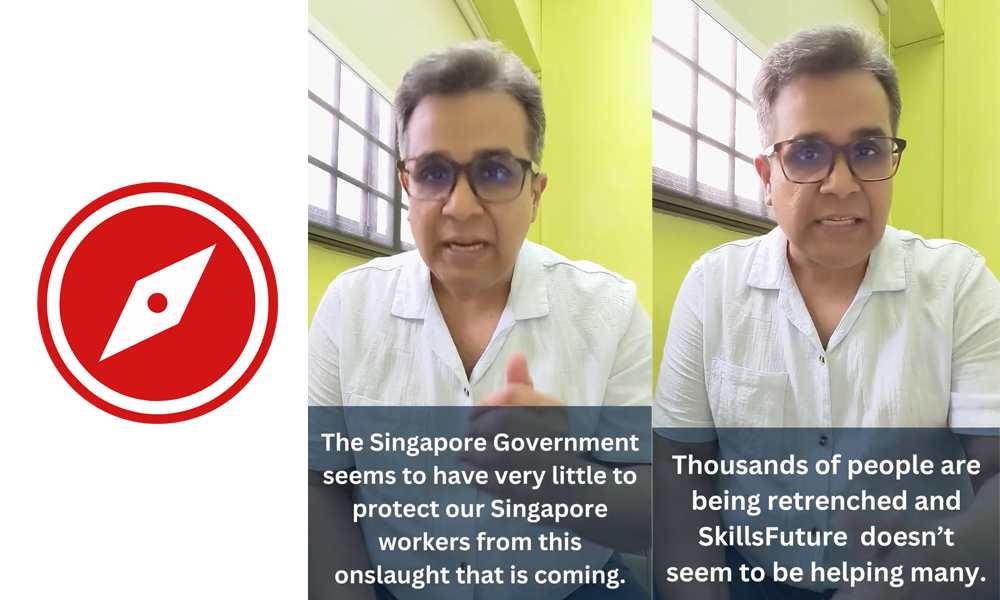

Red Dot United (RDU) Secretary-General Ravi Philemon has warned of an unprecedented global jobs crisis, citing projections that 1.2 billion people will enter the workforce over the next decade, while only 400 million jobs will be available.
In a video posted on the party's Facebook page, Philemon emphasised that Singapore, as an open economy, will inevitably face the consequences of this economic shift.
Referencing President Tharman Shanmugaratnam, who also raised concerns over the impending workforce imbalance, Philemon stressed that Singapore’s workers are at risk. He pointed to increasing retrenchments as evidence of the crisis already taking shape.
One example is DBS Bank, which is set to cut at least 4,000 jobs over the next few years due to AI-driven automation.
Philemon also questioned whether Singapore’s younger workforce truly benefits from current economic policies.
He noted that fresh university and polytechnic graduates are struggling to secure stable employment, despite reports suggesting that salaries have increased. Adjusting for inflation, he argued, real wage growth may not be as significant as it appears.
A key focus of his speech was the government’s reliance on retraining initiatives such as SkillsFuture, Industry Transformation Maps, and Jobs Transformation Maps.
He acknowledged that skills training is important but argued that existing programmes have not delivered tangible results.
Citing statistics, he noted that 40-50% of SkillsFuture participants fail to secure well-paying jobs after completing training.
"Is that a good enough number?" he asked. "If nearly half of those who retrain cannot find good jobs, then we need to be honest and reassess these programmes."
Philemon also criticised the government’s financial support for retrenched workers.
He highlighted the temporary relief measure of S$6,000 over six months (S$1,000 per month) and questioned whether this amount is sufficient for Singaporeans to sustain themselves and their families.
"I think I can safely answer for you and say it's not," he remarked.
As an alternative, Philemon reiterated RDU’s proposal for an unconditional universal cash transfer (UUCT), which was detailed in the party’s Shadow Budget released last week.
The proposal argues that traditional reskilling efforts will not be enough if jobs simply do not exist. It suggests a structured financial safety net to ensure that no Singaporean is left behind in an era of economic disruption.
The plan calls for a pilot phase providing S$200 per month to the lowest 20% of adult Singaporeans, at an estimated cost of S$1.44 billion annually.
Over time, the scheme would be expanded to cover all 2.66 million adult Singaporeans, with an estimated budget of S$6.38 billion per year.
The initiative would be funded through progressive taxation and wealth redistribution, ensuring that economic growth benefits all citizens, not just the wealthiest.
He suggested starting with a pilot programme for the lowest 20% of income earners, stating that such a policy would offer much-needed protection in an era of economic uncertainty.
"The world is changing, and we need to change our outlook to protect our workers against what’s coming," he concluded.