If the Government consistently collects more than it needs, why raise taxes? asks Louis Chua

Workers' Party MP Louis Chua has criticised the government’s persistent fiscal surpluses and questioned the urgency of raising taxes, particularly the GST hike, during the Budget 2025 debate. Highlighting an unexpected $13.2 billion surplus, he called for structural reforms in taxation, retirement adequacy, and wealth inequality instead of short-term handouts.
Featured Image
Comments
Google News

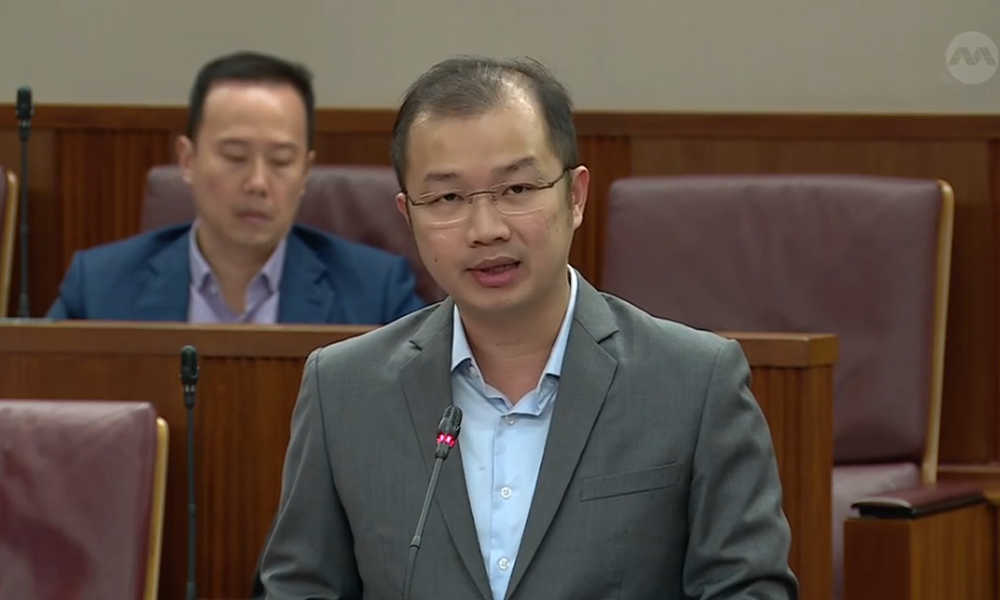
Workers' Party Member of Parliament (MP) Louis Chua (Sengkang GRC) delivered a speech during the Budget 2025 debate, raising concerns over the government's fiscal practices and advocating for long-term structural reforms. Chua highlighted that the government’s unexpected budget surpluses raise questions about the need for increased taxation, particularly the recent Goods and Services Tax (GST) hike.

Unexpected Budget Surplus and Fiscal Policy

Chua pointed out that the government projected a surplus of $6.8 billion for FY2025, following a revised $6.4 billion surplus in FY2024, despite previous estimates suggesting deficits. "The combined fiscal surplus of S$13.2 billion for FY2024 and FY2025 was also surprising," he said, especially given the $41.6 billion in top-ups to endowment and trust funds over the same period. He contrasted these figures with the S$43 billion drawn from reserves to combat COVID-19, noting that the amount set aside for endowment and trust funds in the past four years was nearly S$72.2 billion. Chua argued that these persistent surpluses cast doubt on the urgency of tax increases. "If the government consistently collects more than it needs, and runs huge surpluses year after year, it leads one to question the wisdom of raising the tax burden on Singaporeans, especially as many are struggling with high inflation rates and the cost of living in the past few years," he said.

Criticism of One-Off Handouts

Chua also criticised the government’s reliance on one-off financial assistance schemes, particularly the increasing distribution of vouchers, such as CDC vouchers, climate vouchers, and the new SG60 vouchers. While acknowledging that such assistance was welcomed by many Singaporeans, he noted concerns that these measures were politically motivated ahead of the upcoming General Election. "With the General Elections around the corner, it is only natural for Singaporeans to be cynical of these vouchers, where these are merely seen as 'election handouts' tied to the political cycle rather than the economic cycle," Chua remarked. Instead, he called for structural changes that provide sustainable, long-term support rather than temporary relief measures.

Reforming the Personal Income Tax System

Chua also addressed personal income tax policy, criticising the one-time 60% tax rebate (capped at $200) introduced as part of the SG60 package. He suggested that instead of relying on such rebates, the government should raise the tax-free threshold beyond the current $20,000 of chargeable income to reflect inflation. "This move is branded as part of the SG60 package, but instead of a one-off rebate, we are better off raising the bottom brackets of marginal resident personal income tax rates," he argued.

Call for Urgent CPF Reform

Chua highlighted the retirement adequacy crisis, citing a 2024 OCBC survey where only 35% of Singaporeans were on track with their retirement plans. He noted that 52% of CPF members had less than $60,000 in their accounts, raising concerns about future financial security. He reiterated his long-standing call for the Lifetime Retirement Investment Scheme (LRIS), which was proposed in 2016 but has yet to be implemented. Chua questioned the government’s hesitation, especially given that private investment firms have demonstrated significantly higher returns compared to CPF savings. He cited an analysis showing that from 2014 to 2024, an 80:20 equities and bonds portfolio had a 7.99% annual return, compared to 2.5% for CPF Ordinary Account savings. "If the Government is not confident that our investment entities, be it Temasek or GIC, can over the long term produce better risk-adjusted returns than CPF returns, then we are in serious trouble," Chua said.

Addressing Inequality Beyond Income Redistribution

Chua argued that Singapore’s greatest social divide today is not based on race, language, or religion, but socio-economic status. He pointed out that despite various government transfers and short-term financial support, the structural inequality gap remains wide. He cited statistics showing that 17,600 households earn less than $1,000 per month, while close to half a million Singaporeans live in households earning below $3,000 per month. At the same time, the number of households earning $20,000 and above grew by 158,000 from 2014 to 2024, indicating a widening wealth gap. Chua referenced a 2024 UBS report showing that Singapore experienced the highest growth in wealth inequality among 29 countries surveyed, increasing by nearly 23% between 2008 and 2023. He called for stronger minimum wage frameworks, enhanced wage supplements, and progressive wealth taxes to ensure a more equitable society. Concluding his speech in Mandarin, Chua reiterated his concerns about excessive taxation amid persistent budget surpluses, the need for CPF reforms, and growing socio-economic inequality. He urged the government to prioritise structural reforms over temporary financial assistance to ensure long-term financial security for Singaporeans. His speech adds to the broader debate on Singapore’s fiscal strategy and social policies as the country prepares for the next General Election.

Share This