Adaro’s coal spin-off raises questions on bank coal exit policies

Adaro Energy Group's spin-off of its thermal coal assets into PT Adaro Andalan (Andalan) has raised questions about the effectiveness of bank coal exit policies. With this restructuring, Adaro, now renamed PT Alamtri Resources (Alamtri), may regain access to financing from banks that previously withdrew due to environmental concerns.
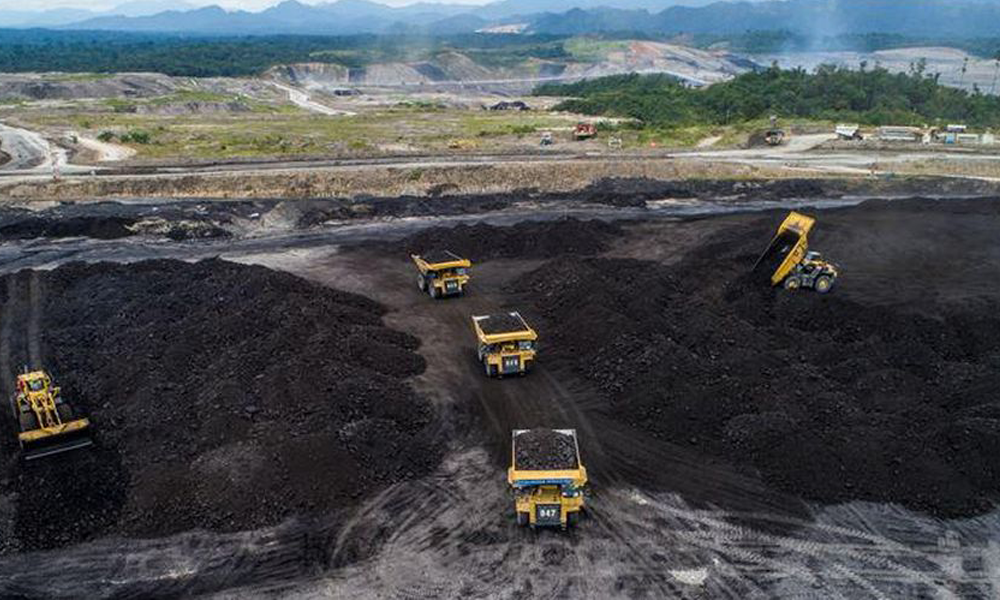
Featured Image
Comments
Google News

On 5 December 2024, Adaro Energy Group, the world’s sixth-largest coal mining company, completed the spin-off of its thermal coal assets into PT Adaro Andalan (Andalan). Following this restructuring, Adaro Energy Group was renamed PT Alamtri Resources (Alamtri). Despite the separation, Alamtri, which now holds a 15% stake in Andalan, may still gain access to financing from banks that previously withdrew due to environmental concerns. According to energy finance specialists Ghee Peh and Mutya Yustika from the Institute for Energy Economics and Financial Analysis (IEEFA), this restructuring could allow Alamtri to qualify for funding under the coal exit policies of major financial institutions such as DBS Bank and Standard Chartered. Both banks had previously withdrawn financing for Adaro’s aluminum smelter project in February 2023 due to its reliance on coal power. However, since Alamtri no longer directly records revenue from thermal coal, Peh and Yustika suggest that it may now meet the banks' existing policy requirements.

Alamtri’s new structure and financing implications

Under the new corporate structure, Alamtri owns three major subsidiaries:
  • Adaro Minerals, which operates metallurgical coal mines and is constructing an aluminum smelter in Kalimantan.
  • Saptaindra Sejati (SIS), one of Indonesia’s largest mining contractors.
  • Adaro Clean Energy Indonesia, which manages renewable energy projects, including an 8-megawatt (MW) solar plant, a 1.4-gigawatt (GW) hydropower plant under construction, and a 70MW wind project.
The restructuring means Alamtri’s financial reports will no longer consolidate revenue from Andalan’s thermal coal operations, as it holds only a 15% stake—below the 20% threshold set by International Accounting Standards (IAS 28) and Indonesian Financial Accounting Standards (PSAK 15) for equity accounting. As a result, despite its continued involvement in coal operations through Andalan, Peh and Yustika note that Alamtri could now comply with the coal exit thresholds set by banks like DBS and Standard Chartered.

Bank coal exit policies under scrutiny

DBS Bank’s coal exit policy states that from January 2026, it will stop financing clients that derive more than 50% of their revenue from thermal coal, except for their non-coal or renewable energy activities. Before the spin-off, Adaro exceeded this threshold, preventing it from securing financing for its aluminum smelter project, which relies on a coal power plant. However, since Alamtri no longer records thermal coal revenue, it may now qualify for funding. Similarly, Standard Chartered’s policy requires phasing out financial services to clients that are more than 60% dependent on thermal coal by 2025, 40% by 2027, and 5% by 2030. Alamtri’s 15% ownership in Andalan means it technically does not record thermal coal revenue, potentially allowing it to meet the bank’s 2030 threshold despite its indirect exposure. IEEFA experts call for reassessment of coal financing criteria Peh and Yustika suggest that banks should reconsider how they assess coal exposure, recommending a shift from an operating-level evaluation to a group-level assessment. They highlight that Alamtri and Andalan share a key stakeholder—Adaro Strategic Capital (ASC)—which holds 46% of Alamtri and 41% of Andalan. If bank policies evaluated coal revenue at the group level, Peh and Yustika argue that Alamtri would still be considered highly exposed to coal, likely disqualifying it from financing. However, they also acknowledge arguments for maintaining the operating-level approach. They note that this structure allows Alamtri’s renewable energy arm, Adaro Clean Energy Indonesia, to access capital for non-coal projects. They suggest that banks could make financing conditional on Alamtri scaling down its coal-related activities, ensuring that funding is directed toward low-carbon investments. Implications for sustainable finance The Adaro spin-off highlights broader challenges in implementing effective coal exit policies. While financial institutions have committed to phasing out thermal coal financing, Peh and Yustika suggest that corporate restructuring strategies like Adaro’s may allow companies to maintain coal operations while still securing bank funding. As climate policies tighten, they recommend that banks reconsider whether to continue assessing coal exposure at the operating level or expand their evaluations to the group level. They argue that such decisions could significantly impact the effectiveness of coal exit strategies in reducing financial support for high-carbon projects.