People's Power Party withdraws from People’s Alliance for Reform ahead of GE2025
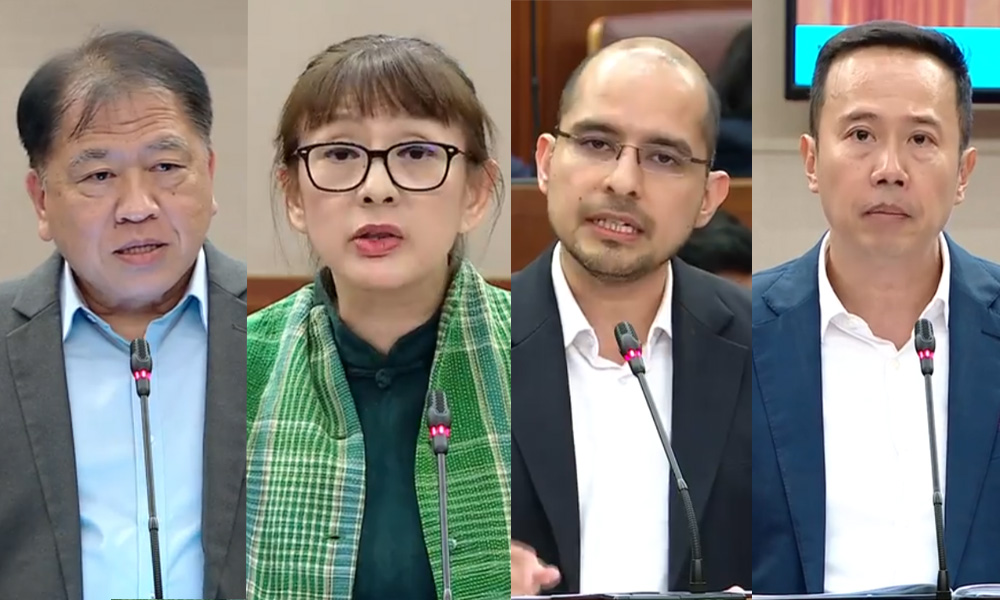
The People’s Power Party (PPP) has withdrawn from the People’s Alliance for Reform (PAR), citing strategic differences ahead of GE2025. A key dispute involved PPP’s bid to contest Tampines GRC, which could lead to a four-cornered fight, a move opposed by PAR members.

The People’s Power Party (PPP) announced on Saturday (22 February) that it would withdraw from the People’s Alliance for Reform (PAR), citing strategic differences ahead of Singapore’s General Election (GE), which must be held before November this year.
In its statement, PPP expressed disappointment over the split but stressed that the decision was necessary to prevent internal disruptions within the alliance.
The party emphasised that it had long championed opposition unity since its founding in 2015.
It said it had also played a key role in pushing for an opposition coalition in GE2020 and later engaged in negotiations that led to the formation of PAR in 2023.
However, despite its efforts to maintain collaboration, PPP acknowledged that irreconcilable differences had made continued cooperation untenable.
PPP reassured supporters that it remained committed to contesting GE2025 and would focus on fielding a strong team of candidates. While it wished PAR success, it also left open the possibility of future cooperation.
Disagreement over Tampines GRC
PAR was officially registered on 7 December 2023 after nearly a year of negotiations. Unlike previous opposition arrangements, it aimed to function as a true coalition by contesting GE2025 under a single banner and a common manifesto.
The alliance had planned to field candidates in constituencies previously contested by its member parties in GE2020, including Radin Mas SMC, Mountbatten SMC, MacPherson SMC, Jalan Besar GRC, Ang Mo Kio GRC, and Pasir Ris-Punggol GRC.
In response to PPP’s announcement, Lim Tean, chief of People’s Voice (PV) and Secretary-General of PAR, explained in a Facebook post that a major reason for the split was PPP’s insistence on contesting Tampines Group Representation Constituency (GRC), a move opposed by the other alliance members—PV, Reform Party (RP), and Democratic Progressive Party (DPP).
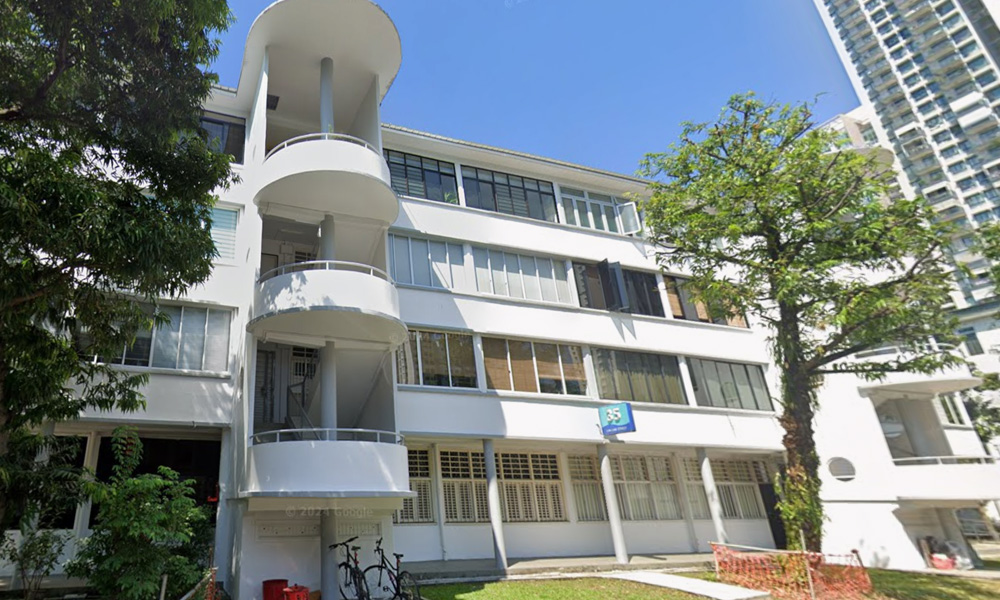
Tampines GRC has traditionally been contested by the ruling People’s Action Party (PAP) and the National Solidarity Party (NSP) since 2011.
In that election, Goh Meng Seng—then NSP’s Secretary-General and now the leader of PPP—led NSP’s campaign in the ward, securing 42.78% of the vote against PAP.
However, after leaving NSP and founding PPP, Goh contested Chua Chu Kang GRC in GE2015 but saw his vote share drop to 23.11%. By GE2020, he shifted to MacPherson Single Member Constituency (SMC), where he obtained 28.26%.
Beyond NSP, the Workers’ Party (WP) has also been actively engaging residents in Tampines GRC and is widely expected to contest the ward in GE2025.
If PPP were to enter the race, it would create a four-way contest involving PAP, NSP, WP, and PPP—an outcome PAR sought to avoid.
Lim Tean and other PAR leaders believed such a scenario could divide the opposition vote, reducing their overall electoral chances.
Policy differences and election strategy
Apart from electoral strategy, Lim Tean also noted policy disagreements between PPP and PAR, particularly regarding PPP’s stance on the COVID-19 vaccine, though he did not provide specifics.
PAR, which had committed to a common manifesto, has focused its campaign on issues such as the cost of living, affordable public housing, job security for Singaporeans, and reducing immigration.
The alliance intended to run as a cohesive unit rather than as separate entities. With PPP diverging on strategic and policy matters, the remaining alliance members felt that continued collaboration would be impractical.
Despite the split, Lim emphasised that PPP’s departure was amicable. He affirmed that PV, RP, and DPP would continue to contest GE2025 as a united coalition, fielding strong candidates in both GRCs and SMCs.
Vote-splitting concerns: A closer look at past elections
While some observers and opposition supporters worry that a multi-cornered fight could weaken the opposition’s chances, past elections suggest that voters tend to consolidate support around credible challengers.
A notable example is the 2013 Punggol East by-election, which was triggered when then-Speaker of Parliament Michael Palmer resigned due to an extramarital affair.
Despite the presence of four candidates, the Workers’ Party’s Lee Li Lian won decisively with 54.50% of the vote.
PAP’s Koh Poh Koon received 43.73%, while the Reform Party and Singapore Democratic Alliance secured just 1.20% and 0.57%, respectively.
This result suggests that in elections where multiple opposition parties contest, voters do not necessarily split their votes evenly. Instead, they tend to support the most viable opposition alternative.
If the same trend holds in GE2025, opposition votes in Tampines GRC may naturally coalesce around the strongest challenger to PAP, reducing the risk of dilution.