Singapore to station F-15SG fighter jets at U.S. Andersen Air Force Base in Guam, PACAF says
The U.S. Pacific Air Forces (PACAF) has stated that up to 12 of Singapore’s F-15SG fighter jets could be stationed at Andersen Air Force Base in Guam as part of efforts to enhance combat capabilities. The move is part of broader military modernisation plans, with infrastructure upgrades expected in the coming years.
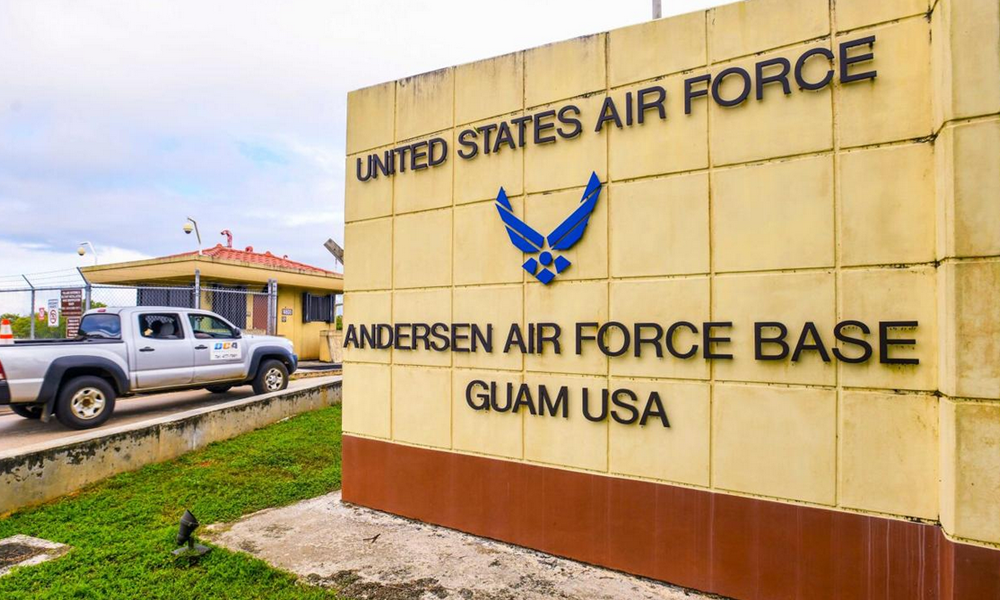

The U.S. Pacific Air Forces (PACAF) has stated that up to 12 of Singapore’s F-15SG fighter jets could be stationed at Andersen Air Force Base in Guam as part of a broader effort to enhance air combat capabilities in the region.
According to PACAF, the base’s strategic location would allow for expanded combat readiness and training opportunities.
A PACAF spokesperson told Defense News that the intent behind the proposed deployment is to “project airpower and expand combat capability from the forward edge of the Indo-Pacific.”
The spokesperson further noted that the initiative is part of a broader effort to “enhance U.S. posture west of the International Date Line.”
Andersen Air Force Base, located on the rim of the Philippine Sea, has been described as a key facility for U.S. military operations in the Pacific.
In past years, it has been used for bomber patrols in response to regional threats, including those posed by North Korea.
PACAF has suggested that the base’s relatively open airspace and proximity to the Farallon de Medinilla training range were among the reasons for its selection for the Singapore deployment.
The upgrades related to Singapore’s F-15SGs would involve mission support infrastructure and training facilities for Republic of Singapore Air Force (RSAF) pilots.
Additionally, PACAF has indicated that improvements in airfield and munitions storage would be part of a broader modernisation effort. The construction is expected to affect 209 acres and could take between three and seven years to complete, though no firm timeline has been announced.
In its statement, PACAF said it had reviewed alternative locations within the Pacific Air Forces’ area of responsibility but ultimately identified Andersen AFB as the preferred site for this initiative. Five other locations were reportedly dismissed from consideration.
Singapore’s acquisition of the F-15SG, a variant of Boeing’s F-15 Strike Eagle, began in 2005 when it signed an initial US$1.6 billion deal for 12 aircraft.
The country later ordered an additional 12, bringing its fleet to at least 24. The RSAF has stated that the F-15SG remains an integral part of its fighter fleet and continues to meet its operational needs.
“The F-15SGs remain an important part of our fighter fleet – they have been serving us well since 2009, and they are expected to continue to meet our operational needs,” Maj. Gen. Kelvin Khong, chief of the RSAF, said in a statement ahead of the Singapore Airshow, which runs from 20 to 25 February.
Khong also reiterated Singapore’s broader transition towards a next-generation fighter fleet, which will consist of both F-15SGs and F-35Bs.
The RSAF has been operating F-16s for several years, with upgrades initiated in 2016, but has announced plans to phase them out from the mid-2030s onwards.
Singapore has ordered 12 F-35Bs from Lockheed Martin, with the first four expected to arrive in 2026. The remaining eight will be delivered in subsequent years.
To support the integration of the F-35 into its fleet, Khong stated that Singapore plans to train its first batch of F-35 pilots in the United States, a move he said would enhance interoperability between the two air forces.
The potential deployment of Singapore’s F-15SGs to Guam, as outlined by PACAF, reflects continued defence cooperation between the two countries and aligns with broader Indo-Pacific security considerations.
However, no specific timeline has been confirmed for when the work at Andersen AFB will commence.