Singapore students urge ban on transporting migrant workers in lorries
Singapore students have joined growing calls to ban transporting migrant workers in lorries, citing safety and dignity concerns. The recent case of a fatal lorry accident has further underscored the urgency of these calls for reform, renewing pressure on the government to act.
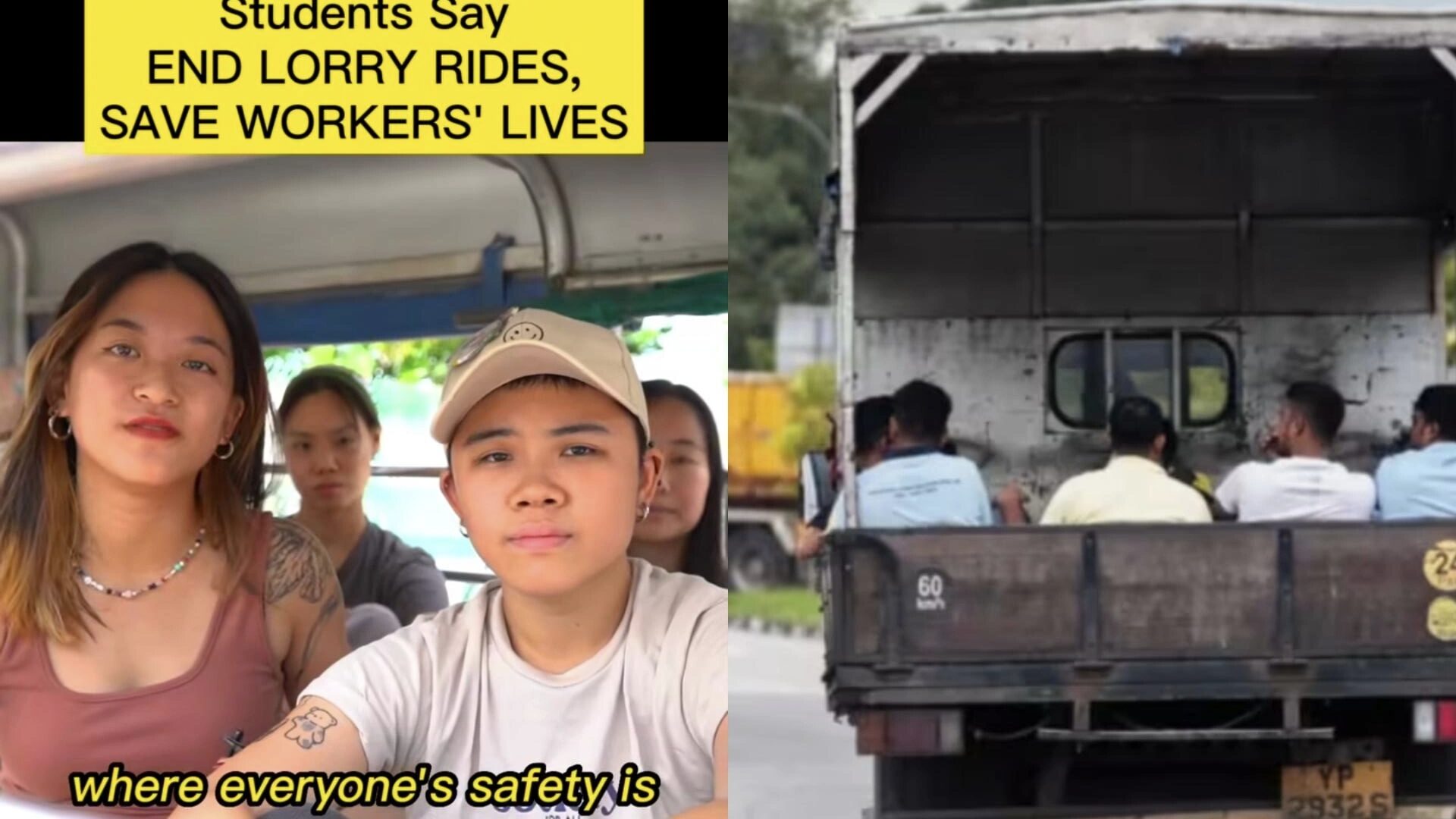

SINGAPORE: A group of students in Singapore has voiced support for the long-standing call to ban the transportation of migrant workers in the back of lorries, citing concerns over safety and dignity.
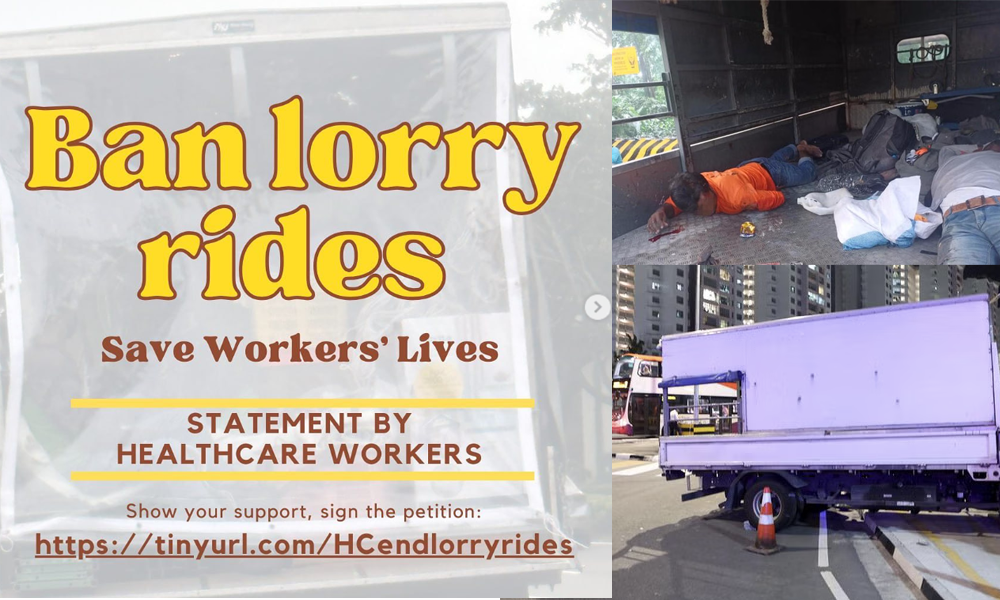
The students have signed a joint statement in solidarity with ongoing efforts by rights groups and community organisations advocating for a ban.
Student organiser Elijah Tay drew a comparison to their own experiences on school shuttle buses to highlight the dangers of lorry transport.
“As students, we already get around school on campus shuttle buses, and we know how bumpy, uncomfortable, and crowded they can be. We can’t even imagine what it might be like to be transported on lorries every single day,” Elijah said.
Rachel Tey, another student, stressed the importance of ensuring the well-being of all members of the community.
“As we study on campuses alongside workers from across the world, we envision a community where everyone’s safety is accounted for.”
The students argue that migrant workers, who contribute significantly to Singapore’s development, deserve dignity and safer transportation.
“It is their hard work and dangerous labour that build and benefit our nation. Therefore, it is our duty to ensure their safety is prioritised,” Rachel added.
She stated that students of all ages from across Singapore have decided to show their support through a petition calling for an immediate ban on transporting workers at the back of lorries.
“There’s a reason why we, as students, are not allowed to travel on lorries. So we shouldn’t let our migrant brothers go to work on such unsafe transportation either,” Elijah stated.
Joint Statement Criticises Government Inaction
The joint statement, endorsed by over 50 community groups, argues that goods lorries were never designed for human transport.
“They are not safety tested for it, and they violate the dignity of workers, who are exposed to heat stress and heavy rain while travelling, always anxious about whether they will reach their destination safely.”
The statement highlights that other countries have already implemented safer transport solutions, such as shared bus services, minibuses, and goods-cum-passenger vehicles, and questions why Singapore has yet to follow suit despite its resources and infrastructure.
It also points out that in 2020 alone, the government collected at least S$1.1 billion in foreign worker levies from industries that transport workers in lorries.
The signatories argue that some of this revenue should be used to help smaller companies transition to safer transport alternatives.
Over the years, pressure to ban lorry transport for workers has grown, with rights groups, health and safety experts, MPs, and migrant workers themselves calling for change.
Between 2011 and 2020, 58 workers died in road accidents while being transported in lorries, while 4,765 others were injured. The signatories demand that the government take immediate action.
“How many more workers will be injured while the government continues to have ‘difficult conversations’? How many more years must we mourn these completely preventable deaths?"
"What will it take before the dignity and the basic right to safe transportation is restored to our migrant brothers?”
The statement concludes by urging the government to immediately ban the transportation of migrant workers in lorries and to introduce measures under the Ministry of Transport to help companies transition to safer transport options.
“Migrant workers’ lives matter. And they certainly matter more than their bosses’ profits.”
Bangladeshi Migrant Worker Killed in Tuas Lorry Accident
The recent case of a fatal lorry accident has further underscored the urgency of these calls for reform.
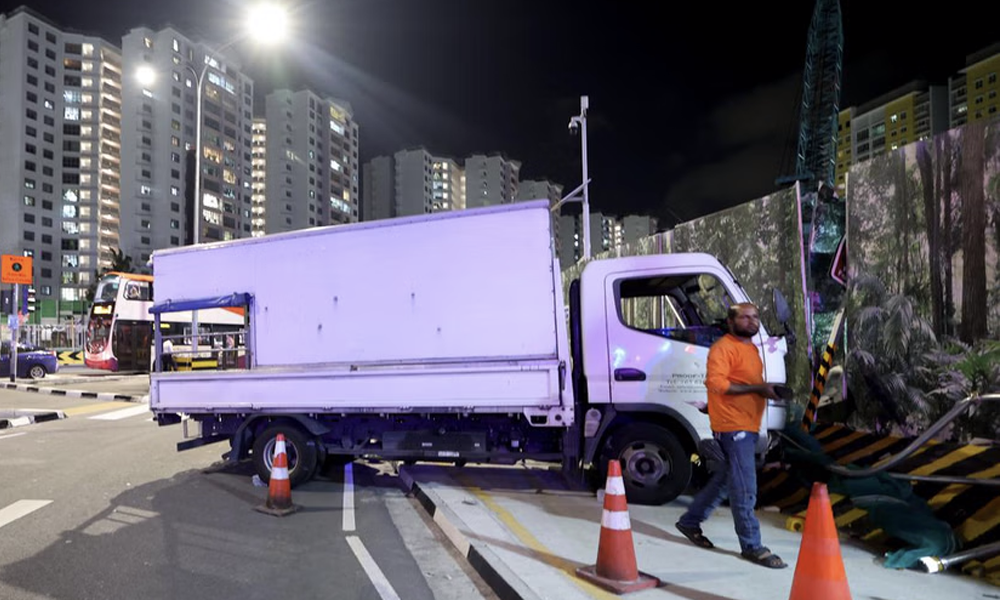
A Bangladeshi migrant worker was killed, and two others were injured when a lorry transporting workers crashed at the junction of Tuas South Avenue 9 and Tuas Nexus Drive on 15 December 2024.
Preliminary investigations revealed that the lorry was carrying one heavy metal box and three workers in the rear deck when the accident occurred.
The driver is currently being investigated for causing death by a negligent act under Section 304A of the Penal Code (1871).
Following the accident, non-profit organisation Transient Workers Count Too (TWC2) strongly criticised the authorities for their continued reluctance to regulate the transportation of migrant workers in unsecured open vehicles.
In a Facebook post, TWC2 condemned Singapore for being “virtually the only first-world country that continues to ferry migrant workers by lorry.”
NMP Questions Legality of Transporting Migrant Workers in Unsafe Lorries
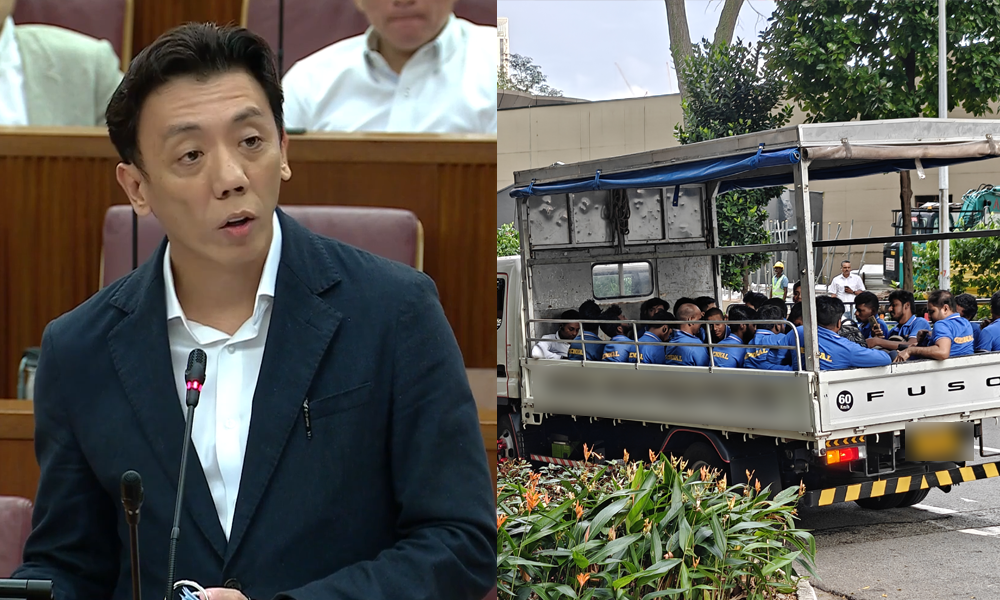
In January 2025, Nominated Member of Parliament (NMP) Associate Professor Razwana Begum Abdul Rahim criticised the continued transport of migrant workers in unsecured open vehicles without seatbelts.
Speaking in Parliament, she questioned why this practice remained legal while all other passengers on Singaporean roads were required to wear seatbelts.
Minister of State Muhammad Faishal Ibrahim did not directly address her concerns, referring her to a previous Ministry of Transport response.
In 2023, PAP MP Louis Ng had also called for a ban, but the government rejected it, with Senior Minister of State Amy Khor citing a shortage of licensed drivers and private buses—issues critics argue should have been resolved long ago.