Budget 2025: Workfare Skills Support enhanced for lower-wage workers
In his 2025 Budget statement, PM Lawrence Wong announces enhancements to the Workfare Skills Support (WSS) scheme, enabling lower-wage workers to access longer-form reskilling and upskilling courses. Workers will receive a fixed S$300 allowance for part-time courses or up to 50% of their average income for full-time courses.


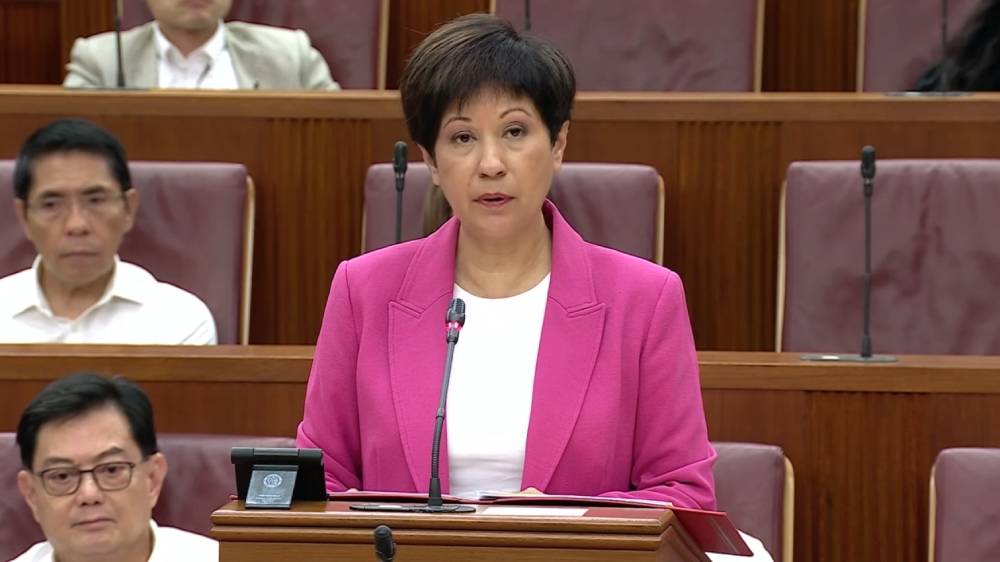
SINGAPORE: In his address to Parliament on 18 February, Prime Minister and Finance Minister Lawrence Wong unveiled significant enhancements to Singapore’s skills development initiatives, as part of the 2025 Budget.
These measures are designed to bolster workforce resilience and lifelong employability, focusing particularly on lower-wage workers and those seeking opportunities for mid-career growth.
The Government’s strategic aim is to help workers adapt to rapidly evolving industries, particularly in the face of disruptive technologies such as artificial intelligence (AI).
The Prime Minister highlighted that while the Government cannot halt technological advances or protect every job, it is committed to equipping every worker with the skills necessary to remain competitive in an increasingly automated world.
One of the key proposals is a substantial expansion of the Workfare Skills Support (WSS) scheme.
From early 2026, lower-wage workers will be entitled to a fixed monthly allowance of S$300 for enrolling in selected part-time courses.
For those pursuing full-time courses, they will receive up to 50% of their average income over the latest available 12 months, with the allowance extended for up to 24 months, depending on their age.
“We want to ensure that lower-wage workers benefit from upskilling opportunities at every stage of their careers,” PM Wong remarked, noting that workers aged 30 to 39 will be eligible for the monthly allowance under the enhanced WSS scheme, while those 40 and above will also be covered, though subject to a shared cap with the SkillsFuture Level-Up programme.
The newly enhanced scheme is a response to feedback that workers seeking to improve their skills through longer-form courses often incur additional expenses, such as transport and course materials.
Recognising the need for financial support in these areas, the Government will introduce a training allowance of up to S$3,000 per month for participants of selected full-time courses, available from March 2025. This allowance will be extended for up to 24 months, offering a maximum payout of S$72,000.
The Budget also places significant emphasis on mid-career Singaporeans, particularly those aged 40 and above.
In 2024, the SkillsFuture Level-Up Programme was introduced to provide a S$4,000 credit for this demographic to acquire new skills. Building on this, PM Wong confirmed that the programme would be enhanced to further support mid-career professionals in their pursuit of continuous learning.
While part-time upskilling remains a popular choice for many workers, the Government acknowledges that it comes with its own set of financial challenges.
In addition to enhancing individual support, the Government is focusing on strengthening enterprise capabilities through the introduction of the SkillsFuture Workforce Development Grant.
The new grant will bring together existing initiatives under Workforce Singapore (WSG) and SkillsFuture Singapore (SSG) to streamline the application process for companies looking to upgrade their workforce. Companies will receive increased funding support of up to 70% for job redesign activities, enabling businesses to adjust more efficiently to the changing needs of the workforce.
Moreover, PM Wong revealed that the SkillsFuture Enterprise Credit scheme, which helps employers offset costs related to workforce and enterprise transformation, will be redesigned to be more user-friendly.
Instead of being paid on a reimbursement basis, the revamped credit will function like an online wallet, allowing companies to instantly check and utilise their available funds for relevant courses and initiatives.
Starting in the second half of 2026, companies with at least three resident employees will be granted a redesigned credit of S$10,000.
To assist businesses during this transition, the Government will extend the current SkillsFuture credit until June 2026.
This is expected to give employers adequate time to adjust to the new system while continuing to support their employees’ skill development.
Addressing the broader theme of technological disruption, PM Wong acknowledged the profound impact that AI technologies, such as ChatGPT, are expected to have on job markets.
While acknowledging the uncertainty surrounding the full extent of AI’s effects, he underscored the importance of investing in workforce capabilities to maintain competitiveness.
“We must ensure our workforce has the tools and skills to thrive in a changing landscape,” PM Wong stressed, reiterating Singapore's commitment to ensuring that lifelong learning remains a cornerstone of the nation’s social compact.
The Prime Minister’s speech reinforced Singapore’s proactive stance in preparing its citizens and businesses for the future, ensuring that every worker has the opportunity to thrive in the face of an evolving global economy.
As these changes are rolled out, further details will be provided by the Ministry of Manpower at its Committee of Supply, expected to provide clarity on course coverage and additional support mechanisms.