Meta job cuts impact Singapore as employees seek support
Meta’s latest round of global layoffs has affected employees in Singapore, with reports emerging on LinkedIn and from sources speaking to The Straits Times. The cuts follow an internal memo from Meta’s vice-president of human resources, Janelle Gale, outlining company-wide reductions. Employees in Singapore have since sought support through networking events.
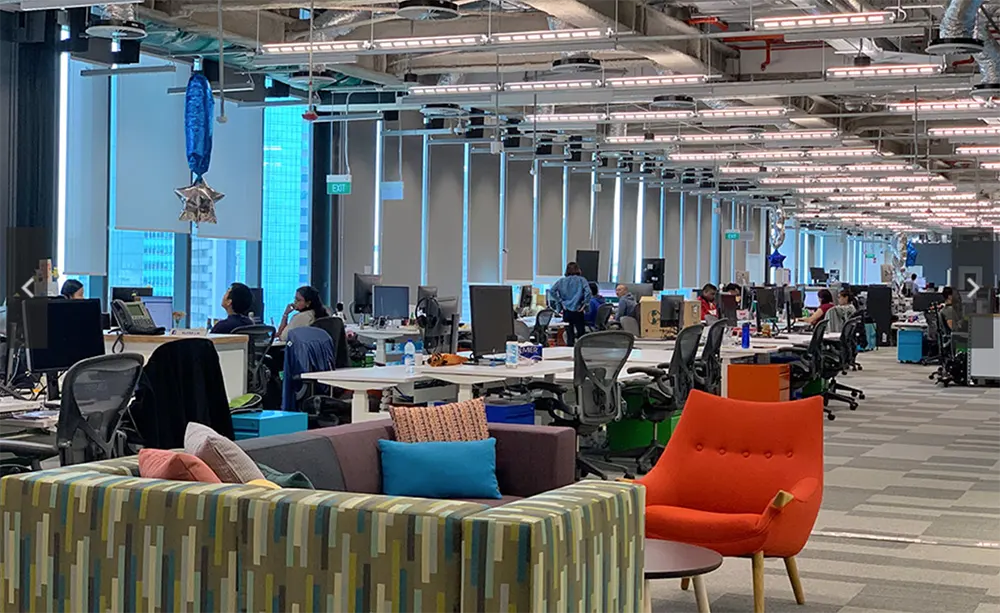

Meta’s latest round of global layoffs has affected employees in Singapore, according to reports on LinkedIn and sources speaking to The Straits Times (ST). The job cuts come after an internal memo from Meta’s vice-president of human resources, Janelle Gale, leaked in February, revealing plans for company-wide layoffs.
The memo stated that employees losing their jobs would receive notices starting at 9 pm Singapore time on 10 February 2025 in most countries, including the United States. Workers in over a dozen countries across Europe, Asia, and Africa were to receive notifications between 11 and 18 February.
A LinkedIn post by a product manager at Meta in Singapore on 11 February described the layoffs as an emotional experience, despite her witnessing previous rounds of cuts during her nearly three-year tenure at the company. She noted that some of those affected had recently been on parental or medical leave.
To provide support, career networking platform Key organised a two-hour gathering on 13 February at Clarke Quay.
The event, led by Key co-founder Christopher Fong and former Meta employees Grace Clapham and Anand Kumar Ramakrishnan, aimed to connect affected workers and offer career advice.
Fong told ST that those who had experienced previous layoffs wanted to help others facing similar challenges.
“We want to share learnings on how to bounce back from a layoff, consider career opportunities and provide support, whether it’s coffee, a hike, or a conversation,” he said. About 20 people attended the event, with half having been laid off earlier that week.
Clapham, a leader in the Apac Meta alumni community, shared that the job cuts in Singapore spanned various roles, including engineering, partnerships, global business operations, and policy.
Organisers acknowledged that affected staff required different types of support, with some needing immediate guidance while others were not yet ready to engage.
Ramakrishnan highlighted concerns about employees who had recently been on leave. He noted that two Meta Singapore employees affected by the cuts had only recently returned from paternal and medical leave.
One of them had sought clarification from Meta’s human resources department regarding whether her leave would affect her standing at the company and was reportedly assured it would not.
Employment law expert Eunice Grace Choong noted that Singapore’s legal framework provides specific protections for employees on medical or parental leave.
While the Employment Act and Child Development Co-Savings Act prohibit dismissal during such leave periods, retrenchment afterward is not explicitly illegal.
However, she warned that if employees perceive the layoffs as discriminatory, they may challenge them through the Tripartite Alliance for Dispute Management or the Employment Claims Tribunals.
Choong further stressed that companies risk both legal and reputational consequences if retrenchments appear to be linked to legitimate leave usage. “Performance evaluation should primarily focus on an employee’s ability to deliver core job responsibilities, rather than contextual factors such as attendance patterns,” she said.
The Creative Media and Publishing Union (CMPU) noted that Meta is a non-unionised company.
A spokesperson stated that in retrenchment exercises involving individual union members at non-unionised firms, assistance would be extended by National Trades Union Congress-affiliated unions or associations. Affected employees were encouraged to seek help by contacting CMPU via phone or email.
Meta had previously announced plans to lay off approximately 5% of its “lowest performers,” affecting around 3,600 jobs globally, including positions in Asia.
The company has also recently relocated its Singapore workforce to new offices at Marina One after choosing not to renew its lease at South Beach Tower.
In response to queries from ST, a Meta spokesperson referred to previous announcements about “performance terminations” from mid-January but did not provide a country-specific breakdown of job cuts.
Choong advised that performance assessments should be adjusted to account for actual working time to ensure employees are not penalised for legitimate absences.
She added that a fair and transparent approach to layoffs is essential for maintaining employee trust and organisational integrity.
Online discussions surrounding the layoffs have sparked broader concerns about retrenchment practices, particularly in relation to employees on parental or medical leave.
One individual commenting on ST’s coverage said, “They are the first to let go. Then come those not performing. Then those with more people in the same role. Then those who can outsource.” The person cited an example of a human resources professional who had been retrenched twice but accepted the compensation and moved on to a third company.
Another commenter, who had recently been laid off from a major American hospitality company, alleged that retrenchments disproportionately affected certain groups.
“Best part is it happened during my hospitalisation leave. But kept a lot of those non-locals from you know where. Nepotism at the very highest level there.” They also questioned why their former employer did not make a public announcement like Meta, estimating that the job cuts impacted thousands of employees across Singapore, the US, and global offices.
Some also raised concerns about the government’s stance on retrenchments, especially in cases where employees on maternity or paternity leave were affected.
One commenter questioned, “If those staff taking maternity or paternity leave are shown the door and MOM is not doing anything about it just because Meta is big, is the government on the wrong track by attempting to increase these leaves for locals?”
Another referenced a 2003 remark by former Singapore Prime Minister Goh Chok Tong about retrenchments being beneficial for Singaporeans.
The commenter stated, “Retrenchment is good for all Singaporeans—it allows them to downgrade, try new jobs, and allows foreigners to take over for higher cost efficiency.”
Concerns over job security and family planning were also expressed, with one person commenting, “Ah, now you know why Singaporeans are scared to give birth. You can give as many days of leave as you want, but companies are just going to use it against employees. Do something lah, instead of the watchdog saying it’s ‘monitoring’.”