Shanmugam defends Maintenance of Racial Harmony Bill but leaves concerns of enforcement unresolved
WP MP Gerald Giam raised concerns about the Maintenance of Racial Harmony Bill’s broad ministerial discretion to label speech as racially inflammatory and issue restraining orders. While Minister K Shanmugam defended the bill’s continuity with existing laws, key questions about its enforcement remained unresolved.


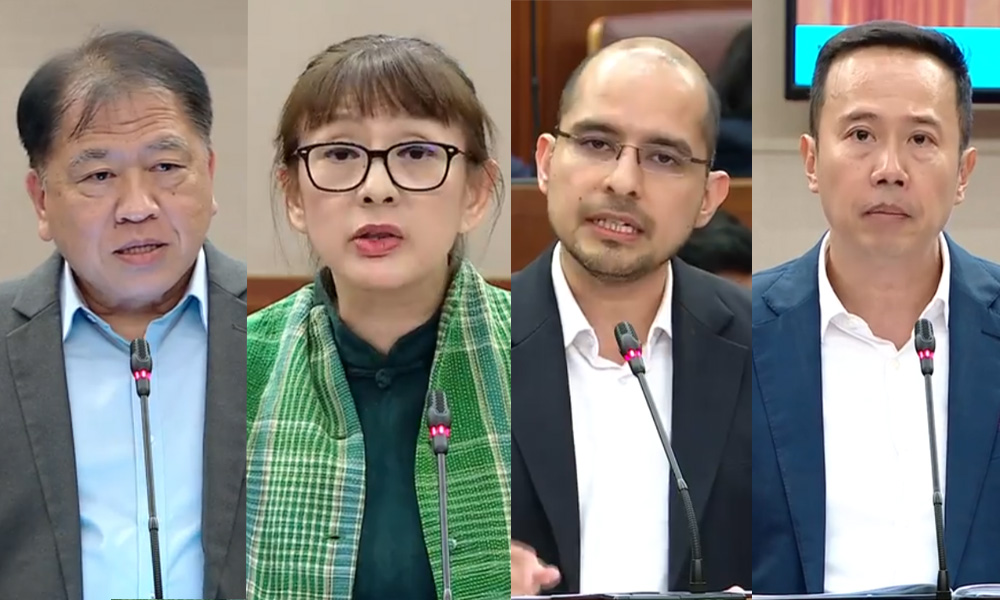
During the 4 February 2025 debate on the Maintenance of Racial Harmony Bill, Workers' Party (WP) MP for Aljunied GRC Gerald Giam raised significant concerns about the bill’s broad provisions, particularly the minister’s discretion to label speech as racially inflammatory and issue restraining orders without judicial oversight. Giam warned that this could create uncertainty, discouraging public discussions on race and sensitive topics.
With the bill now passed into law, albeit not yet gazetted, the Minister for Home Affairs has the power to issue restraining orders against individuals involved in the communication, production, or distribution of content that prejudices the maintenance of racial harmony in Singapore. Appeals from individuals issued with restraining orders can be reviewed by the Presidential Council for Racial and Religious Harmony, an independent body created under the Act. The council can provide recommendations to the president, who has the authority to confirm, cancel, or vary restraining orders in cases where the Cabinet’s advice differs from the council’s recommendation.
Minister for Home Affairs and Law K Shanmugam defended the Act, asserting that it preserves existing legal standards on racially charged speech under Sections 298 and 298A of the Penal Code. However, questions about how ministerial discretion will be exercised in practice remained unanswered.
Concerns over stifling public discourse
Giam highlighted the risk that speech raising legitimate issues—such as systemic racial discrimination or controversial international conflicts—could be misinterpreted as racially inflammatory.
He warned that well-meaning public discussions, including critiques of policies affecting minority groups, could be curtailed if individuals feared being subjected to legal action or restraining orders.
“The broad ministerial powers under this bill risk deterring legitimate public discourse that is essential for fostering inter-communal dialogue and strengthening social cohesion,” Giam said. He explained that even with defences for good-faith speech, the bill’s requirement to prove intent or the private nature of communication could lead to hesitation or self-censorship.
"Forums discussing global events like the Israeli-Palestinian conflict or domestic policies such as CECA—the Comprehensive Economic Cooperation Agreement—could risk being labelled as racially inflammatory, despite their role in constructive discourse."
He sought clarification on what types of speech would or would not fall within the scope of the bill and asked whether public discussions of systemic issues, such as discrimination, would be explicitly protected. Giam also questioned whether, unlike religious discussions under the Maintenance of Religious Harmony Act, race-related discourse would face similar restrictions.
Shanmugam’s reliance on legal continuity
In response, Shanmugam framed Giam’s concerns as stemming from a misunderstanding of the bill’s scope. He emphasised that the bill’s provisions closely mirror Sections 298 and 298A of the Penal Code, which have been in force for 17 years and have not restricted public discussions on contentious topics.
“The scope of unacceptable conduct regarding race relations will remain substantively the same as today,” Shanmugam said, reiterating that speech on sensitive topics like the Israeli-Palestinian conflict would remain lawful, provided it did not cross into incitement or hostility.
However, Shanmugam did not provide specific examples of lawful versus unlawful speech, as requested by Giam. Instead, he focused on the continuity of the legal framework, suggesting that if existing laws had not caused issues previously, no additional concerns should arise under the new bill.
Shanmugam also rejected Giam’s suggestion to refer the bill to a select committee for further review, stating that its provisions had already been thoroughly debated in Parliament.
Hazel Poa presses on Clause 8 and ministerial discretion
Progress Singapore Party NCMP Hazel Poa turned the focus to Clause 8 of the bill, which allows the home affair minister to issue restraining orders against individuals without requiring a court decision. She questioned how this discretion would be exercised and whether it would be bound by the same legal safeguards and precedents used in judicial decisions.
Under current laws, decisions regarding racially charged speech are made through court processes, which involve careful reviews, legal precedents, and rigorous evidence. Poa highlighted concerns that shifting this power to the minister could undermine consistency and fairness. “What is the system that the minister will be using, and will they be bound by legal precedents?” she asked.
In response, Shanmugam explained that decisions under Clause 8 would involve internal assessments by ministry officials and legal advice from government lawyers. He acknowledged that these decisions would need to be made quickly to address the rapid spread of harmful speech on social media but did not clarify how the process would ensure the same level of rigor as court decisions.
Shanmugam emphasised that Clause 8’s requirements for issuing restraining orders are similar to the conditions under Sections 298 and 298A. However, unlike the courts, the minister would have executive authority to act swiftly. While he assured Parliament that appeal mechanisms and oversight by the Presidential Council for Racial and Religious Harmony would provide safeguards, he did not provide details on how this discretion would be applied consistently.
Lingering uncertainty about enforcement
Despite Shanmugam’s explanations, concerns persisted about how the minister’s discretion would be exercised, particularly in cases involving speech that could be misinterpreted. Giam and Poa’s requests for clearer examples of what speech could trigger restraining orders remained largely unanswered, leaving ambiguity about how individuals could safely engage in public discourse on race.
During the debate, Shanmugam also warned against potential misrepresentation of the bill’s provisions on social media. He stated that any misleading statements about the bill could require correction under the Parliamentary Proceedings Act.
However, this warning did not address the underlying concern over the discretionary nature of the provisions. The wording of the bill gives the minister broad latitude in interpreting speech as racially inflammatory, further contributing to uncertainty about enforcement.
As the debate concluded, questions remained about whether the bill’s procedural changes could result in overreach or inconsistent enforcement. While the bill aims to maintain racial harmony, its impact on public discourse will depend heavily on how ministerial discretion is exercised in practice.