Israeli military launches targeted ground raids in Southern Lebanon against Hezbollah
The Israeli military has launched targeted ground raids against Hezbollah in southern Lebanon, supported by airstrikes and artillery. The limited operations aim to dismantle Hezbollah's military infrastructure near the border as tensions continue to escalate, causing significant casualties and widespread displacement in Lebanon.
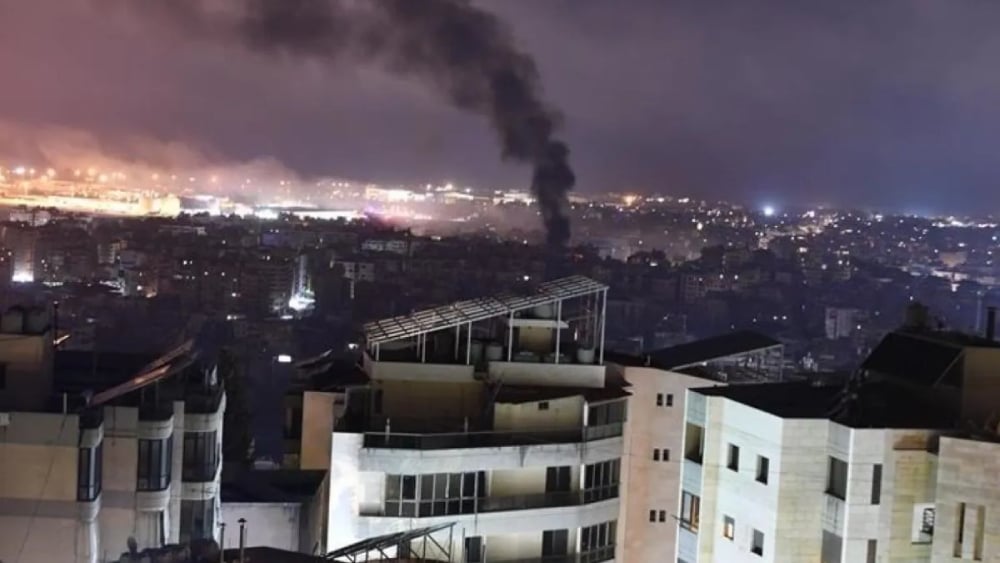

The Israeli military announced the commencement of “targeted ground raids” on villages in southern Lebanon, aiming at Hezbollah positions near the Israeli border.
The raids, backed by airstrikes and artillery, were initiated early on Tuesday (1 Oct) as part of Israel’s escalating conflict with the Iranian-backed Lebanese militant group.
According to the Israel Defense Forces (IDF), the operations are “limited, localised, and targeted” in nature.
The IDF detailed the military strategy on X (formerly Twitter), stating that the Israeli Air Force and artillery units were providing precise strikes on Hezbollah’s military infrastructure in the region.
The goal of the operation is to protect Israeli citizens, particularly in northern Israel, and to return displaced residents to their homes.
"“The IDF is continuing to operate to achieve the goals of the war and is doing everything necessary to defend the citizens of Israel and return the citizens of northern Israel to their homes," IDF stated on X.
This incursion, approved by Israeli political leaders, represents a new phase in Israel’s ongoing war against Hezbollah.
Lebanon Health Ministry reported that at least 95 people were killed and 172 injured due to the attacks. Officials say more than 1,000 people in Lebanon have been killed in the past two weeks.
Hezbollah’s activity in the region has been an ongoing threat since it began launching low-intensity strikes against Israeli targets shortly after Israel declared war on Hamas last October.
Hezbollah’s actions followed the initial attack by Hamas, a Palestinian group, which triggered Israel’s military operations in Gaza.
Speaking with Al Jazeera, former Israeli Justice Minister Yossi Belin expressed concerns over the scope of the current operation, stating, “I really hope we are talking about a limited ground operation.”
He pointed out that, historically, even limited operations are challenging to control, even if the government’s intentions are to conclude quickly and focus on curtailing Hezbollah’s capabilities.
Earlier on Monday, US officials confirmed reports that Israel had conducted smaller-scale ground raids targeting Hezbollah and that communities along Israel's northern border had been sealed off.
In a conversation between US Secretary of Defense Lloyd Austin and Israeli Defense Minister Yoav Gallant, the two agreed on the necessity of dismantling Hezbollah’s attack infrastructure along the border.
This action was deemed crucial to prevent the possibility of Hezbollah launching attacks similar to the one Hamas carried out on 7 October against southern Israeli communities.
Austin reiterated the importance of a diplomatic resolution to the ongoing conflict to enable civilians on both sides of the border to return home safely.
The Pentagon also noted that the US continues to support efforts to safeguard Israeli citizens while advocating for a de-escalation of the conflict.
Last week, Israel escalated its attacks on Hezbollah, specifically targeting its leadership in Lebanon.
On Friday (27 Sept), an Israeli airstrike killed Hezbollah’s veteran leader, Hassan Nasrallah, in the southern suburbs of Beirut.
Despite this significant blow to its leadership, Hezbollah has continued launching rockets and missiles at Israeli targets.
In the group’s first public statement since Nasrallah’s assassination, Hezbollah’s deputy chief, Naim Qassem, declared on Monday (30 Sept) that Hezbollah was fully prepared for a potential Israeli ground incursion and expressed readiness for a prolonged conflict.
The conflict has resulted in widespread displacement, with over 100,000 people fleeing from Lebanon to Syria in recent weeks as hostilities intensified.
The escalating violence has prompted Lebanon’s acting Prime Minister Najib Mikati to reaffirm his country’s willingness to implement United Nations Security Council Resolution 1701.
This resolution, which was established following the 2006 war, calls for an end to Hezbollah’s armed presence south of the Litani River, a critical component of efforts to maintain peace and prevent further conflict with Israel.