SMRT privatization: Shielding information or strategic restructuring?
In 2016, SMRT was privatized to focus on long-term goals over market pressures, aiming to enhance rail maintenance and service quality. Yet, recent severe disruptions question if this move obscured vital operational details from public view.


In 2016, the privatization of SMRT under the ownership of Temasek Holdings was defended vigorously with promises of greater focus on long-term strategic goals rather than short-term market pressures.
This move was touted as a necessity to enable SMRT to tackle the evolving challenges of Singapore's public transport needs, particularly the maintenance of an ageing rail system following the 2011 breakdowns that saw the resignation of Saw Phaik Hwa, who prioritised on the development of the transport, company's retail business and skimming on maintenance expenses.
Temasek, in its announcement, said, "Privatisation will provide SMRT with greater flexibility to focus on its primary role of delivering safe and high-quality rail service, without short-term pressures of being a listed company, in the midst of its transition to a new regulatory framework under the New Rail Financing Framework."
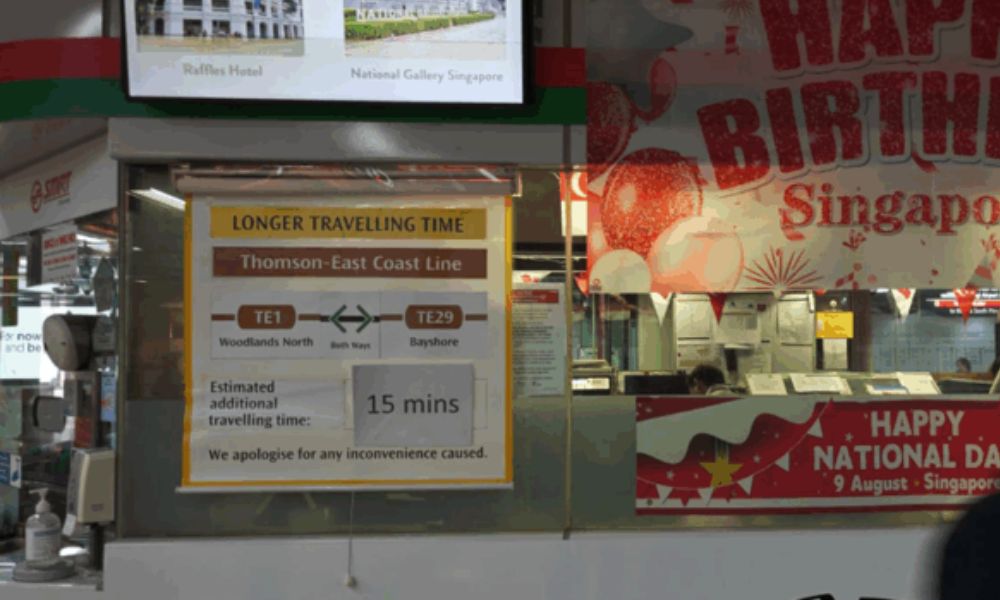
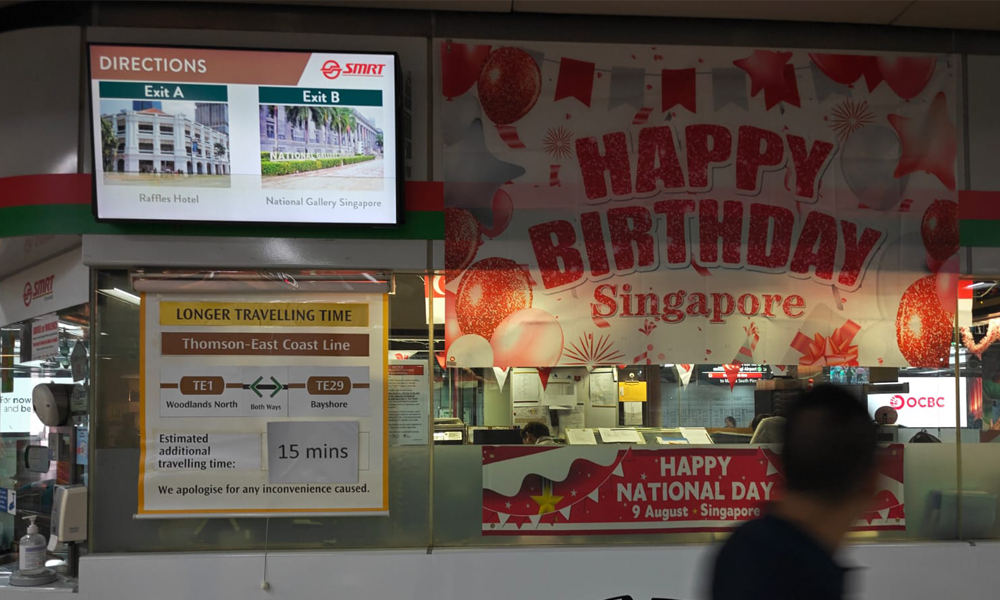
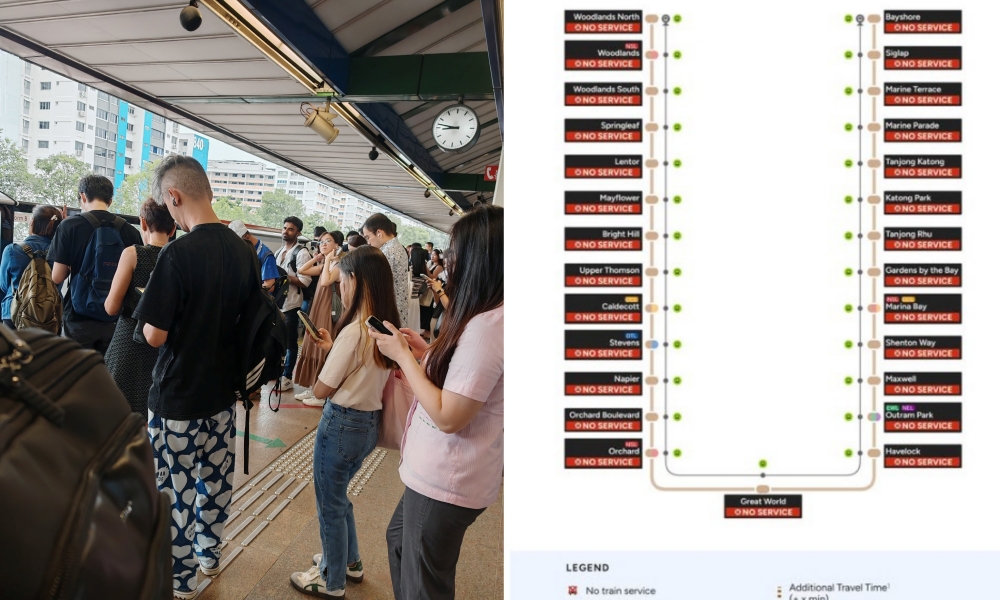
However, with recent developments, particularly the massive 2023 rail disruption that we are seeing for the East-West Line, questions arise: Has privatization truly served its stated purpose, or has it instead cloaked critical operational details from public scrutiny?
Transparency and Its Implications
The annual reports published by SMRT before and after its privatization tell a tale of changing transparency levels.
Pre-privatization, the 2016 report was replete with details about executive remuneration, specific maintenance expenditures, and breakdowns of revenue and expenses.
Such transparency empowered stakeholders to understand where and how funds were being allocated, particularly towards crucial maintenance operations and how much the top executives were being paid.

Post-privatization, after being delisted from the Singapore Stock Exchange, these details have become conspicuously sparse.
The 2023 report, for example, lacks detailed disclosures about how much is spent on maintenance and whether these activities are handled in-house or outsourced to subcontractors.
What we have now is just a chunk of text outlining SMRT's policies on remuneration and maintenance.
Such omissions not only cloud stakeholder understanding but also prevent the public from assessing whether the transition away from public markets has led to better or worse management practices.
Recent Disruptions and Maintenance Oversight
The recent and severe disruption along the East-West Line, which involved extensive rail damage due to alleged maintenance failures, sharply contrasts with the purported benefits of privatization.
The lack of detailed financial reporting makes it difficult to verify if appropriate investments are being made in maintenance or if cost-cutting measures have led to reduced direct oversight and increased reliance on potentially less accountable subcontractors.
Discussion on Reddit recalled remarks made by SMRT Corporation Chairman Mr Seah Moon Ming in a June 2023 interview with The Straits Times.
He stated, “We never want to undermaintain because, in the past, it was an issue. But neither do we want to do overmaintenance.”
At that time, the 67-year-old emphasized the need for high performance while also considering costs. The Straits Times even boasted about the significant improvement in SMRT’s train services since his appointment.
The ST even boasted about the reliability of SMRT’s train services has improved significantly since his appointment.
While acknowledging that SMRT can always improve, Mr Seah cautioned against excessive efforts to achieve ever-higher reliability scores, citing the risk of overspending public funds received through government grants.
Mr Seah mentioned that SMRT is leveraging technology such as data analytics to optimize its maintenance regimen and better predict when components need replacement. He noted that SMRT’s rail lines have consistently achieved a mean kilometres travelled between failures (MKBF) of over one million train-kilometers—a recognized international measure of rail reliability.
Separately, SMRT Group Chief Executive Mr Ngien Hoon Ping, who was appointed in August 2022, stated that the one million MKBF benchmark is sufficient from a regulatory standpoint. The former LTA chief noted that raising this bar yields diminishing returns and could be prohibitively expensive.
“If 99.9 per cent of the time the train is going to work, commuters will take the train. Once you reach one million MKBF, it is about there already, ” Mr Ngien said.
So, what does Mr Seah's position entail for the maintenance regime? When he says that SMRT does not want to do over-maintenance, how much more or less have they actually spent on maintaining the rail system?
We don't really know, given that financial details have been omitted from the transport company's annual report following its privatization.
A Call for Rebalanced Priorities
While the motive to shield SMRT from the volatility of public markets might have been well-intentioned, the resulting lack of transparency has significant repercussions. It impacts not just investor confidence but also public trust, as they can only speculate with the limited information available, especially when failures lead to substantial service disruptions like the ones we are seeing today.
For privatization to be genuinely effective, it must be paired with a commitment to transparency that reassures the public about the responsible management of their critical transport services.
As SMRT faces the most severe breakdown in Singapore's transport history, it faces the imperative to disclose more, not less, about its maintenance regimes, staffing, and the deployment of resources to ensure the reliability and safety of its services.