Thailand placed on CIVICUS Watchlist amid escalating repression of civic freedoms
Thailand has been added to the CIVICUS Monitor Watchlist following the dissolution of the Move Forward Party and increasing prosecutions under lèse-majesté laws. Activists and human rights defenders continue to face repression, raising concerns about Thailand's commitment to democratic freedoms.
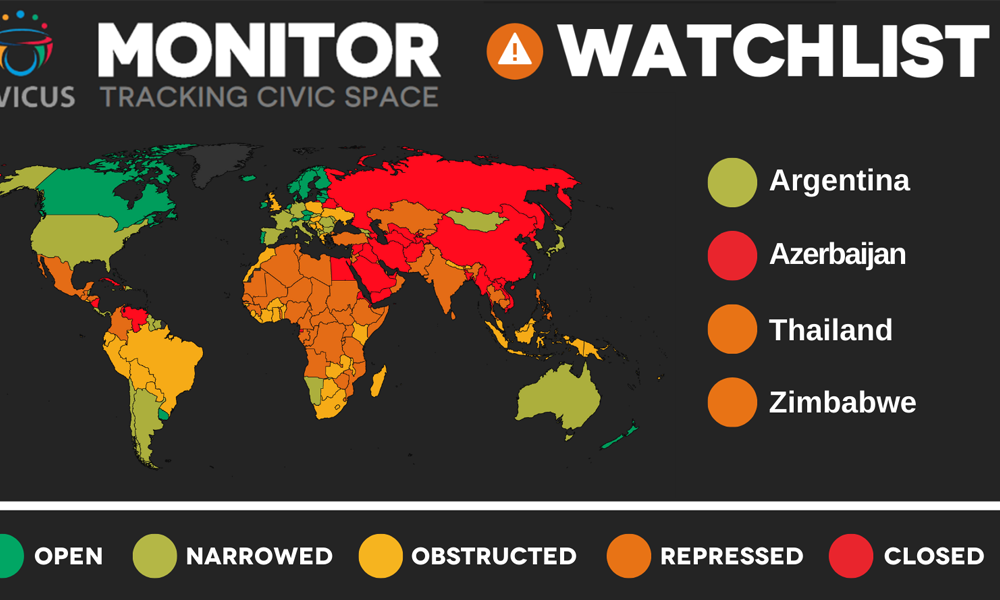

The CIVICUS Monitor has once again added Thailand to its Watchlist of countries experiencing rapid declines in civic freedoms. This decision follows a series of significant developments, including the dissolution of a major opposition party and the ongoing use of strict lèse-majesté laws to suppress political dissent. On 7 August 2024, Thailand’s Constitutional Court dissolved the opposition Move Forward Party, which had won the most seats in the recent general election. The court charged the party with treason for advocating reforms to Penal Code Article 112, which governs lèse-majesté (royal defamation), and imposed 10-year political bans on all executive members who served from April 2021 to January 2024. Human rights organizations have condemned the ruling as politically motivated. Josef Benedict, a CIVICUS Monitor Asia researcher, described the dissolution of the party as "a blatant attempt to stifle political opposition and silence voices calling for reform," noting that the decision undermines democratic processes and violates the right to political participation. Thailand’s government has been criticized for its continued use of lèse-majesté laws to target activists. According to Thai Lawyers for Human Rights (TLHR), at least 272 individuals have been prosecuted under the law since 2020. Recent cases include the sentencing of three activists to seven years in prison for singing a protest song on 18 July, and the conviction of human rights lawyer Arnon Nampa to four years in jail on 25 July for social media posts about the monarchy. Pro-democracy activist Parit "Penguin" Chiwarak was sentenced in absentia to two years in prison on similar charges on 31 July. Further highlighting the deteriorating human rights situation, in Thailand’s Deep South, Malay Muslim human rights defender Roning Dolah was killed in June 2024. Additionally, nine activists face potential charges of sedition in connection with their participation in a cultural event in 2022. Josef Benedict emphasized the broader implications of these developments, stating, "The ongoing use of lèse-majesté laws to target activists and critics is deeply troubling for a country seeking a place on the UN Human Rights Council. These actions are part of a broader pattern of repression that is eroding civic space and silencing dissent in Thailand." Another concern is the rise of transnational repression. Independent UN experts have raised alarms over Vietnam’s request for Thailand to extradite human rights defender Y Quynh Bdap, whose extradition hearings are ongoing. There are fears that Bdap may face severe persecution if returned to Vietnam. Despite these concerns, Prime Minister Paetongtarn Shinawatra, elected in August 2024, has yet to address the growing criticisms. The CIVICUS Monitor continues to urge the Thai government to halt its crackdown on dissent and uphold its obligations under international human rights laws. Thailand currently holds a 'Repressed' rating on the CIVICUS Monitor, which classifies 50 countries worldwide as heavily restricting civic freedoms through legal and practical measures imposed by authorities.