LTA’s response to WP: Raising more questions on why they weren’t waived sooner?
Opinion: LTA's recent response to the Workers' Party’s claim about the S$10 ERP fee raises more questions than answers. While LTA attributes the grace period to features of ERP 2.0, the fee was initially for notifying motorists of missed payments, not processing them. If paperless systems existed since 2018, why weren’t fees waived earlier?


The Land Transport Authority’s (LTA) recent Facebook post, meant to counter the Workers' Party's (WP) claim regarding the administrative fees for missed Electronic Road Pricing (ERP) charges, seems to have created more confusion than clarity.
On 30 August, The Land Transport Authority (LTA) announced that starting 1 October, motorists who miss an ERP payment will receive an SMS notification and be given a five-day grace period to make the payment without incurring the S$10 fee.
If the payment is not made within this grace period, LTA will issue a letter requiring the motorist to pay both the missed ERP charge and the S$10 fee. Failure to comply will result in a S$70 fine.
In a Facebook post on Monday (2 September), the WP highlighted the government's apparent policy reversal concerning the S$10 administrative fee for missed ERP payments—a suggestion the WP had put forward in 2017.
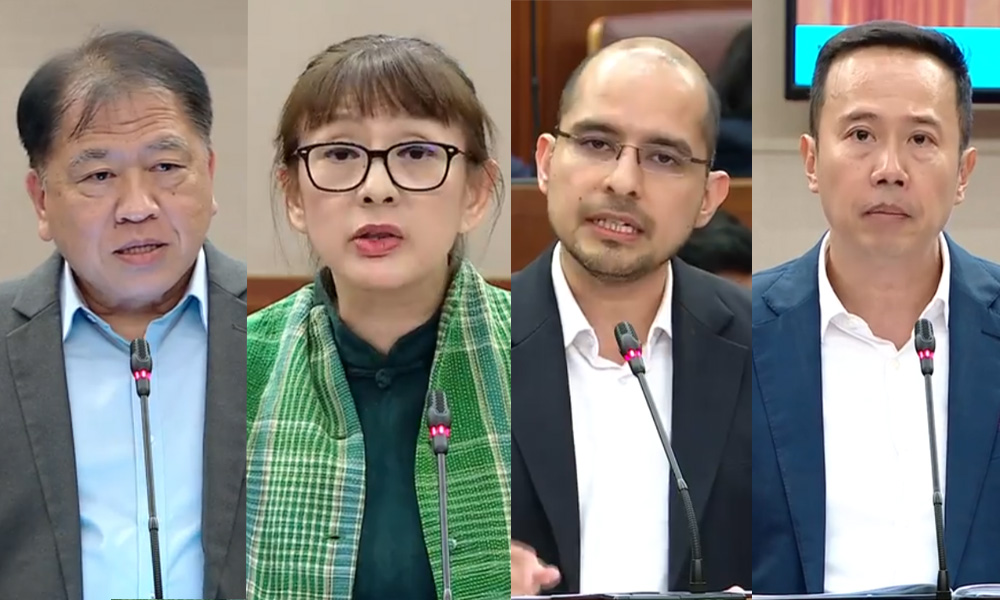
WP MP Faisal Manap had asked then-Transport Minister Khaw Boon Wan whether the Ministry of Transport would consider allowing motorists to pay for failed ERP deductions electronically within a reasonable period, without incurring the admin fee or with a reduced fee.
Mr Khaw rejected the proposal, stating: “Motorists who miss the ERP payments are required to pay the administrative charge to cover the cost of processing the ERP violation, notification, and payment. It would not be fair for taxpayers to bear these costs on motorists’ behalf.”
Responding to WP in its Facebook post on Tuesday, the LTA stated: “Mr Khaw’s explanation remains valid, as it is indeed fairer for motorists who have ERP arrears to bear the administrative charges instead of the WP’s suggestion for taxpayers to bear these costs.”
The LTA further clarified that the recent announcement of a five-day grace period for missed ERP payments without incurring the S$10 fee was not equivalent to WP’s 2017 proposal, as the new policy does not ask taxpayers to cover the costs:
“We are now able to introduce the 5-day grace period because we re-designed our workflow to leverage on the capabilities provided by ERP2.0 to detect, notify and facilitate the missed payments. With ERP2.0, LTA will no longer need to process and send letters to motorists if they make payment within the 5-day grace period. Hence, we will not incur these administrative costs and do not need to impose the $10 administrative charge on motorists who pay within the grace period.”
While the LTA claims this new policy is made possible by technological advancements in ERP 2.0, their explanation raises a significant question: If the technology to eliminate the need for physical notifications and administrative fees was already available before 2024, why wasn’t this system adopted sooner?
In November 2018, it was reported that the Land Transport Authority (LTA) had moved to use electronic notifications for motoring-related transactions and facilitate online payment for its services. Instead of sending hardcopy letters for processes like road tax renewals, vehicle owners would receive updates through SMS or electronic letters via their One.Motoring accounts.
LTA's press release states: "For instance, when it is time to renew a vehicle’s road tax, owners will receive an SMS alert to log on to the One.Motoring website using SingPass/CorpPass 2FA to retrieve their e-letters and complete the transaction."
However, it is important to note that only statutory notices, such as summonses which are mandated by law, were explicitly stated to continue being sent in hardcopy. This exception was made clear in the LTA’s 2018 announcement.
Yet, the LTA’s recent explanation regarding ERP non-payment notifications does not mention this as a reason for not adopting a paperless approach earlier. This suggests that ERP non-payment notifications do not fall under the category of statutory notices, and therefore there appears to have been no legal requirement preventing the LTA from sending them electronically well before ERP 2.0’s introduction.
Given that the infrastructure for a paperless system had already been in place for years, the delay in transitioning to an electronic system for unpaid ERP fees remains perplexing. It is difficult to accept LTA’s claim that the five-day grace period and the removal of the administrative fee are entirely due to ERP 2.0 advancements.
The LTA’s 2024 response seems to contradict former Minister Khaw's earlier stance, as the authority now acknowledges that ERP 2.0 will eliminate the administrative costs previously used to justify the fee.
This raises the question: If these costs could now be avoided, why were motorists charged for years after the technology to eliminate those costs became available?
Additionally, LTA’s post appears to downplay the significance of WP’s 2017 suggestion. While LTA argues that WP’s proposal would have unfairly burdened taxpayers, it is now evident that the administrative costs could have been reduced or even eliminated earlier without involving taxpayers during the shift to a paperless system.
The timing of this policy change, coinciding with the rollout of the unpopular ERP 2.0 system, suggests that LTA might be trying to ease public dissatisfaction with the new chunky three-piece system by offering this concession.
Transport Minister Chee Hong Tat’s comments following LTA’s announcement warrant further scrutiny. He described the decision as a “win-win” for both the government and motorists, saying: “It is a win-win outcome because for LTA, we save the trouble and we improve our productivity. We don’t have to process and send out the letters for the motorists.”
Mr Chee explained that the rollout of ERP 2.0 provides a “better way” for motorists to pay outstanding arrears without incurring additional administrative costs. The new system’s on-board unit (OBU) is connected to a backend system, allowing motorists to view and pay their arrears directly through the OBU display.
However, this explanation seems to conflate the purpose of the S$10 administrative fee. The fee was not directly about facilitating payment but rather about covering the cost of notifying motorists of their missed ERP payments and processing the payments. While ERP 2.0 may streamline the payment process, it does not directly address why motorists were previously charged an administrative fee for notifications when paperless systems were available.
Considering the S$2 price difference between cash/cheque payments and digital transactions as stated by Mr Khaw in his response to Mr Faisal, wouldn’t the cost of notification be S$8? This is, of course, setting aside the question of whether the processing of these payments should have been charged at all.
Although ERP 2.0 appears to be a positive development, it skirts the more pressing question: Why didn’t the LTA pursue the elimination of the administrative fee earlier, given the technology to send electronic notifications was already in place?
If this policy is indeed beneficial for both the government and motorists, why wasn’t it implemented when the technological capability first existed?
Notably, when rejecting WP’s proposal in 2017, Mr Khaw did not cite technological limitations. Instead, he justified the administrative fee as necessary to cover the costs of processing and notification—a justification that now seems outdated and irrelevant.
Therefore, contrary to LTA's concluding statement in its Facebook post—"We hope the above explanation clarifies the facts and helps the public to understand what actually happened so they would not get confused by misleading claims"—the explanation does little to clarify the situation. In fact, it raises further doubts about the true motivations behind the recent policy change.
While the introduction of a five-day grace period and the waiving of the administrative fee may be presented as a positive step, the timing and reasoning behind it suggest that it could be more about managing public perception of ERP 2.0 than genuine policy improvement.
As a result, motorists and taxpayers are left wondering why they were made to shoulder these administrative costs for so long, despite the availability of technology that could have rendered them unnecessary years ago.