Government support and media bias: The double standards in Singapore’s media landscape
The PAP government’s S$900 million support for SPH Media Trust contrasts with its use of POFMA to financially cripple independent outlets like TOC and Gutzy Asia. Critics argue that government funding could bias SMT towards the PAP, while independent media faces suppression under the guise of combating foreign influence and online falsehoods.


Government support for SPH Media Trust (SMT) has been justified on the grounds that SPH is an important national institution with wide reach among Singapore's reading public and that it is necessary to keep it functioning amidst the global decline in the news industry. However, the PAP government's contrasting approaches to SMT and independent media outlets like The Online Citizen (TOC) and Gutzy Asia reveal a troubling pattern of selective support and repression.
While SMT enjoys a S$900 million government grant over five years, independent media faces increasingly stringent regulations that threaten their very survival. The discrepancy underscores the PAP government's intent to curtail critical voices while financially bolstering media entities that align with its interests. This selective approach raises serious concerns about media freedom and the government's commitment to a diverse and independent press.
In July 2023, TOC's website and Facebook page were hit with a Declaration of Online Location (DOL) under the Protection from Online Falsehoods and Manipulation Act (POFMA), making it illegal for the site and page to financially benefit from their operations. This marked a significant escalation in the government’s efforts to stifle independent media. The DOL effectively cut off TOC’s ability to secure funding, which is crucial for its operations, especially in an environment where resources are already limited. This tactic of financial strangulation follows a pattern of using legal measures, such as POFMA, to undermine independent media.
More recently, in June 2024, Gutzy Asia, also under the same Taiwanese parent company as TOC, faced a similar fate. The publication was also issued a POFMA DOL, with particularly alarming justifications. The DOL was based on POFMA directions issued for reports on current affairs, and more absurdly, for simply having a link to a POFMAed post by Reform Party chief Kenneth Jeyaretnam. The arbitrary nature of these actions underscores the PAP government's determination to control the narrative and suppress any media that might offer a dissenting perspective.
Now, imagine if The Straits Times, Singapore’s largest and most influential newspaper, were subjected to the same treatment as TOC. Could its editors and reporters survive the financial fallout if a DOL were issued against the publication, making it illegal to benefit financially from its operations?
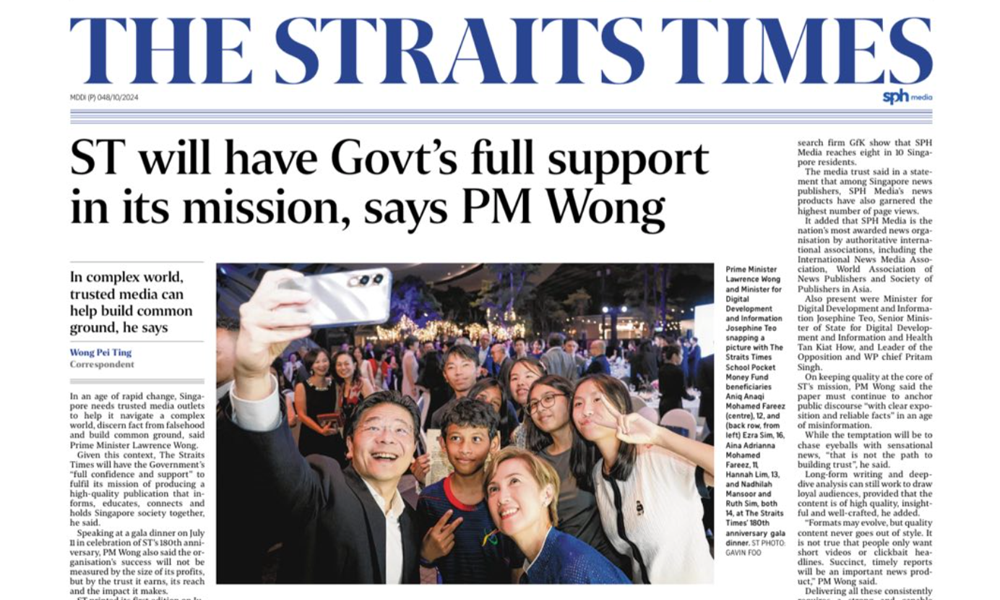
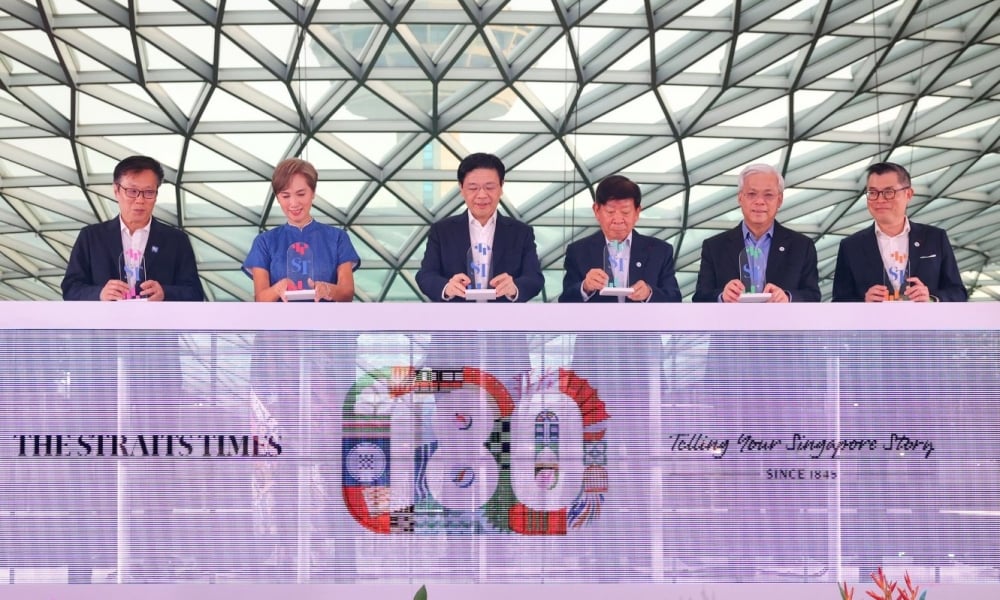
The very notion seems far-fetched given that SMT, which publishes The Straits Times, is supported with a grant of up to S$900 million from the government. This grant not only ensures the paper's financial stability but also implies a level of protection that independent media like TOC and Gutzy Asia do not enjoy.
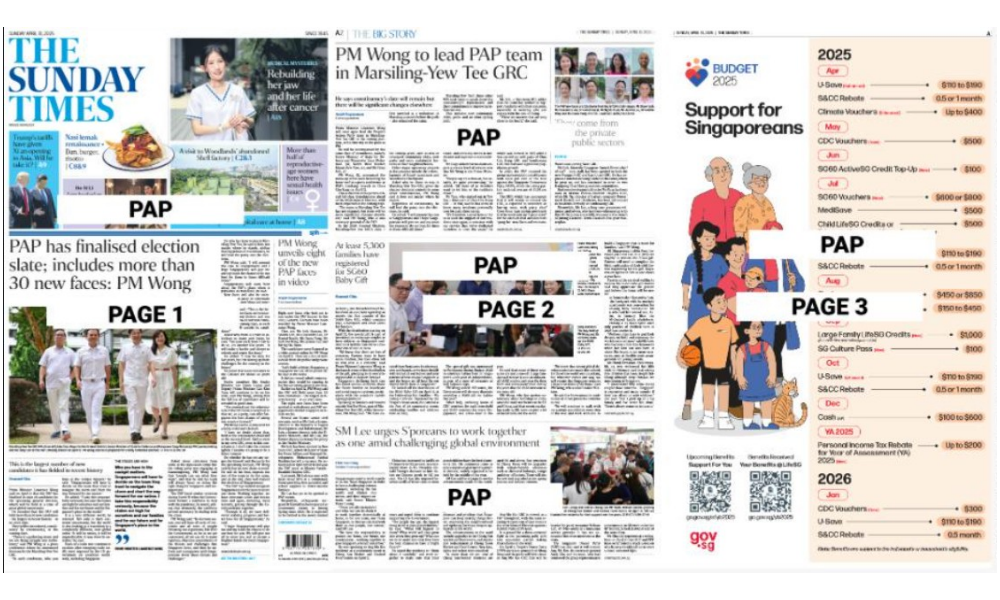
The announcement in 2022 that the government will fund the SPH Media Trust directly via government funding has effectively put the last nail in the coffin of ‘government mouthpiece’ allegations. Many question why they should pay for SPH publications' subscriptions when they are perceived as little more than government propaganda pieces.
Critics have pointed out that while the government justifies its actions against independent media by claiming they might be subject to foreign intervention due to monetary support, the same logic is not extended to SMT.
If foreign funding can bias media outlets, wouldn't a publication's reliance on a S$900 million government grant similarly influence its editorial stance? Given the PAP government's heavy financial support for SMT, it is reasonable to question whether SPH Media Trust can truly remain impartial, or if it is inevitably biased towards the government that sustains its operations.
The government’s continued support of SMT, particularly in light of the misrepresentation of its circulation figures revealed in 2023, suggests that there is little chance SPH Media would ever face a POFMA direction or a DOL.
At most, the organization might receive a warning—a slap on the wrist compared to the draconian measures imposed on independent outlets. The PAP government’s willingness to financially support SMT, despite these misrepresentations, contrasts sharply with its aggressive legal actions against even minor transgressions by independent media, revealing a clear intent to maintain control over the media landscape.
The PAP’s dual approach—lavishing public funds on state-aligned media while using legal tools to cripple independent outlets—highlights a strategy designed to suppress dissent and protect the government’s narrative. The financial support for SMT, juxtaposed with the restrictions placed on independent media, paints a picture of a government more interested in controlling its political narrative than in fostering a healthy, diverse media environment.
As long as the PAP government continues to wield laws like POFMA selectively, there is little hope for the development of a truly free and independent press. The generous funding of SMT, coupled with the financial strangulation of critical voices, suggests that the government is not merely supporting trusted journalism—it is shaping a media landscape where only government-aligned narratives can thrive.