Allianz-Income Sale: A Case of Elite Capture and Unethical Profiteering?
Foong Swee Fong opines that the proposed sale of Income Insurance to Allianz reveals how elites and big business may benefit unethically. NTUC's acquisition of shares at par value before the sale raises significant ethical concerns, highlighting potential conflicts of interest.


The state has been captured by the elites and big business.
The issue of the proposed sale of Income Insurance to Allianz is not so much the stripping off of the nation’s assets, but rather, that some elites and big business are benefiting unethically from the sale.
I have no issue with the proposed sale per se. With the financial muscle and expertise of Allianz, Income can probably scale greater heights.
Besides, National Trades Union Congress (NTUC), being closely linked to the government, should not be running a business. There is no greater conflict of interest than the government setting the rules on how business should be run and itself partaking in business.
Perhaps, there may have been a case for Income as a co-operative in the early days of our founding when there was no viable insurance for workers, but those days have long gone. Income has become just another profit maximizing business. Its policies are not, and have not been for a long time, the most affordable in the market.
Ideally, all businesses should be competing freely, without undue protection from the state or engaging in anti-competitive monopolistic behaviors.
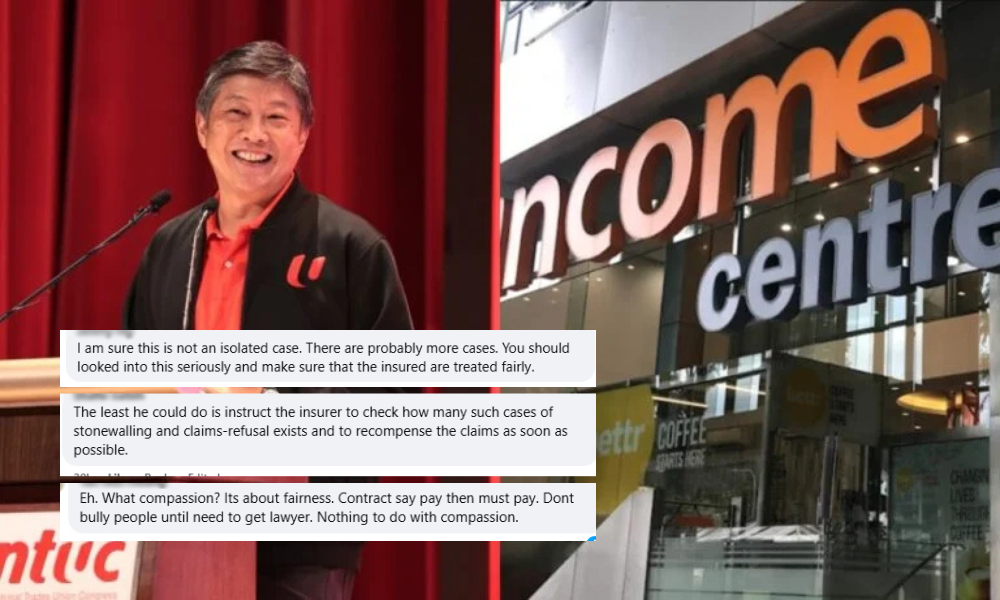
The stink of the proposed sale, however, is that NTUC Enterprise and some elites, seeing immense value in Income if it were eventually corporatized and sold to the highest bidder, rushed in to grab shares at par before the sale.
As it is, NTUC Enterprise, a holding company that buys shares in other businesses for the purpose of control, bought S$630m worth of Income shares at par, i.e., S$10 a share between 2015 and 2020, which was cleverly reported as "injecting capital" despite Income not being financially distressed. With Allianz offering S$40.58 per share, that S$630m has now ballooned to S$2.56 billion.
Bear in mind that between 2015 and 2020, members of the public would have found it next to impossible to buy any Income share. NTUC Enterprise was able to because it promised not to sell the shares and thus profit from it, and that it was doing so to inject capital, and more pertinently, it being the majority shareholder with the purchase, will ensure that Income will not drift away from its social mission.
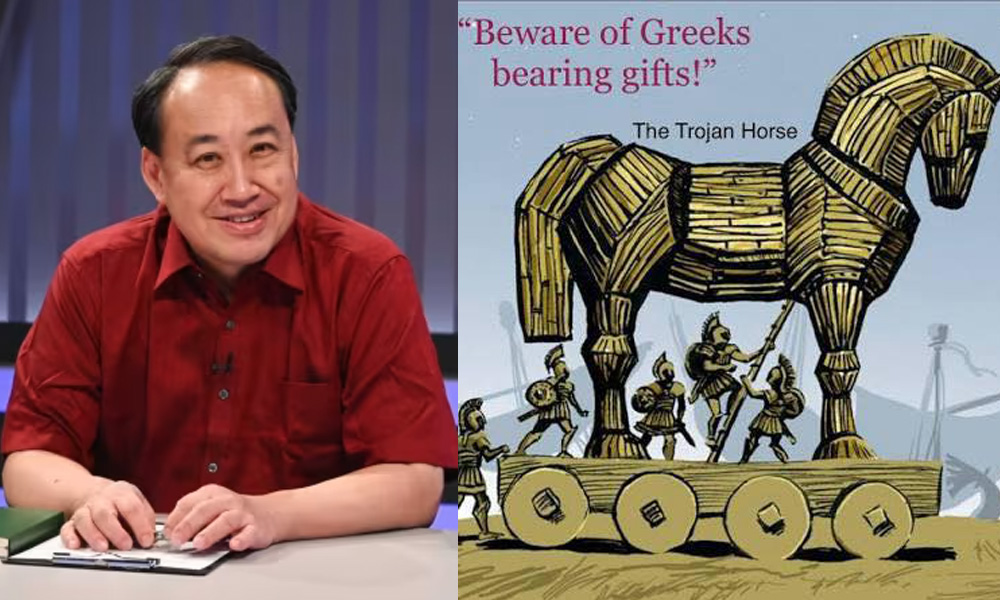
When Income was corporatized in 2022, Mr Tan Suee Chieh, NTUC Income’s CEO from 2007 to 2013, smelling a rat, wrote to Income for assurance that NTUC Enterprise would not sell its share in Income as promised. He, as well as the public, were duly assured that no such thing would happen.
And yet, barely two years later, Allianz announced it would buy at least 51% of Income.
Given the events, it is hard not to believe that NTUC Enterprise had an inkling that it would sell its shares of Income eventually to reap a windfall, rendering its promises otherwise, extremely unethical, on par, if not exceeding, the stink of insider trading.
MAS now has to approve the sale. If it approves, it has to explain how NTUC Enterprise had bought the shares of Income in good faith but that circumstances has forced it to sell its share. It cannot sweep it under the carpet and still approve the sale because it will reinforce the notion that the elites and big business have indeed captured the state, further eroding trust in institutions and the government.
Read the open letter of Tan Suee Chieh here.