Over 1,000 people presently classified as homeless, sleeping on streets in S'pore: LKYSPP study


Between 921 and 1,050 people are currently classified as homeless and sleeping on the streets in Singapore, according to a study by Assistant Professor Ng Kok Hoe of the Lee Kuan Yew School of Public Policy (LKYSPP) at the National University of Singapore released last Thu (7 Nov).
Nearly 500 volunteer fieldworkers, who are social workers recruited by the Ministry of Social and Family Development (MSF), were tasked to cover 12,000 blocks of flats and other public and commercial spaces over a period of three months to count the numbers sleeping on the streets.
The fieldworkers recorded the number of people who were asleep, or were about to sleep, in public spaces after 11.30pm. This was gauged by observing whether the rough sleepers had some form of bedding or many belongings with them.
Two count strategies were used as a part of the nationwide street count in the study, namely a cumulative count and a single night count, said Assoc Prof Ng.
A cumulative count, which formed a baseline for the single night count zones, took place islandwide over several months.
The cumulative count relied solely on observation and covered all possible sites where homeless people might reside.
The count produced data on the distribution of homelessness down to individual zones of around 50 residential blocks or which took two hours to cover on foot.
While geographically comprehensive, Assoc Prof Ng noted that the cumulative count "cannot rule out duplication due to individuals moving across zones during the count period". The single night count was thus used, which "entailed deploying all the fieldworkers at the same time to conduct observation as well as interviews".
The upper limit of the above range of homeless persons was derived from the 1,050 observations in the cumulative count, while the lower limit is based on the single night count which recorded 921 unique individuals.
The actual size of the homeless population on the streets is likely to lie within this range, Assoc Prof Ng added.
Based on the main findings from the cumulative count, homelessness occurred in most parts of Singapore, with "significant variation in numbers across districts", as seen in the map
in Figure 1 below.

Homelessness was found to be geographically widespread at the district level, with "significant variation" in the figures, ranging from 2 observations in the Bukit Timah district to 241 in the City district. The average number was 42 observations per district, the report read.
The City, Bedok, and Kallang districts recorded the highest numbers of homeless persons, with each having recorded more than 50 observations each. At the other end, fewer than 10 observations were recorded in each of six districts: Queenstown, Punggol, Bukit Panjang, Sembawang, Sengkang, and Bukit Timah, as seen in Table 1 below.

The single night count covered almost all the zones where observations were recorded in the cumulative count, and similarly found that homelessness was widespread across Singapore.
An uneven distribution of the number of homeless persons was observed, with figures ranging from 1 person in Punggol district to 251 persons in the City district. The average number was 38 persons per district.
The largest numbers were again reported in the City, Bedok, and Kallang districts, with the addition of Jurong West, where more than 50 persons were recorded.
Fewer than 10 people were found in districts such as Choa Chu Kang, Sembawang, Queenstown, and Punggol at the other end. No homeless persons were encountered in Sengkang district.

On average, each zone had 6.7 homeless persons, which is higher than in the cumulative count. These indicate that the single night count was able to target zones more likely to have homeless people, according to the study's findings.


"The geographical distribution of homelessness in the cumulative count and single night count are tightly correlated, suggesting that patterns of homelessness may remain stable over several months and that the count method was fairly consistent," Assoc Prof Ng added.
HDB public rental housing should be modified to remove housing barriers; work and wage interventions necessary
The study defined homelessness as the state of "living in inadequate housing situations".
Adequacy was defined as having three dimensions, namely:
- Security in terms of tenure, exclusive occupation, and affordability;
- Physical adequacy in terms of amenities, hygiene, safety, and sufficient space; and
- Social adequacy in terms of privacy, control of the use of space, and conduciveness for social relationships.
Assoc Prof Ng noted that there are different levels of homelessness, which encompass:
- Primary homelessness or street homelessness, in which people "do not have accommodation and sleep in public spaces not intended for human habitation";
- Secondary homelessness, where people live in "temporary accommodation such as shelters and hostels, or moving frequently because permanent housing is not available"; and
- Tertiary homelessness, in which people live in "inadequate accommodation such as overcrowded housing, or may imminently lose their housing due to eviction, violence, or lack of social support".
Out of the 88 people interviewed, around six in 10 were employed in low-income jobs, with a median monthly wage of S$1,400 a month, compared to the national median wage of S$3,467.
Half of those interviewed revealed that being unemployed or not having secure employment had led to them sleeping rough. The respondents were unable to pay their rent or mortgage, or had sold their house.
Conflicts within family units and relationship breakdown were also among the primary reasons for homelessness.
Despite the findings, however, Assoc Prof Ng is optimistic that there is "scope to expand outreach services to connect homeless people to housing support" in Singapore.
Senior director at MSF Lee Kim Hua said that the ministry is currently working with the Peers Network to build an interim shelter for those affected by street homelessness. At the moment, three transitional shelters cater to the homeless in Singapore.
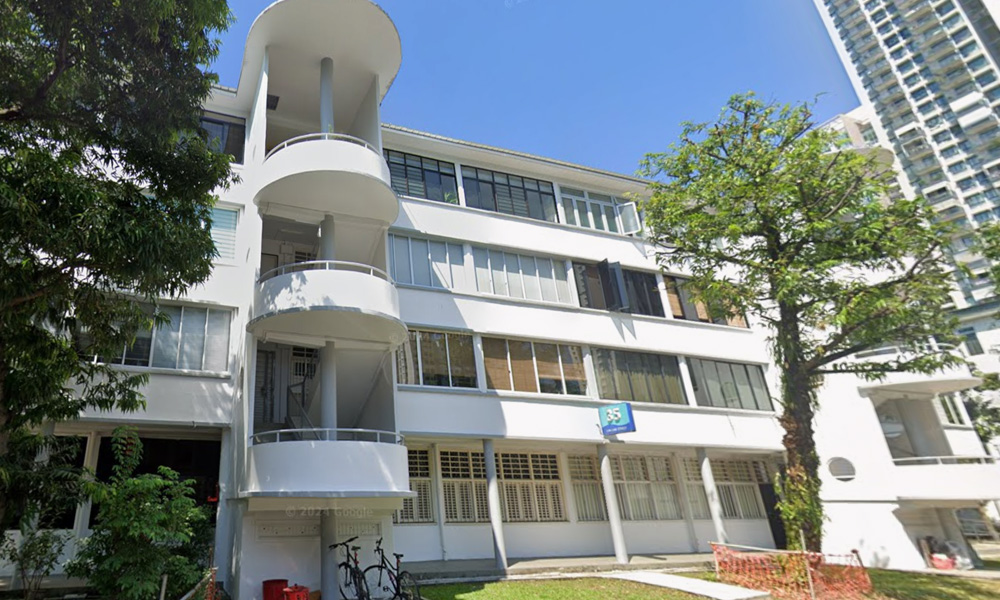
The study found higher numbers of homelessness in larger and older housing estates, as well as estates with more rental flats, with public housing void decks being among the most common locations chosen by homeless people to sleep in.
Consequently, he suggested that removing housing barriers can, beyond improving the availability and accessibility of shelter services, provide a longer-term solution for people facing homelessness.
The study found that 26 per cent of the people interviewed had either rented a flat from the Housing Board at highly subsidised rates or bought an HDB flat, but had chosen not to go home due to conflicts with their co-tenants.
Thus, Assoc Prof Ng suggested that "improvements can be made to the eligibility criteria and space provisions" for the Housing and Development Board’s public rental housing scheme.
"The joint tenancy requirement deprives residents of basic privacy, creates conflict among co-tenants, and should be removed," he suggested.
Assoc Prof Ng also highlighted that "homelessness illustrates the consequences when work does not bring about economic security, especially among older workers", and thus making "a strong case" for "public provision to ensure income security in old age".
Currently, based on findings of the study, 40 per cent of those interviewed had sought financial assistance from the Government in the past year, including in Social Service Offices or through their Member of Parliament.
"Low wages and insecure work remain key contributing factors to the inability to access stable housing. Work and wage interventions must be part of any comprehensive response to homelessness," he added.
While fieldworkers in the study were deployed in virtually every housing estate islandwide, the study did not cover other public areas where people affected by street homelessness are also likely to be found, such as in Changi Airport, beaches and parks.