Editorial
Stupid is as stupid does: When rhetorical diversions and selective decorum rule Parliament
Ministerial theatrics, rhetorical pivots, and selective enforcement of decorum in Singapore’s Parliament are no longer isolated incidents. From file-flinging to name-calling, the deeper threat lies not in a single word, but in the systemic erosion of accountability.

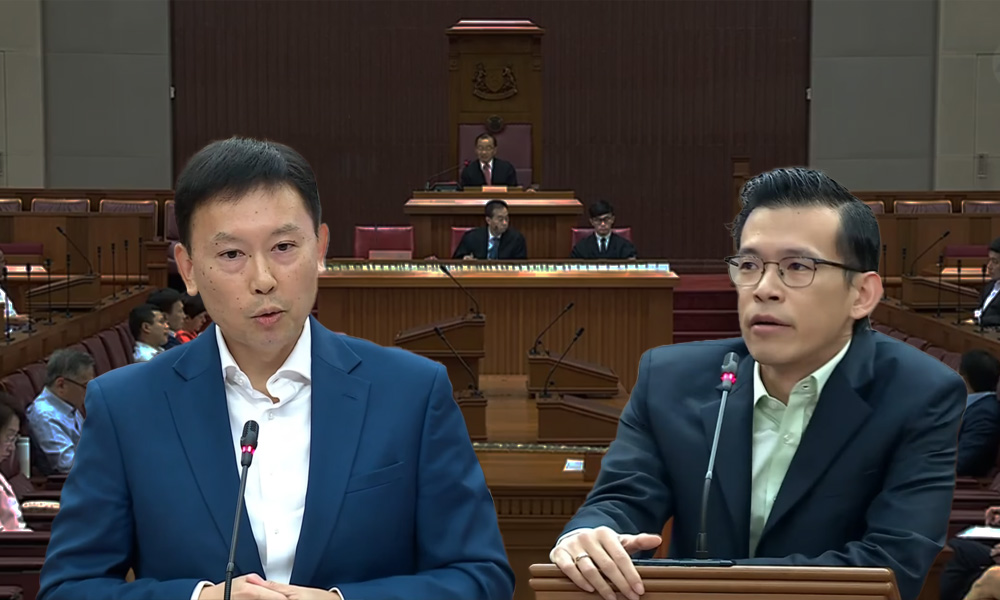
The Singapore Parliament holds itself to a standard of decorum and accountability — or so it claims. But a series of episodes in recent years reveal a growing pattern of rhetorical posturing, aggressive ministerial conduct, and selective enforcement of rules that undermines both the spirit and the letter of parliamentary procedure.
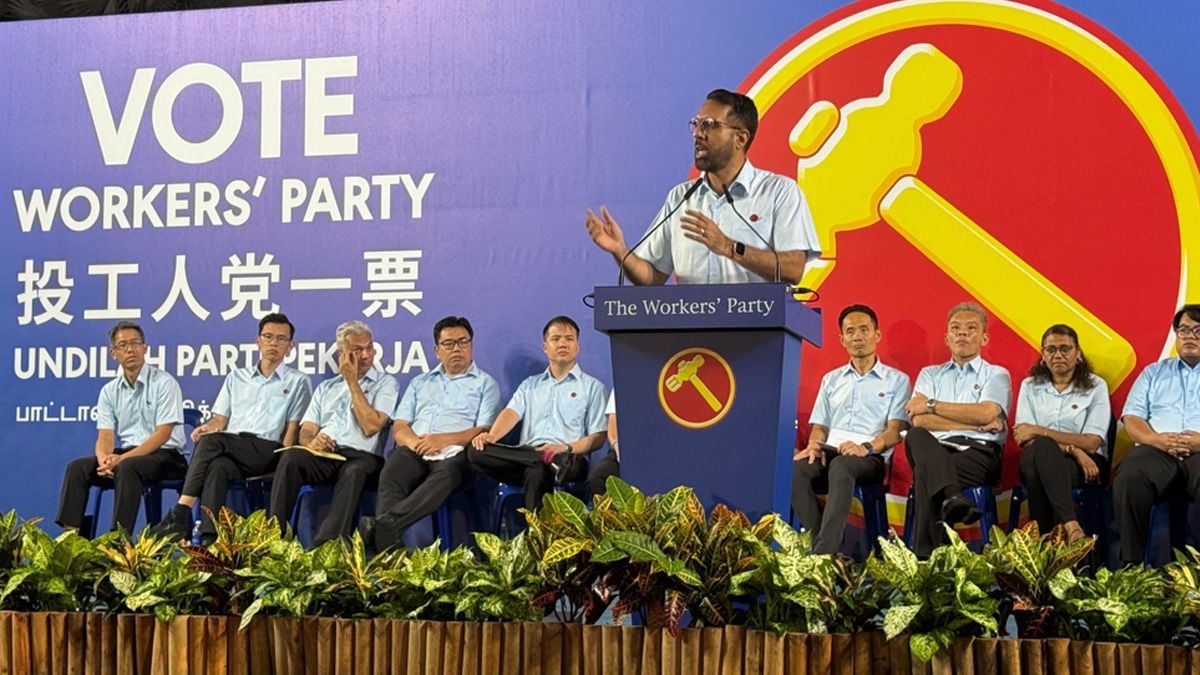
When Workers’ Party MP Kenneth Tiong Boon Kiat recently described a rhetorical question by Minister for National Development Chee Hong Tat as “stupid”, he was swiftly reprimanded by the Speaker and made to apologise. This was in line with the rules — but that compliance shines a brighter light on the many instances where ministers were not held to the same standard, despite conduct that was arguably worse.
Because while “stupid” is unparliamentary, so too is mockery, deflection, name-calling, file-flinging, and grandstanding — all of which have been displayed by People’s Action Party (PAP) ministers without similar consequences.
Dodging the point: When answers become questions
In Tiong’s case, he had asked serious supplementary questions that were clear, pointed, and policy-focused. He asked:
- Whether the Monetary Authority of Singapore (MAS) had conducted any mid-term reviews of DW Capital Holdings, despite public reports dating back to 2022 and 2024 that flagged concerns about its links to Prince Group’s scam operations.
- Whether the Government would now assume that illicit money has already penetrated Singapore, and if so, whether enhanced due diligence would be mandated across all regulated financial sectors, not just at onboarding.
- Whether existing tax incentive holders under the 13O and 13U family office schemes would be subject to mandatory re-screening, given ongoing concerns about money laundering.
These were not rhetorical flourishes — they were concrete policy questions, grounded in publicly reported timelines and aimed at identifying systemic regulatory vulnerabilities.
In response, however, Chee — who also serves as Deputy Chairman of MAS’ Board of Directors — did not address the substance of the queries. Instead, he asked Tiong:
“Is the Workers’ Party advocating a zero-risk approach? Or would he agree with me that we should adopt a risk-proportionate approach, set high standards, but also maintain the efficiency and competitiveness of our financial system?”
This was not clarification — it was a political reframing that ignored the substance of the concern. It’s a familiar tactic: recast policy critiques as ideology, then dismiss them as impractical.
Such evasions have precedent.
In January 2020, Opposition Leader Pritam Singh asked for a breakdown of employment data between Singaporeans and PRs. Then-Minister Chan Chun Sing responded:
“What is the point behind the question?”
Instead of providing information, he warned against divisiveness — another example of turning a factual request into a philosophical debate, and in doing so, avoiding transparency.
November 2022: When questions become weapons
In another case, during debate on the Carbon Pricing (Amendment) Bill, Minister Grace Fu repeatedly interrupted WP MP Assoc Prof Jamus Lim and demanded, with rhetorical flair:
“If you are the Minister… how would you glide to this number?”
At one point, she remained standing at the podium, firing question after question at Lim — a breach of procedure, as members are expected to sit after speaking. It was Leader of the Opposition Pritam Singh who had to raise a point of order.
The Speaker let it continue. Had the roles been reversed — with an opposition MP behaving in this manner — it is difficult to imagine such leniency.
March 2023: The file, the fury, and the word ‘coward’
Perhaps the most telling episode of double standards occurred during a heated March 2023 exchange between NCMP Leong Mun Wai and Minister K Shanmugam.
The debate, stemming from a Facebook post by Leong questioning government disclosure around police investigations involving Lee Hsien Yang and Lee Suet Fern, lasted over an hour. Tensions escalated as both men spoke over one another.
At one point, Leong objected to a question from the Speaker, saying:
“Don’t ask me questions that the Minister didn’t ask me.”
This prompted Leader of the House Indranee Rajah to storm to the podium — after flinging her file onto the table — and deliver a scolding:
“I would just like to remind members to conduct themselves in a parliamentary manner… The tone in which we address one another is important.”
Ironically, the most visibly aggressive behaviour that day came from Indranee herself. Throwing a file and approaching the podium with vehemence, her conduct was unbefitting of her role and would likely have drawn immediate rebuke had it come from an opposition MP.
But the Speaker said nothing.
More disturbingly, during the exchange, Shanmugam told Leong:
“Disagree, explain, debate… But don’t be a coward.”
That word — “coward” — is unprecedented in modern parliamentary debate. The last recorded use was in 1962, when then-Minister Kenneth Michael Byrne called Workers’ Party MP David Marshall an “absolute coward”. On that occasion, Speaker Sir George Oehlers immediately intervened:
“The word ‘coward’ should never be used of a Member of this Assembly.”
Byrne was ordered to withdraw the remark — and did so. Contrast that to 2023, where former Speaker Tan Chuan-Jin allowed Shanmugam’s insult to stand without objection or instruction.
Even Indranee, whose role as Leader of the House includes upholding standards, did not raise an issue with the use of the slur. Instead, it was Leong who eventually apologised for his own conduct — despite having just lost his mother days prior and returning to Parliament amidst grief.
Selective decorum is no decorum at all
The issue is not just tone — it is consistency.
If opposition MPs are swiftly censured for saying “stupid”, then ministers who call their colleagues “cowards”, throw files, or badger opponents with rhetorical questions must also be held to account.
The Speaker’s role is not merely to maintain order — it is to uphold fair and impartial standards. When the rules of parliamentary conduct appear to be enforced asymmetrically, the dignity of the House suffers.
Parliament must rise above theatre
Parliament is not a stage for performance, nor a place to entrench political advantage through procedural asymmetry. It is where the people’s representatives — regardless of party — should be able to question, debate, and challenge, without fear of rhetorical ambush or biased enforcement.
If ministers wish to demand respect, they must model it. If the Speaker wishes to enforce dignity, he must do so across the board. And if Parliament is to remain credible, it must start treating its members — all its members — with equal expectation and fairness.