Singapore
Singapore maintains top ranking for public safety in Gallup’s 2025 global survey
Singapore ranked among the safest countries globally in the 2025 Gallup Law and Order Report, with high public confidence in law enforcement, but its public communications spending has drawn attention for its scale.

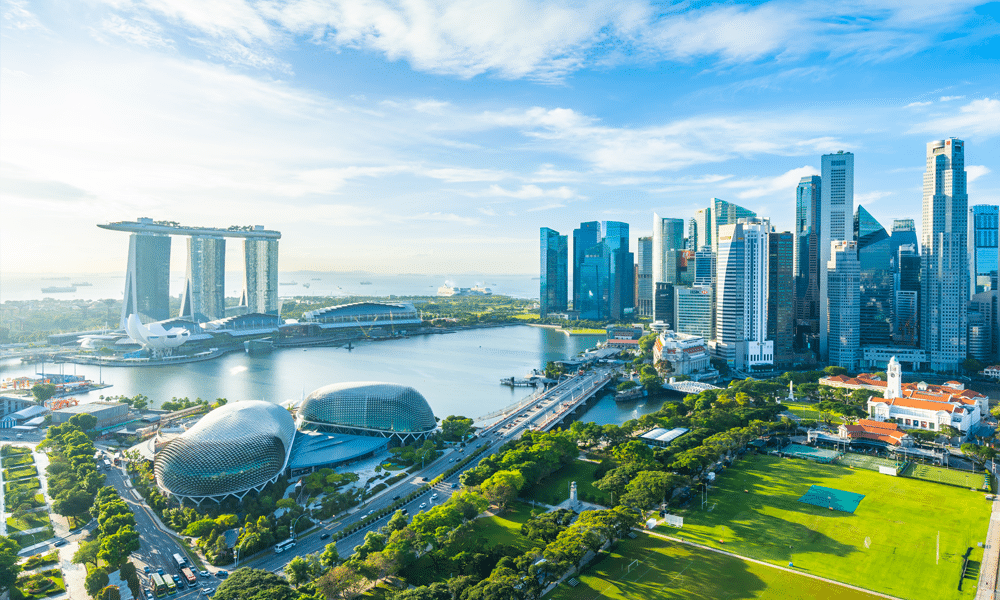
Singapore has been ranked among the world’s safest countries in the 2025 Gallup Global Law and Order Report, released on 8 November. The report measures residents’ perceptions of safety and confidence in law enforcement, based on interviews with over 140,000 individuals across 140 countries.
According to the report, 98% of Singapore-based respondents said they felt safe walking alone at night, while 95% expressed trust in the police—among the highest levels globally. The country earned a Law and Order Index score of 95 out of 100, placing it alongside Norway, the United Arab Emirates, and Switzerland.
Longstanding trend in global safety rankings
Singapore has consistently ranked near the top of Gallup’s safety index for over a decade. In response to the 2025 result, the Ministry of Home Affairs (MHA) credited a mix of legal frameworks, visible policing, community-based enforcement, and strict deterrent laws.
In a statement, the ministry highlighted investments in neighbourhood policing, technology-enabled surveillance, and public involvement initiatives such as SGSecure, which aims to build national resilience against security threats.
Regional and global comparisons
In Southeast Asia, Singapore outpaced regional neighbours by a notable margin. Vietnam ranked second with 88%, followed by Indonesia at 83% in terms of respondents feeling safe walking alone at night.
Across Asia, average safety perception hovered around 70%, placing Singapore well above the regional mean. The global average Law and Order Index score was 71, according to Gallup.
The results align with other benchmarks. The 2025 Global Peace Index, published by the Institute for Economics and Peace, also named Singapore the most peaceful country in Asia and placed it within the top 10 globally.
Key factors behind safety perception
Singapore’s safety reputation is often linked to low rates of violent crime and visible enforcement mechanisms. Urban planning features such as well-lit streets and public CCTV infrastructure contribute to both perception and deterrence.
The Singapore Police Force reported a 4.5% decline in overall crime in 2024. However, authorities noted that cybercrime and scams remain significant challenges. Scams accounted for more than half of all reported crimes, with total losses exceeding S$650 million (US$500.5 million) last year.
To counter this trend, the government established a Counter-Scam Command and increased cooperation with banks and telecommunications providers to block suspicious transactions more swiftly.
Senior Minister Teo Chee Hean stated, “Safety today must include cyberspace. Our aim is to be as safe online as we are on the streets.”
Public trust and recent incidents
Among residents, safety is often seen as part of daily life. “I can walk home after midnight without fear — that’s something I never take for granted,” said Nur Aisyah, a 32-year-old office worker in Toa Payoh.
Still, isolated incidents do occur.
Just days before the Gallup report’s release, police arrested a 22-year-old man for an alleged robbery with hurt in Little India. The assault, which took place in the early hours of 9 November, resulted in a 28-year-old victim being hospitalised and robbed of S$190 (US$146). The suspect was arrested within 20 hours using CCTV and police camera footage.
While such cases are rare, they highlight the need for continued vigilance, even in generally safe environments.
A closer look at communications spending
Political analysts say public trust is a key pillar of Singapore’s internal stability. “Safety depends not only on laws, but on legitimacy,” said Dr Ho Kai Leong, a political analyst. “Singapore’s trust in public institutions helps sustain a sense of safety that many countries struggle to build.”
However, some observers have pointed to significant government spending on communications, particularly by the Ministry of Home Affairs.
For the 2025 financial year, MHA allocated S$132.5 million (US$102 million) to International and Public Relations and Public Communications. This figure represents more than 34% of the total S$393.1 million (US$302.7 million) allocated across all Singapore ministries for communications.
In comparison:
- Ministry of Health (MOH): S$29.8 million (US$22.9 million)
- Ministry of Education (MOE): S$9.9 million (US$7.6 million)
- Ministry of Transport (MOT): S$9.6 million (US$7.4 million)
- Ministry of Manpower (MOM): S$6.3 million (US$4.9 million)
- Ministry of Trade and Industry (MTI): S$2.5 million (US$1.9 million)
- Ministry of Defence (MINDEF): S$20,500 (US$15,800)
- Ministry of Finance (MOF): S$897,200 (US$690,800)
The disparity raises a broader question: if public trust in law enforcement is already among the highest globally, as Gallup’s findings suggest, to what extent is such a large-scale publicity budget necessary?
In the absence of a detailed breakdown of how these funds are used — for instance, how much supports public education versus strategic messaging — it remains unclear whether the scale of spending reflects operational need or institutional priorities around influence and perception.