80 piracy and robbery cases reported in Straits of Malacca and Singapore in first half of 2025
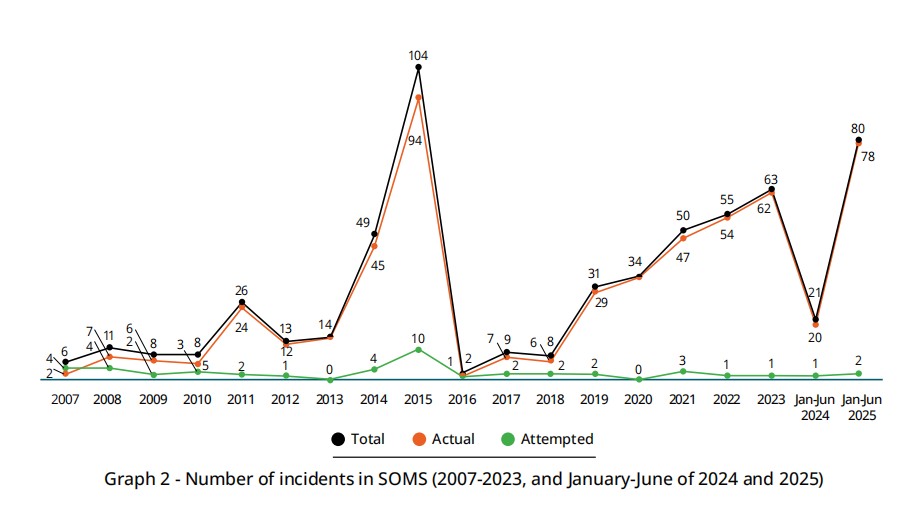
The first half of 2025 saw 80 piracy and armed robbery cases in the Straits of Malacca and Singapore, nearly four times the 21 incidents in the same period last year, ReCAAP ISC reported on 10 July 2025. The Straits accounted for 84 per cent of all 95 incidents in Asia in the first six months of 2025.

SINGAPORE: A sharp rise in piracy and armed robbery incidents in the Straits of Malacca and Singapore has raised concern within the maritime community, despite the majority of cases being of low severity.
According to the Regional Cooperation Agreement on Combating Piracy and Armed Robbery against Ships in Asia (ReCAAP) Information Sharing Centre’s (ISC) half-yearly report released on 10 July 2025, 80 incidents were recorded between January and June 2025.
This figure is nearly four times the 21 incidents reported in the same period in 2024.
The incidents in the Straits account for 84 per cent of all 95 incidents reported in Asia in the first half of 2025.
Significant increase but low severity
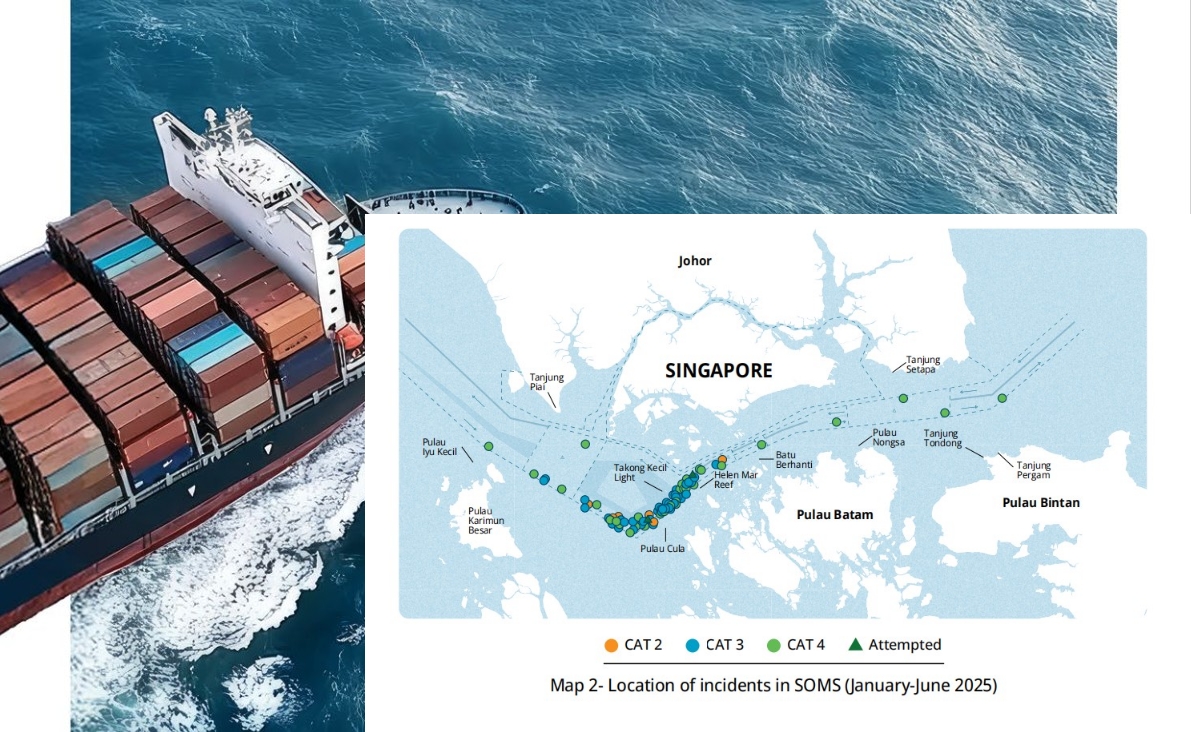
At a media briefing in York Hotel Singapore on 10 July 2025, ReCAAP ISC’s Executive Director Vijay D Chafekar highlighted that although the number of incidents has surged, they remain less severe than piracy cases elsewhere. “There has not been a serious piracy case in Asian high seas for four to five years,” Chafekar stated. “Most cases here involve petty thefts with minimal confrontation.” ReCAAP ISC’s report showed that none of the 80 incidents in the Straits were classified as Category 1, which involves severe violence or hijacking. Seven were deemed Category 2, where perpetrators were armed with knives or gun-like objects. Six of these occurred on bulk carriers and one on a container ship.Crew safety and psychological impact
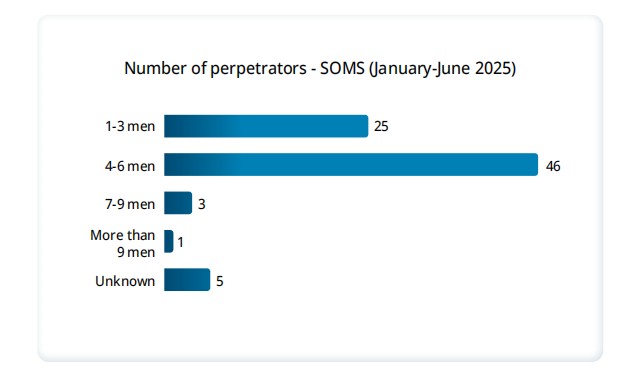
Despite the low severity, the presence of intruders remains unsettling. “A knife-wielding person on board, even if no one is harmed, has a huge psychological impact on the crew,” Chafekar remarked. In one incident, a crew member suffered a minor head injury, while in four incidents, crew members were restrained. Items stolen included personal belongings, engine spares and equipment. ReCAAP ISC’s findings noted that most attacks occurred while ships were underway, mainly during hours of darkness. Bulk carriers were the most targeted, followed by tankers and container ships. Small groups of four to six perpetrators typically boarded ships using small unlit boats, taking advantage of poor visibility to approach unnoticed.