Comments
Govt urged to review CBA’s KPIs for Smith Street rejuvenation amid S$77k pavement rent dispute
In a TikTok post, former F&B owner Khoo Keat Hwee renewed scrutiny of the Chinatown Business Association’s rent-setting practices and questioned its effectiveness in rejuvenating Smith Street. Public attention focused on CBA’s S$77,000 rent demand for a narrow walkway—S$8,600 per month—versus its own S$123,000 lease for over 33,000 sq ft, working out to S$3.75 per sq ft.

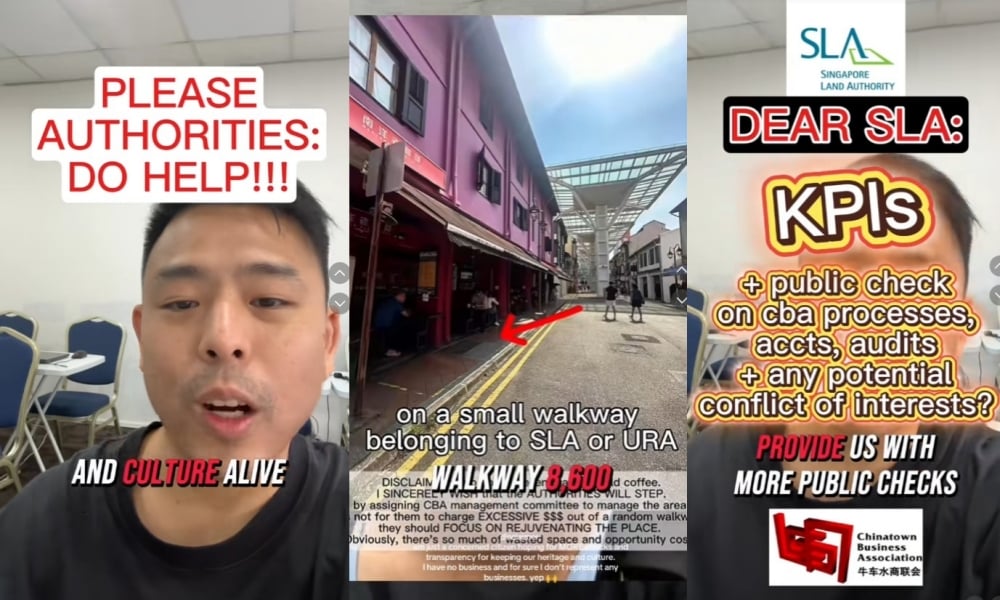
SINGAPORE: Khoo Keat Hwee, founder of Mentai-Ya Japanese Cuisine and F&B consultant, has continued his criticism of the Chinatown Business Association (CBA) over its rent-setting practices and management of the historic precinct.
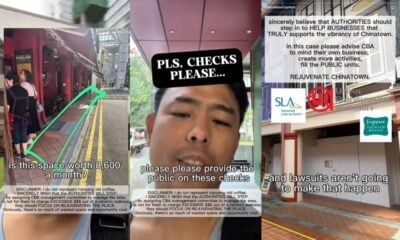
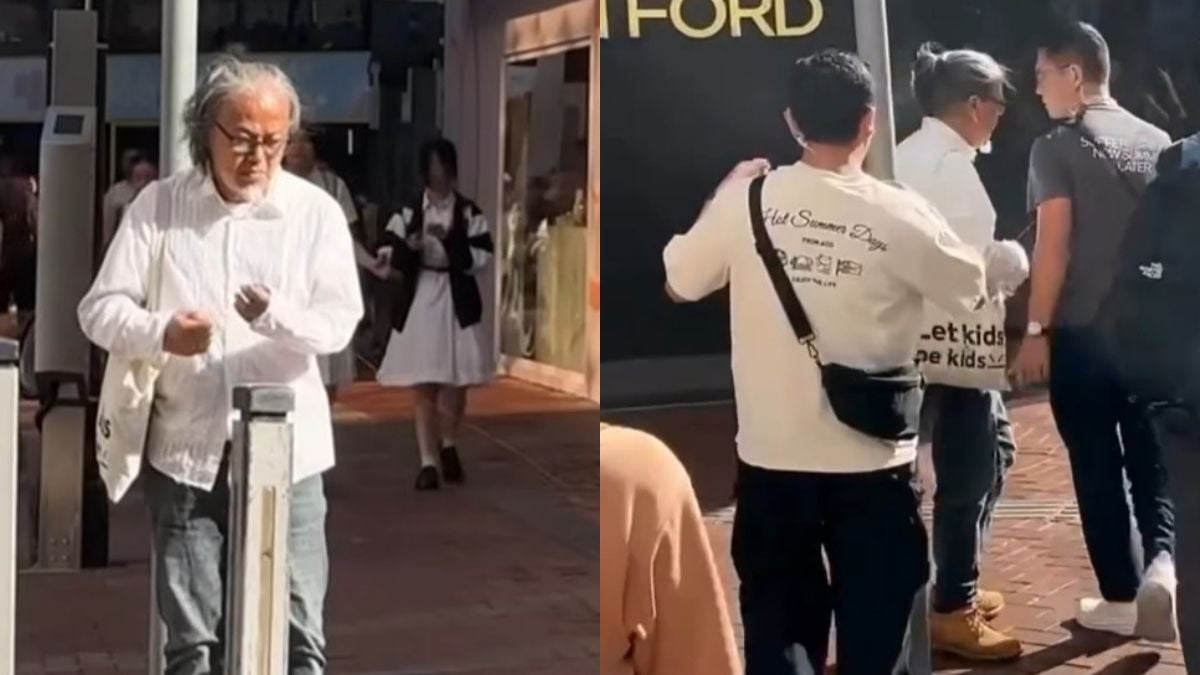
In a TikTok video posted on 6 July 2025, he raised concerns about an S$8,600 monthly rent demanded for a 65 sq ft sheltered walkway outside Nanyang Old Coffee.
Call for transparency and public oversight
Nanyang Old Coffee, has been issued a legal letter from the CBA demanding over S$77,000 in unpaid rent for nine months of outdoor space usage, plus S$5,500 in legal fees.
Speaking “as a concerned citizen hoping for more checks and transparency for keeping Singapore heritage and culture,” Khoo said his fundamental concern is public accountability.
He has called on government agencies and Singaporeans to incentivise more robust performance indicators (KPIs) and oversight into CBA’s stewardship of the precinct.
Khoo’s point is stark: “Any paid management agent, or paid director, can just say, ‘sorry I quit my job.’ But if this salary director doesn’t do their job well and the streets stay empty, honest operators … might risk failing or lose everything they built. ”
“There’s no ‘sorry, please give me back my rent’ on this quiet street.”
Questionable rental disparities
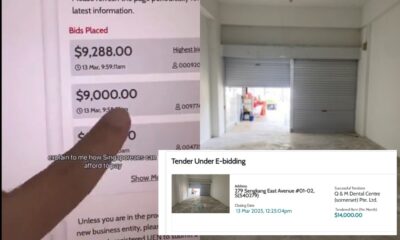
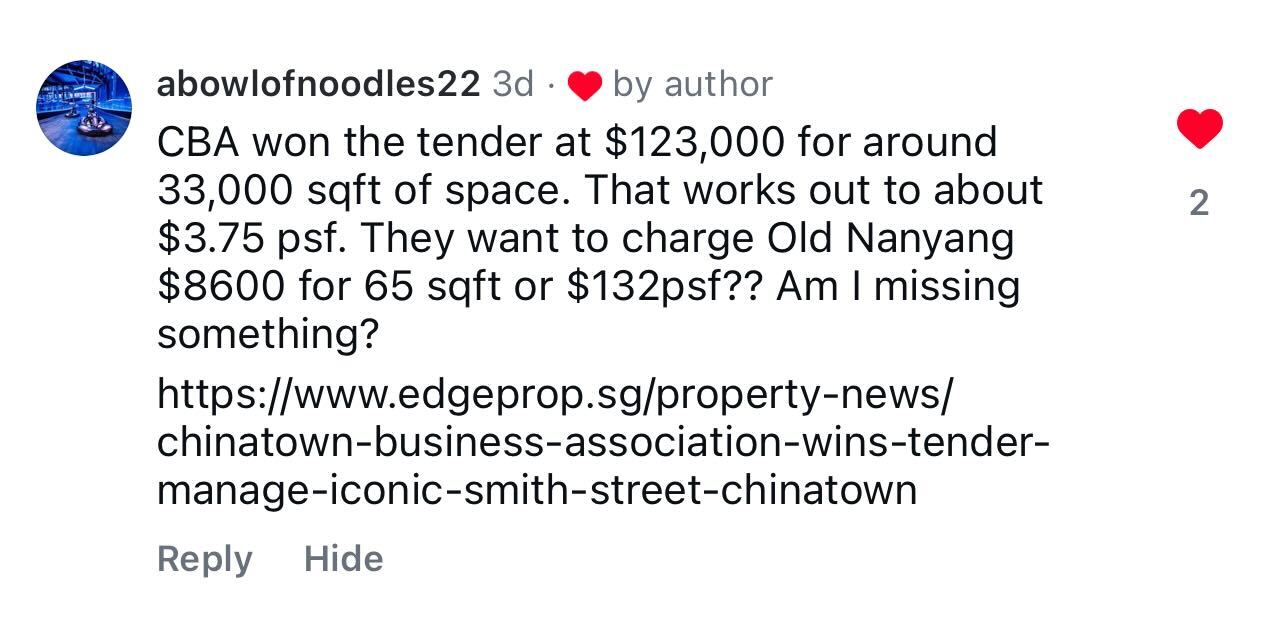
An online comment highlighted that CBA as the master tenant for approximately 33,065 sq ft of gross floor area (GFA) on Smith Street and adjacent State land, having won a tender in August 2024 with a monthly lease of S$123,000.
This works out to roughly S$3.75 per sq ft.
Yet, CBA demanded S$132 per sq ft from Nanyang Old Coffee, roughly 35 times the tender average—despite the café’s use of only an approximately 65 sq ft walkway.
“They (CBA )want to charge Old Nanyang $8,600 for 65 sq ft or $132 psf?” the TikTok user broke down the math based on the tender’s area and rent .
Outdated event listings on CBA’s website
Khoo also highlighted discrepancies in CBA’s management of public information.
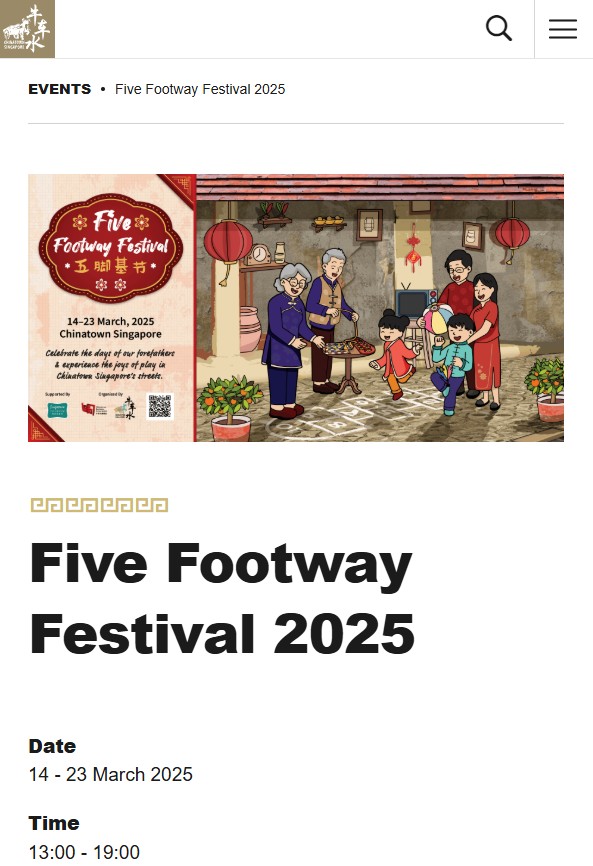
While the Five Footway Festival 2025—CBA’s last event listed on their official website—took place from 14–23 March, the website appears otherwise silent.
Khoo questioned: “If your information… is not updated, then why bother having a website representing our place of interest?”
Yet CBA’s Facebook page suggests more active engagement, advertising events such as Hanfu and flower‑accessory rentals at Sago Street, a Nyonya Heritage workshop on 19 July, a Kaya Blossom Tart workshop, and the Smith Street Mini Fun Fair held from 7–21 June 2025.
Khoo contrasted these activities with the inactivity on CBA’s own site, underscoring concerns over transparency and coordination.
Outdated CBA tenant listings and office space concerns
Further scrutiny arose from factual errors in CBA’s tenant listings.
For example, ‘Authentic Manchurian Cuisine’ is recorded as temporarily closed on Google Maps, while Holland Village XO Fish Head Bee Hoon Restaurant has relocated from 17 Smith Street to Temple Street.
Khoo argues that such inaccuracies undermine public confidence in CBA’s commitment to supporting Chinatown operators.
Concerns extend beyond rent hikes and outdated listings.
Khoo queried the CBA’s decision to convert prime ground‑floor shophouse units into office space.
He asked: “How much should a non‑profit office fund from shophouse work, and will their office space help rejuvenate the street?”
He urged for more clarity on this, asking whether the space benefits public stakeholders or merely serves administrative convenience.
@keatmentaiya Who’s really responsible when our heritage streets stay empty? Tag someone who needs to see this. Drop your thoughts below.👇 #SmithStreetSG #ChinatownSG #SaveOurHeritage #SupportLocalSG #URA #SLA #SingaporeIssues #SgHawker #HawkerCulture #HeritageSG #食话实说 #RealTalkSG #ChinatownMatters #FYP #ForYou #ForYouPage #TrendingSG #SgTikTok #SpeakUpSG ♬ original sound – Keat Mentaiya 食话实说
SLA outlines vision for vibrant and heritage-rich Smith Street
According to the Singapore Land Authority, the master‑tenant contract covering shophouses at 11–37 Smith Street and adjoining State land spans some 34,066 sq ft of land and 33,065 sq ft GFA.
The contract lasts five years, with an option to renew for a further four years.
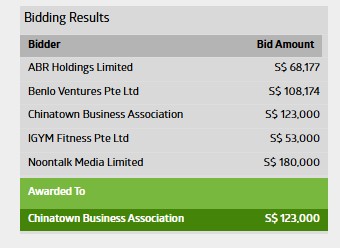
CBA secured the tender as the runner‑up, after Noontalk Media submitted the highest bid of S$180,000, followed by CBA’s own successful offer.
Other bids ranged from S$108,174 (Benlo Ventures) to S$53,000 (IGYM Fitness).
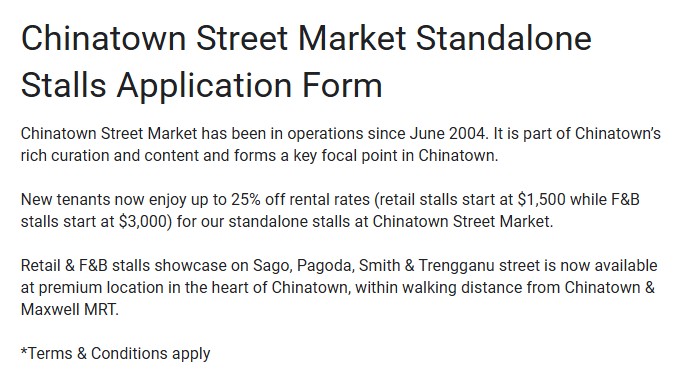
The SLA’s tender documentation stated that the revitalised Smith Street would feature new lifestyle concepts, diverse dining experiences, culturally complementary programmes, and improvements to the public realm.
CBA’s proposal emphasised “differentiated lifestyle concepts, complementary programmes and enhancements to the public realm” with the goal of bolstering Chinese‑heritage identity, according to SLA.
CBA’s earlier response to rent dispute with Nanyang Old Coffee
The rub lies in a standoff between CBA and Nanyang Old Coffee’s founder, Lim Eng Lam.
CBA claims it made repeated contact attempts from October 2024 to engage him, including in February and March 2025, to sublet the walkway space—although the café allegedly did not respond.
CBA stressed it was not aiming to restrict the café’s operations, but asserted that all managed areas must be paid for.
It further stated any proceeds from legal action would be donated.
Lim, meanwhile, told Lianhe Zaobao on 24 June that he removed all tables and plants by 23 June—CBA’s final deadline.
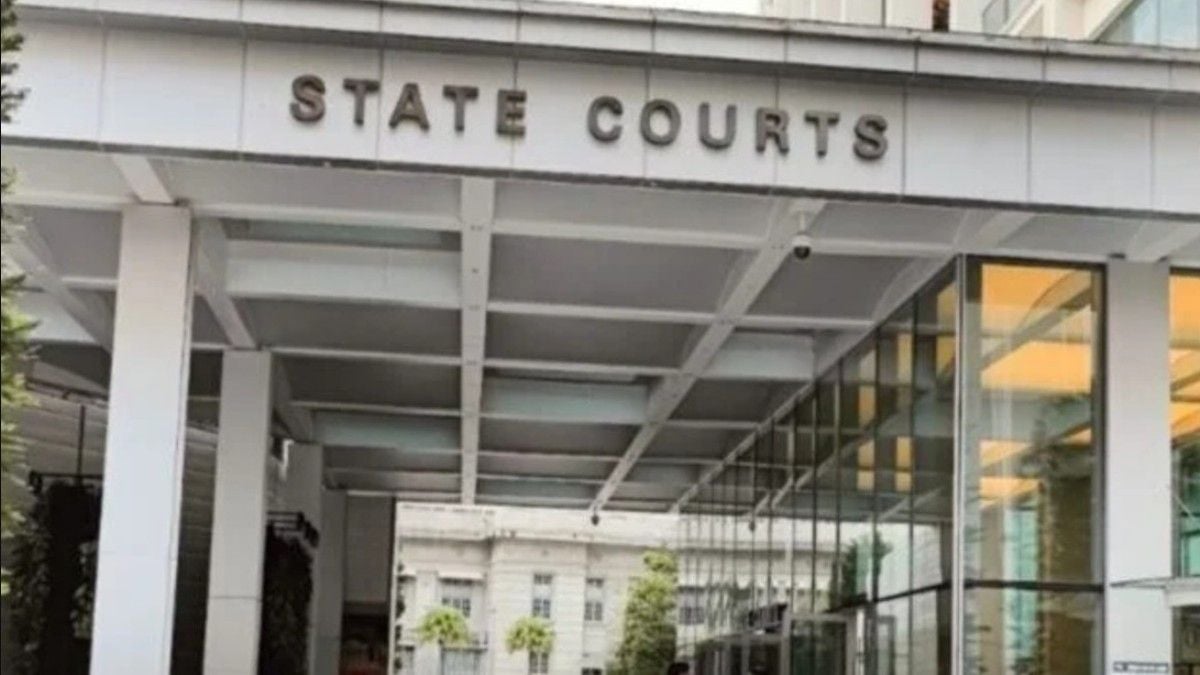
He is appealing for a waiver of accumulated rent and legal fees. An interlocutory hearing was scheduled in State Court on 26 June.
The walkway in question has been in use by the coffee shop for over 15 years—heightening claims of entitlement based on longstanding custom.
Broader calls for rental reform
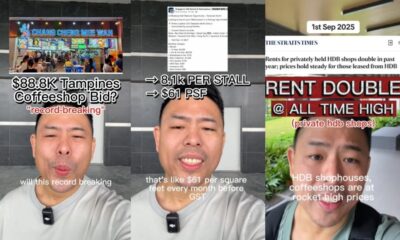
The Chinatown dispute reflects a larger problem across Singapore, where small and medium-sized enterprises (SMEs)—particularly in the F&B sector—are struggling with unsustainable rental hikes.
In May, a bakery near Sembawang Road saw a 15% increase in rent, while a cake shop in Siglap faced a jump from S$5,400 to S$8,500—an increase of 57%—which led its owner to shut down.
On 12 June, advocacy group Singapore Tenants United For Fairness (SGTUFF) called for urgent structural reforms to help SMEs stay afloat.
Their recommendations include short-term relief and long-term policy recalibration.
Among their proposals: rental caps tied to inflation and a national reassessment of urban planning and commercial land use priorities.