Politics
GE2025 candidates spend record S$13 million, highlighting PAP’s resource dominance
Candidates in Singapore’s GE2025 spent over S$13 million, a sharp rise from 2020, with PAP alone accounting for more than 70% of total spending. While the Workers’ Party led among the opposition, smaller parties spent far less. Notably, grassroots schemes during the campaign likely fell outside these declared expenses.

Candidates in Singapore’s 2025 General Election collectively spent over S$13.05 million on their election campaigns, according to declarations released by the Elections Department (ELD) on 27 June 2025.
This marks a significant increase of 42.4 per cent from the S$9.16 million spent during the 2020 polls. The data, published after submissions were gazetted, underscores the rising costs of political campaigning in Singapore.
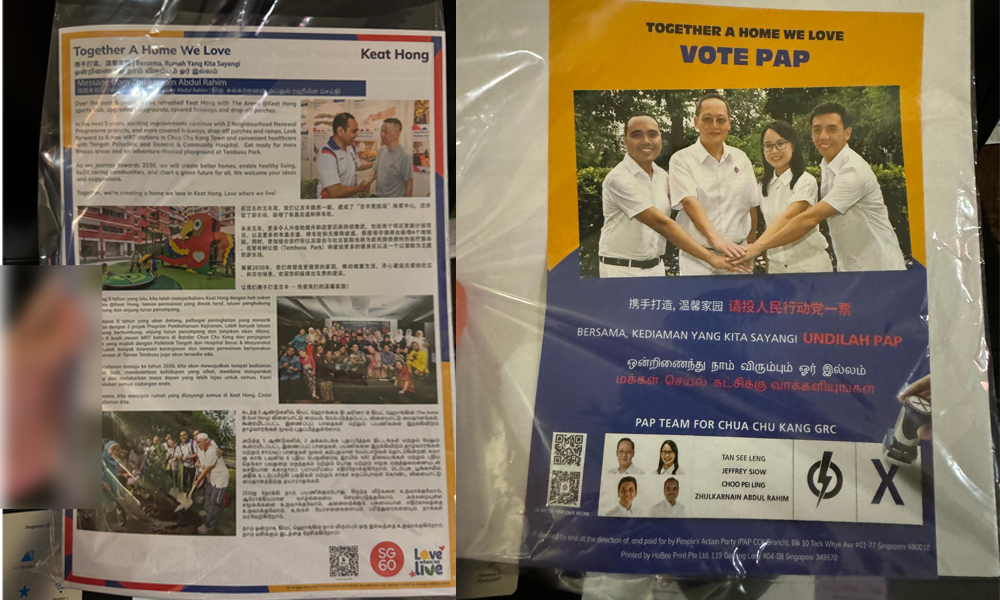
Almost half of this year’s expenses went towards non-online advertising, such as posters, banners, and flyers. Candidates spent a combined S$6.24 million on these traditional methods, an 11.4 per cent rise from 2020’s S$5.6 million.
Spending on online advertising, including paid social media content and website promotions, rose slightly to S$2.13 million, up from S$2 million in the previous election.
The 2025 election also marked the return of physical rallies, which had been suspended in 2020 due to pandemic restrictions. Candidates collectively spent S$1.72 million on 48 rallies held during the campaign period.
The People’s Action Party (PAP) emerged as the highest spender, declaring S$9.4 million in expenses — representing over 70 per cent of total spending across all parties.
The ruling party, which contested all 97 seats, allocated 42.8 per cent (S$4.03 million) to non-online ads, S$2.04 million to online ads, and S$1.05 million to rallies. The scale of PAP’s spending highlights its significant organisational and financial capacity, providing a major structural advantage over its opponents.
The Workers’ Party (WP) was the largest opposition spender, declaring S$1.64 million — a substantial portion of total opposition spending. Nearly 70 per cent (S$1.14 million) of WP’s expenses went to non-online advertising. WP spent about S$233,000 on rallies and only S$540 on online ads, all of which was attributed to Aljunied GRC MP Gerald Giam.
Other opposition parties operated on considerably smaller budgets. The Singapore Democratic Party (SDP) declared S$583,440 in expenses across 11 candidates, with more than half going to non-online advertising. Rallies accounted for 39 per cent (S$228,520), while online ads made up only 3 per cent (S$20,000).
The Progress Singapore Party (PSP), which fielded 13 candidates, reported S$441,548 in total spending — a significant decline of nearly 43.5 per cent from 2020. PSP allocated S$248,736 to non-online ads, S$98,739 to rallies, and S$52,538 to online ads. This reduction may reflect a strategy to focus resources on fewer constituencies or funding constraints.
Among smaller parties, spending was even more restrained: National Solidarity Party (NSP) spent S$281,888, Red Dot United (S$204,145), Singapore Democratic Alliance (S$193,524), Singapore People’s Party (S$107,196), People’s Power Party (S$80,218), People’s Alliance for Reform (S$59,527), and Singapore United Party (S$32,789).
Interestingly, NSP stood out for spending more than many other small parties despite losing deposits in all the seats it contested, suggesting either a willingness to invest heavily despite low support or difficulty in translating spending into votes.
At the constituency level, the highest spending teams were all from PAP. In East Coast GRC, PAP spent S$602,866 — more than twice the WP’s S$250,560. Senior Minister of State Tan Kiat How led individual spending in this constituency with S$150,062. PAP’s West Coast–Jurong West GRC team followed closely at S$602,708, while the Punggol GRC slate spent S$541,854. Notably, the Punggol team allocated more than half of its spending to online platforms, contrasting with the other PAP teams’ focus on traditional advertising.
Among single-member constituencies, top spenders included PAP’s Alex Yeo (Potong Pasir), Liang Eng Hwa (Bukit Panjang), and Low Yen Ling (Bukit Gombak), whose spending was also heavily directed towards non-online advertising.
The highest individual spender in GE2025 was National Solidarity Party president Reno Fong, who declared S$160,000. Interestingly, his teammates in Tampines GRC reported no expenses — a common practice in GRCs, where expenses are often consolidated under one or two candidates for administrative efficiency.
A total of 24 candidates declared no individual campaign expenses, not because they conducted no activities, but due to this practice of pooling and consolidating spending within their teams.
While overall online spending saw a modest increase, most major opposition parties continued to rely on traditional ground engagement, highlighting the enduring importance of face-to-face outreach in Singapore’s electoral strategy.
Beyond individual strategies, the expense declarations reveal the stark disparity in resources between PAP and its challengers. PAP’s deep financial and organisational strength allows for large-scale, multi-channel campaigns unmatched by any opposition party.
Even within the opposition, WP accounts for a large share of spending, while smaller parties such as SDP, PSP, and NSP operate with far leaner war chests.
It should also be noted that despite the high amounts declared, these official expenses very likely do not include parallel grassroots or community initiatives that took place during the election period, such as S$1 meal deals, discounted groceries, or town upgrading and community events.
These schemes, often organised by affiliated town councils or community organisations, play a significant role in ground outreach but would typically fall outside formal campaign spending declarations.
Furthermore, the public cannot verify how these sums are specifically spent, as declarations are submitted as consolidated totals without detailed itemised breakdowns.
All candidates were required to submit detailed declarations of expenses by 16 June 2025, a legal requirement to ensure financial transparency. The ELD confirmed that all 211 candidates met this deadline.
The expense declarations were published in three batches on 29 May, 13 June, and 27 June. The records will be available for public inspection on the ELD website for six months from the gazette date.