Comments
Vote-buying? Netizens question timing of food voucher initiatives ahead of general election
A wave of food voucher and care package schemes launched close to the General Election has come under public scrutiny, with netizens questioning whether these are genuine welfare efforts or indirect vote-buying. Some argued that if public funds are involved, credit should be shared with all MPs, not just the ruling party.

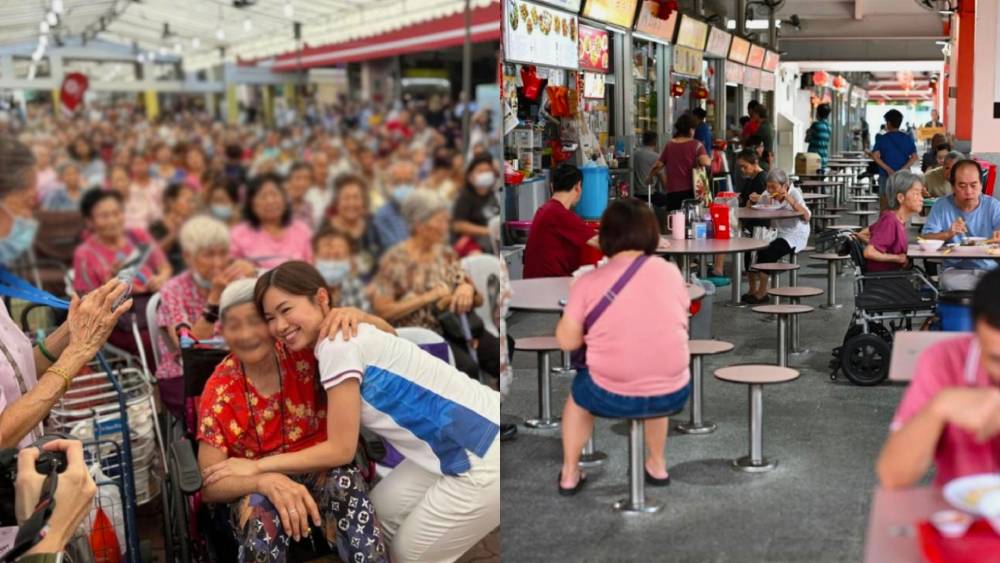
SINGAPORE: A series of food voucher and care package initiatives rolled out across various constituencies has sparked public debate, with some netizens questioning whether these efforts amount to indirect vote-buying ahead of the upcoming General Election.
In MacPherson, a new food support initiative titled MacPherson Jiak Ba Buay—Hokkien for “have you eaten”—was launched by MP Tin Pei Ling on 12 April at Geylang East Market and Food Centre.
The $216,000 programme is designed to benefit up to 2,400 low-income households while also supporting local hawker businesses.
To qualify, residents must be Singapore citizens holding a valid blue or orange CHAS card, or have a monthly household per capita income of $2,300 or less. Registration is open at MacPherson Community Club.
Each eligible household will receive 15 meal vouchers worth $3 each, which can be used at participating hawker stalls. The vouchers are valid until March 2026.
Approximately 137 stalls across Geylang East Market and Food Centre, and hawker centres at Blocks 79/79A, 80, and 89 Circuit Road, are involved in the scheme.
Participating stalls will display a decal indicating their inclusion in the programme.
Tin said the initiative was introduced in response to residents’ concerns about food affordability.
While existing programmes, such as the MacPherson Marketplace, offer cheaper groceries, many residents had expressed a desire to dine more confidently at hawker centres.
She added that the vouchers aim to give residents the ability to choose the food they want and ensure they stay full, while providing a boost to hawkers.
In the weeks leading up to the launch, 1,140 residents had already registered for the scheme.
Tin also confirmed that her team would continue raising funds to sustain the initiative until 2026. She noted that this is just one of many tools to assist low-income households in MacPherson.
Although MacPherson SMC will be absorbed into the newly renamed Marine Parade–Braddell Heights GRC for the upcoming election, Tin assured that existing programmes will continue without disruption.
Her team will also gather feedback from residents to assess the effectiveness of the initiatives.
Citing the Caregiver Support Fund as an example, Tin described their approach as two-pronged—designing programmes for specific local needs while also scaling up solutions that can be applied across the GRC when common concerns arise.
Care Pack Initiatives in Bukit Timah and Jurong
Similar initiatives have been launched in other parts of Singapore.
In Bukit Timah, a Care Value Package was introduced, allowing households to purchase a bundle of essentials for $5 via the People’s Association website.
The package includes two and a half kilogrammes of white rice, two litres of cooking oil, and $20 worth of vouchers for the Bukit Timah Interim Market and Hawker Centre.
Orders must be placed by 15 April, with collection scheduled for 26 and 27 April.
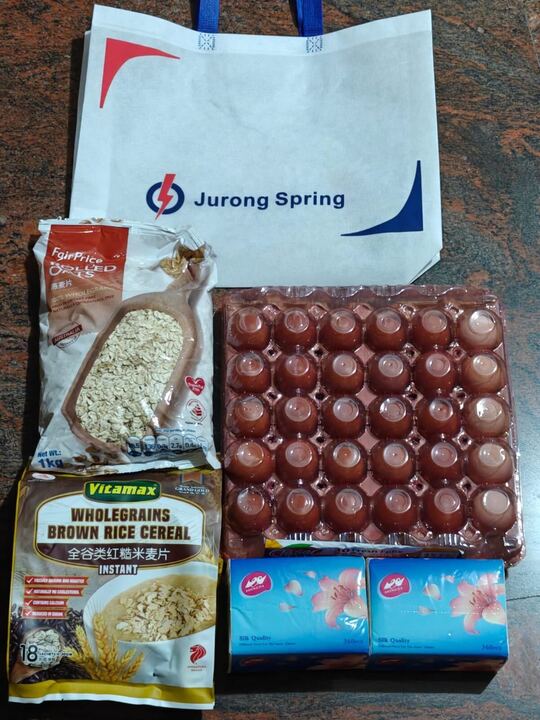
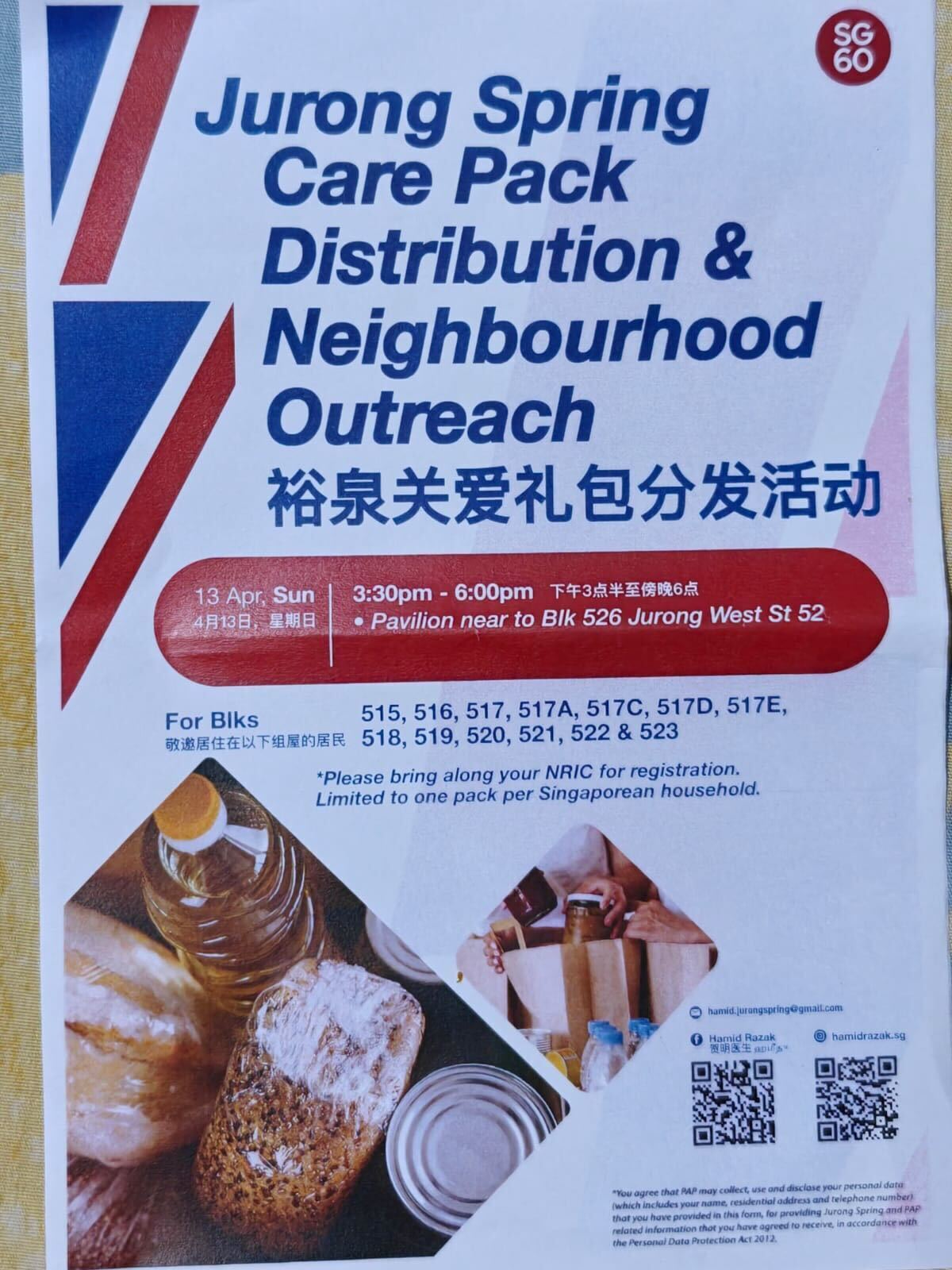
In Jurong, the “Jurong Spring Care Pack” has been distributed to residents.
The pack includes a tray of eggs, tissue rolls, brown rice cereal, and other daily necessities.
Photos show goodie bags featuring the PAP logo and the words “Jurong Spring.”
‘Is This Vote-Buying?’ Netizens Question Timing of Handouts
The roll-out of these food vouchers and care packages so close to the election period has drawn scrutiny, with accusations of indirect vote-buying surfacing online.
Veteran journalist Bertha Henson questioned the MacPherson initiative in a Facebook post on 14 April, asking, “Who put up the money? Is this vote-buying?”
Similar sentiments were echoed in the comments on The Straits Times’ Facebook post about the MacPherson scheme.
Many questioned the timing of the giveaways and whether they were politically motivated.




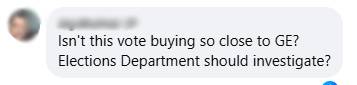
One user wrote, “Isn’t this vote-buying, especially so close to the General Election?”
They suggested that the Elections Department should investigate the matter.
Another user raised concerns about the source of funding, questioning whether the money came from the government or other sources.


They argued that if it is government funding, opposition MPs should also be credited, as the funds do not belong solely to the ruling party.

Others expressed skepticism about the motivations behind such initiatives, with one commenter remarking, “Purely because of election… If it’s during a non-election period, I would clap more for the government. But very pretentious acts.”

The debate has sparked wider discussions about the ethical implications of such initiatives during an election period, with many wondering whether these efforts genuinely aim to assist residents or are strategically timed to sway voters.