Parliament
Rahayu Mahzam: Less than 10% of foreign mothers delivering Singaporean children are not PRs or LTVP+
During the Parliament sitting on 8 April, Minister of State for Health Rahayu Mahzam said under 10% of foreign mothers of Singaporean children lack PR or LTVP+ status. Most receive full citizen-level maternity subsidies. WP’s Sylvia Lim raised concerns that high delivery costs for others may hinder Singapore’s efforts to boost fertility.

SINGAPORE: During the Parliament sitting on 8 April, the Ministry of Health (MOH) clarified that less than 10% of foreign mothers giving birth to Singaporean children are neither Permanent Residents (PRs) nor Long-Term Visit Pass Plus (LTVP+) holders.
This was disclosed by Minister of State for Health Rahayu Mahzam in response to parliamentary questions filed by Workers’ Party chair Sylvia Lim and Ang Mo Kio Member of Parliament Gan Thiam Poh.
According to Rahayu, the vast majority of these foreign mothers are either PRs or LTVP+ holders, and they are already entitled to full maternity subsidies equivalent to those given to Singaporean citizens.
These subsidies cover the entire delivery episode, from hospital admission to discharge.
MPs raise concerns over maternity subsidies, hospitalisation costs, and insurance coverage for foreign mothers and their families
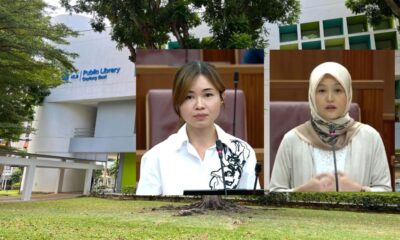
Lim, who is also Aljunied GRC MP, had asked whether citizen-level maternity subsidies for foreign mothers of Singaporean children covered all hospitalisation costs.
She also questioned whether the Ministry would consider reviewing the disparity in total bill sizes faced by these mothers.
Gan Thiam Poh inquired whether MOH had received appeals from Singaporeans seeking financial help with medical expenses incurred by foreign spouses or relatives.
He also asked if there were plans to mandate medical insurance coverage for long-term pass holders.
In response, Rahayu confirmed that MOH does receive such appeals.
These are handled on a case-by-case basis, though the Ministry does not track the total number of appeals.
She highlighted that as medical subsidies are funded by Singaporean taxpayers, any extension of these benefits to foreigners must be approached with care.
She added that foreigners facing financial difficulties could approach medical social workers for assistance.
Moreover, foreigners holding LTVPs or Dependant Passes already have the option to purchase Integrated Shield Plans or rely on employer-provided medical benefits.
Premiums for these plans may also be paid using the MediSave accounts of their Singaporean or PR family members.
Concerns raised over high delivery costs for foreign mothers not on LTVP+ may hinder Singapore’s fertility goals
Lim further questioned whether the Ministry recognised that many Singaporean children are born to foreign mothers on LTVPs or lesser passes, who face significantly higher total hospital bills.
She expressed concern that such costs may deter childbirth, contradicting Singapore’s efforts to improve its Total Fertility Rate (TFR).
Rahayu responded that MOH’s data clearly showed the proportion of such mothers was under 10%.
For those awaiting LTVP+ approval at the time of delivery, retrospective applications can be made for subsidies at the citizen rate for their hospital stay.
She also noted that LTVP+ holders married to Singaporeans are eligible for the same inpatient subsidies at public hospitals as PRs, even beyond the delivery episode.
Lim continued to press the issue, arguing that even though the number of such cases was small, each Singaporean child is valuable.
She urged MOH to consider financial support even for mothers not currently holding LTVP+ or PR status.
“Every Singaporean child born is precious to us. Given that the numbers are not large, according to what the ministry has just said, then I think there is scope for us to review to see how we can better support financially at least the delivery episodes of these mothers who are holders of LTVP+ or lesser passes, ” Lim said.
In response, Rahayu assured the House that MOH regularly reviews its healthcare financing policies to address any emerging trends or coverage gaps.
She encouraged mothers on LTVP or lesser passes to apply for LTVP+ status, which would qualify them for the relevant subsidies.
Singapore’s fertility rate remains at 0.97 in 2024
In February, Minister in the Prime Minister’s Office (PMO) Indranee Rajah revealed that Singapore’s TFR remained at 0.97 in 2024, unchanged from the record low recorded in 2023, despite a slight rise in the number of resident births.
This marks the second consecutive year that the TFR has fallen below 1. Preliminary data showed that there were 30,800 resident births in 2024, up slightly from 30,500 in 2023.
A resident birth refers to a child born to at least one parent who is a Singapore citizen or permanent resident.
Despite this increase, the TFR remained stagnant. The TFR measures the average number of babies each woman is expected to have during her reproductive years.
Speaking in Parliament on 28 February, Ms Indranee highlighted the implications of a low fertility rate on Singapore’s economy and society.
“As our local workforce growth slows, it will be increasingly challenging to sustain economic growth and maintain a dynamic economy. There will be fewer young people to support a growing elderly population,” she said.