Parliament
Alvin Tan: MAS received 8 complaints against financial influencers in first quarter of 2025
Minister of State for Trade and Industry Alvin Tan told Parliament on 8 April that MAS received eight complaints against financial influencers in 2025. The majority were linked to public comments made during the Chocolate Finance liquidity issue in March, following a spike in fund withdrawals.

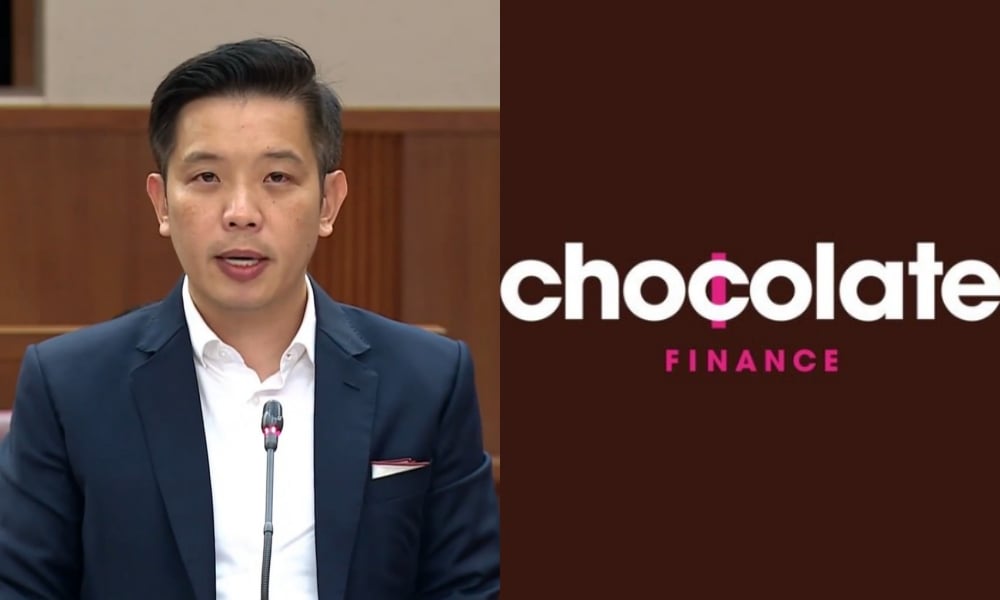
On 8 April 2025, Minister of State for Trade and Industry Alvin Tan informed Parliament that the Monetary Authority of Singapore (MAS) had received eight complaints this year concerning financial influencers, also known as “finfluencers”.
Tan noted that the majority of these complaints were related to “comments made recently by two finfluencers who shared their reasons for liquidating their investments from an investment platform”.
Although he did not name the platform, it coincided with a liquidity incident at Chocolate Finance in March 2025.
That month, the platform faced an “unusually high” volume of instant fund withdrawal requests, which depleted its liquidity pool and led to the temporary suspension of its instant withdrawal service.
The surge in withdrawals followed public comments by two finfluencers, who highlighted the removal of AXS payment support on Chocolate Finance and announced their intention to withdraw their funds.
Responding to questions from Workers’ Party Member of Parliament He Ting Ru, Tan said MAS considers public financial commentary to fall under regulatory scrutiny if it crosses into the realm of financial advice.
“By and large, finfluencers help create awareness of financial products and promote financial literacy,” he said.
“However, they must do so responsibly and must not veer into providing financial advice, which is a regulated activity.”
Under MAS regulations, an individual is regarded as providing financial advice if they make recommendations or express opinions on the buying, selling, or holding of investment products, regardless of whether they receive payment for doing so.
If such conduct is habitual, the individual may be deemed to be acting as a financial adviser and would be required to be licensed under the law.
Tan emphasised that those engaging in regulated activities without proper authorisation may be subject to enforcement action under the Financial Advisers Act.
He also cautioned that even individuals not offering explicit advice must avoid making false or misleading statements regarding capital market products, as this could constitute an offence under the Securities and Futures Act.
This includes statements made on social media that could influence others to invest in or divest from products such as shares or units in collective investment schemes.
MAS data shows an average of five complaints annually over the past five years concerning finfluencer-related activities.
The jump to eight in 2025, largely attributed to the Chocolate Finance case, marks a noticeable increase.
MAS urges finfluencers to act responsibly and stay within regulatory boundaries
In her follow-up, He asked what steps MAS has taken to ensure that finfluencers understand their obligations and the boundaries of permissible conduct under existing regulations.
In response, Tan said MAS continues to clarify what constitutes regulated advice and educates content creators on what they are permitted to do.
He issued a direct call to finfluencers, urging them to exercise caution and responsibility in their work.
“First, share responsibly. Second, create content with care—check that it is accurate and balanced. Third, disclose any relevant financial interests in your content,” Tan advised.
He added that MAS would continue to monitor such activities and work closely with the Commercial Affairs Department to take enforcement action when necessary.
5 complaints per year against ‘finfluencers’ to MAS over 5 years
Over the past three years, MAS has taken enforcement action against six individuals for providing financial advice without a licence. None of these individuals were finfluencers.
In a previous statement in November 2024, Tan had reported that MAS received fewer than five such complaints per year on average over the past five years.
The jump to eight in 2025, largely attributed to the Chocolate Finance case, marks a noticeable increase.
Tan reiterated MAS’s position that financial advice should only be provided by licensed professionals.
While acknowledging the role of finfluencers in raising awareness, he stressed that their influence must not stray into regulated territory.