Parliament
MSF and HDB to help ComLink+ families in rental housing work towards homeownership
The Ministry of Social and Family Development (MSF) will partner the Housing Board to help ComLink+ families in public rental housing work towards homeownership. Announced during the Committee of Supply 2025 debate, the initiatives also include enhanced support for persons with disabilities in independent living, employment, and lifelong learning.

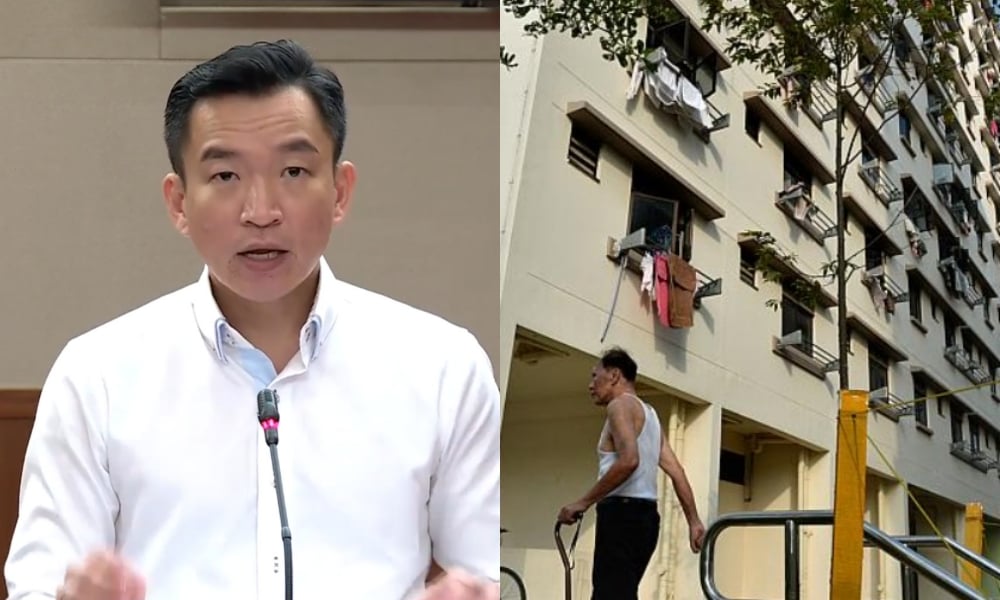
SINGAPORE: The Ministry of Social and Family Development (MSF) will partner the Housing Board (HDB) to help ComLink+ families in public rental housing progress towards homeownership, Senior Parliamentary Secretary for Social and Family Development Eric Chua announced on 10 March.
Speaking during the Committee of Supply 2025 debate for MSF, Chua outlined that HDB officers will assist in determining the necessary income and savings targets.
These will be integrated into an action plan developed with family coaches and the families themselves.
“Family coaches will journey with them towards these goals and when they are ready to purchase a flat, HDB will help them navigate the process,” Chua stated.
This initiative complements recent enhancements to the Fresh Start scheme, aimed at making housing more affordable for families in public rental flats.
It was announced at Budget 2025 that eligible first-time ComLink+ families in public rental housing will be able to buy new flats on shorter leases.
Additionally, the Fresh Start grant for eligible second-time applicants will increase from S$50,000 to S$75,000.
New support for persons with disabilities
Chua also announced new initiatives to better support persons with disabilities in independent living, employment, and lifelong learning.
Most persons with disabilities live with their families and prefer to continue doing so.
However, as caregivers age, they may become unable to provide the necessary support, which could lead to institutionalisation.
To address this, an Enabled Living Programme will be launched in the second half of 2025.
This programme will allow lower-income persons with disabilities, who cannot stay with their families, to live in designated public rental flats.
They will receive supervision, financial assistance referrals, and coaching on living and social skills, Chua said.
A pilot version of this initiative, announced last year, is set to support up to 250 persons with disabilities between 2025 and 2028.
Additionally, a Home Support Programme will be introduced in 2026 to assist persons with disabilities with low to moderate needs in continuing to live at home.
Those in need, such as individuals with physical disabilities whose caregivers are frail, will be able to access visiting services, including monitoring and coaching on independent living and social skills.
Education and employment initiatives
The government will also launch the Enabling Skills for Life Programme from 2025 to 2028, providing lifelong learning opportunities for persons with disabilities who cannot work.
Targeting individuals with higher support needs, this initiative will operate through selected sheltered workshops and day activity centres.
It aims to offer a structured curriculum focusing on independent living, communication, and social-emotional skills without requiring participants to transition between multiple services.
To further enhance employment opportunities, the Institute of Technical Education and disability agency SG Enable will expand their internship and employment support programmes for students with special educational needs.
This will include pre-employment training, career exploration, and job placement with on-site job coaching for up to a year.
Additionally, SG Enable will double the intake of its school-to-work programme from 45 participants per year to 90 by 2030.
This programme provides structured training, job placement, and support in sectors such as transport and financial services for graduates from Special Education (SPED) schools.
The employment rate for persons with disabilities aged 15 to 64 has increased from 28.2% in 2019-2020 to 33.6% in 2023-2024.
Chua reaffirmed the government’s commitment to reaching 40% by 2030.
New health support model for ComLink+ families
Separately, MSF will introduce a new support model in 2025 to address the health needs of families under the ComLink+ scheme.
“Being healthy allows us to live, work, and pursue our aspirations. But families trying to make ends meet may find it hard to keep track of medical appointments or need help identifying relevant healthcare services,” Chua explained.
Under this initiative, family coaches will guide families towards healthier lifestyles through improved diets, exercise, and regular health screenings.
Healthcare cluster staff will also assist in connecting families to necessary medical services.
For families facing complex health conditions, coaches and healthcare staff will collaborate to develop personalised health action plans.
These plans will help prioritise medical needs and ensure individuals take necessary steps, such as medication adherence and regular consultations.
For instance, an individual with chronic asthma will receive reminders to take prescribed medication, attend scheduled tests, and adjust their home environment to reduce allergens.
“We hope to improve families’ overall health so that they can better pursue their other life goals,” said Chua, adding that insights from the trial will be used to refine and expand the initiative in the future.