Thailand
Thailand considers border wall with Cambodia to curb scam networks
Thailand is studying the feasibility of building a wall along part of its border with Cambodia to prevent illegal crossings and combat scam centres operated by criminal gangs. The plan follows increased efforts to dismantle these fraud networks, which have trafficked thousands of people into forced labour.

Thailand is considering the construction of a wall along its border with Cambodia to prevent illegal crossings associated with scam centres.
Government spokesman Jirayu Houngsub announced on Monday that this proposal aims to dismantle networks involved in financial fraud and human trafficking in Southeast Asia.
The initiative was discussed during a cabinet meeting, where the Foreign and Defence ministries were assigned to consult with Cambodian authorities on the project’s feasibility.
Jirayu emphasized the need for thorough studies to determine the wall’s potential effectiveness and implementation strategies.
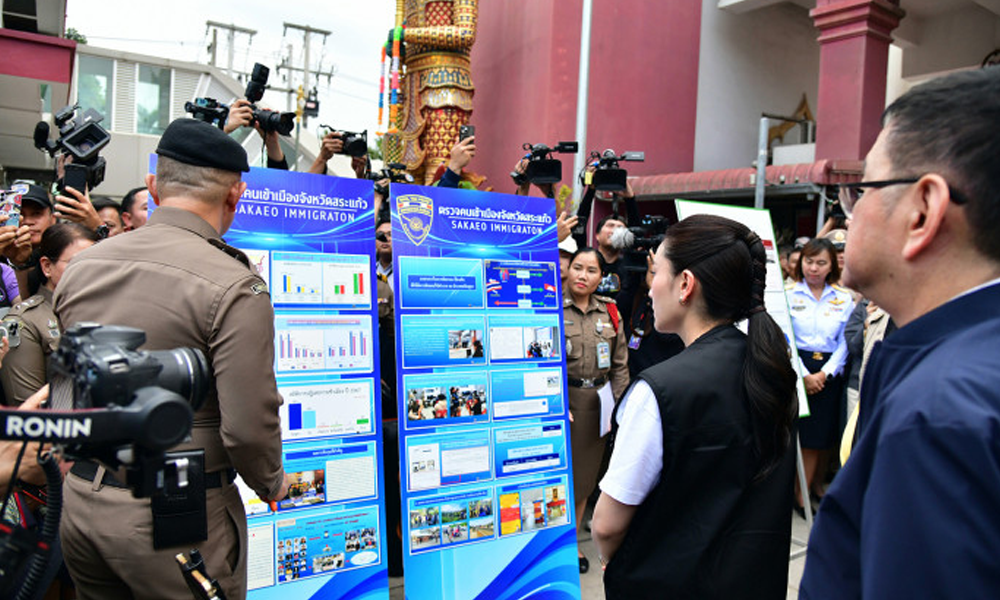
This discussion follows Prime Minister Paetongtarn Shinawatra’s recent visit to the Khlong Luek checkpoint in Sa Kaeo province, highlighting the government’s commitment to border security.
The Cambodian government has yet to respond to the proposal.
Thailand and Cambodia share an 817-kilometre border. Previously, the Thai Defence Ministry proposed a 55-kilometre wall in the Sa Kaeo-Poipet area, known for its natural crossings and challenges in border control. Currently, this area is secured with razor wire.
The move comes amid intensified efforts against scam centres operating in Southeast Asia.
These centres, often run by Chinese criminal networks, have victimized individuals worldwide through various fraudulent schemes.
Many victims were lured with false job offers and subsequently trafficked into forced labour.
Recently, Thai police received 119 nationals from Cambodian authorities following a raid in Poipet that rescued over 215 individuals from a scam compound.
The United Nations reports that hundreds of thousands have been trafficked into such operations in recent years.
In Myanmar, scam centres have also faced increased scrutiny.
In January, Chinese actor Wang Xing was rescued after being lured to Thailand with a job promise, only to be taken to a scam centre in Myanmar. In Myawaddy, over 7,000 foreign nationals, mostly from China but also from Africa and other regions, remain in limbo after the closure of scam centres.
Thailand is collaborating with embassies to facilitate their repatriation, though many remain in militia camps under dire conditions.
People’s Party deputy leader Rangsiman Rome highlighted the issue’s scale, estimating that 300,000 individuals had been involved in scam operations in Myawaddy alone, with many more operating elsewhere.
He stressed that despite ongoing crackdowns, significant work remains to dismantle these networks completely.
The Thai government continues to explore border security measures, including the proposed wall, while enhancing cross-border cooperation to address human trafficking and fraud networks.
These efforts aim to protect vulnerable populations and maintain regional stability.