Parliament
He Ting Ru presses for exit plan on wage subsidies, but Chee Hong Tat offers no clear timeline
During the Committee of Supply debate on 28 February 2025, Member of Parliament He Ting Ru questioned the long-term sustainability of the Progressive Wage Credit Scheme, highlighting its repeated extensions and potential impact on business reliance. In response, Second Minister for Finance Chee Hong Tat defended the scheme, emphasising its role in supporting low-wage workers while reiterating that future extensions will be decided closer to 2026 based on economic conditions.

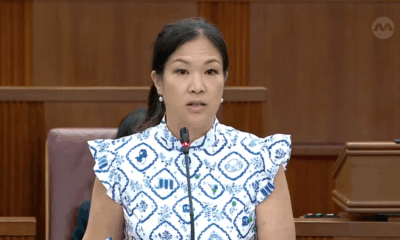
During the Committee of Supply debate for the Ministry of Finance on 28 February 2025, Workers’ Party MP He Ting Ru raised concerns about the long-term sustainability of the Progressive Wage Credit Scheme (PWCS).
She questioned whether the scheme, initially intended as a temporary support measure, has become an entrenched policy that businesses have grown dependent on.
He highlighted that the PWCS was first introduced in 2013 as a three-year initiative to support wage increases under the Progressive Wage Model. However, it has been repeatedly extended and expanded, with the government allocating S$9 billion from 2022 to 2026 to sustain the scheme.
The initial co-funding rate of 40% was supposed to conclude by 2017 but has since been extended multiple times, with funding levels fluctuating between 30% and 75% instead of reducing as originally planned.
Referring to the Singapore National Employers Federation’s (SNEF) Budget 2025 wish list, He pointed out that employers have called for continued co-funding of wage increases beyond 2026, suggesting a growing reliance on government support.
She questioned how Singapore’s economy had reached a point where businesses depended on such subsidies and called for clarity on an exit plan with firm targets.
“How did our economy get to the point where our businesses rely so much on such rich support?” He asked, adding, “The original co-funding of 40% was supposed to end by 2017, but was instead extended multiple times.”
She further emphasised that the broader economic structure, including land policies and overall cost structures, must be considered when planning a transition away from wage subsidies.
“A clear exit plan must take into consideration the overall structure of the economy, projections of where we are headed, and the right ingredients to allow businesses to remain sustainable in the long run.”
He also raised concerns about whether these subsidies discourage businesses from investing in productivity improvements, not just in skills upgrading but also in capital investments.
“Uncertainty about whether the scheme will be extended will make businesses more cautious and less keen to take action to either invest in or increase wages now.”
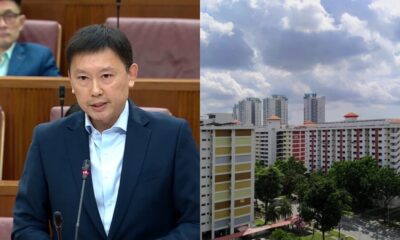
In response, Second Minister for Finance Chee Hong Tat defended the PWCS, stating that the scheme is designed to help businesses pay their low-wage workers better salaries by co-funding a portion of wage increases.
“This is not a broad-based subsidy for all companies. Employers must first raise wages before they qualify for co-funding from the government.”
He reiterated that the scheme is scheduled to cease in 2026 and that a review would be conducted closer to that date, considering prevailing economic conditions.
Chee clarified that the PWCS is not a broad-based subsidy but a targeted measure requiring employers to first increase workers’ wages before qualifying for government support.
He acknowledged the need to improve business productivity and noted that the government already has multiple initiatives in place to assist companies in this regard.
Responding to He’s request for clarity on the criteria for phasing out the scheme, Chee stated that decisions on extending or ending the PWCS cannot be made based on fixed metrics alone.
Instead, the government would assess global economic uncertainties, business conditions, and consultations with tripartite partners before making a decision.
“It’s difficult to say we will end it if the following boxes are checked, because we have to look at the situation at that time.”
He Ting Ru later sought further clarification on whether the government had conducted an analysis of how wage subsidies impact employers’ willingness to invest in productivity beyond skills training.
She also reiterated concerns about the uncertainty surrounding the scheme’s future, arguing that businesses might delay wage increases or productivity investments if they are unsure whether the scheme will continue.
In response, Chee maintained that while the scheme is aimed at supporting low-wage workers, it does not replace other government productivity initiatives. He also disagreed with the suggestion that subsidies discourage businesses from improving productivity, stating that firms would still seek efficiency gains to remain competitive.
As the 2026 deadline approaches, the debate underscores the challenges of balancing wage support for low-income workers with long-term economic sustainability. The government’s eventual decision on the PWCS will likely depend on the broader economic landscape and ongoing engagement with industry stakeholders.
However, He Ting Ru’s key questions on the exit strategy for the scheme and its impact on employer productivity investments remained only partially addressed.
While Chee acknowledged concerns about business reliance on wage subsidies, he did not provide specific metrics for phasing out the scheme or confirm whether the government had conducted an analysis on its effects on productivity investments.
Instead, he maintained that decisions would be made closer to 2026, depending on economic conditions.
In a later clarification, He Ting Ru reiterated that her concerns were not about opposing business support but about understanding the long-term systemic effects of what was initially meant to be a temporary scheme.
“It’s not to say that I do not support businesses, but the concerns I raised were systemic to the long-term effects of what was initially meant to be a temporary scheme,” she stated.
Chee responded by acknowledging her clarification, stating that the government and businesses must work together on wage increases.
“This is an important part of our social compact, that it is correct for us to co-fund some of the cost increases,” he said, adding that the government seeks to implement policies that benefit Singaporeans in collaboration with all stakeholders.
Despite this exchange, the lack of clear long-term plans may leave businesses uncertain about future wage policies, potentially delaying investment and wage decisions until the government makes its next announcement.