Parliament
Fighting for mid-career workers: Gerald Giam’s call for real job support
WP MP Gerald Giam urges the government to provide structured job placements and financial support for mid-career PMETs, warning that training alone is not enough. He calls for returnship programmes and targeted job matching to prevent skilled workers from being sidelined.

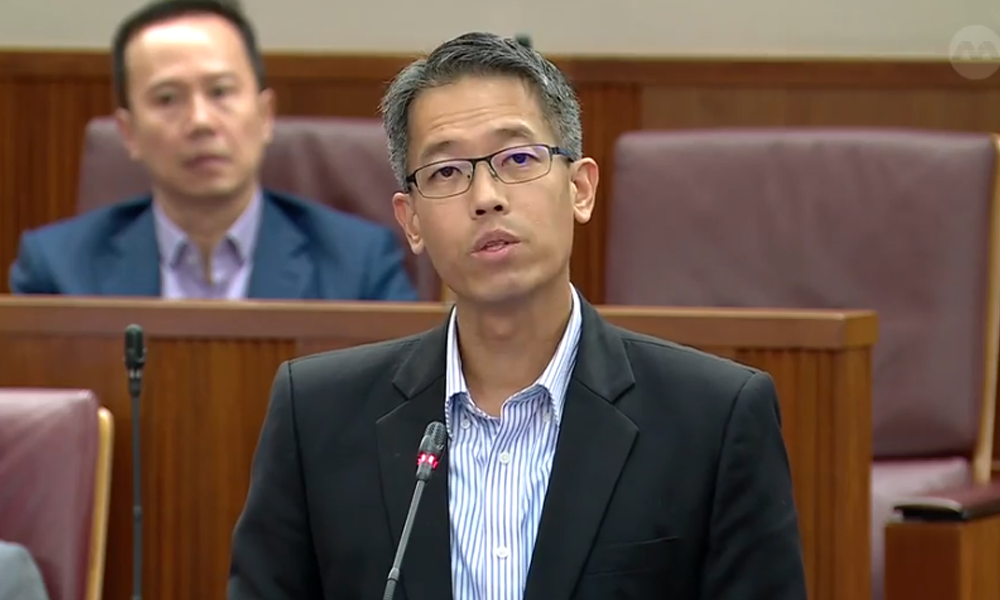
“Our nation and our economy cannot afford to overlook the experience and skills of these workers. Let’s give every Singaporean who wants to work, retrain, and contribute the best possible chance to do so,” said Gerald Giam, Workers’ Party Member of Parliament for Aljunied GRC
On 27 February 2025, Giam delivered a speech in Parliament during the Budget 2025 debate, focusing on the pressing challenges faced by mid-career professionals, managers, executives, and technicians (PMETs) in Singapore.
Highlighting job displacement, structural employment barriers, and the inadequacies of current support schemes, Giam called for more structured and targeted interventions to assist these workers.
The Mid-Career Employment Challenge
Giam began by acknowledging the growing pressure on mid-career PMETs, many of whom are caught in industries undergoing disruption due to automation, artificial intelligence, and economic shifts.
“Many mid-career PMETs are under pressure. Some are in industries that are shrinking or being disrupted, where jobs are disappearing faster than new ones are created,” he stated.
He further emphasized the anxiety of professionals being forced to reapply for their own jobs due to restructuring exercises, a practice that not only creates stress but also serves as a loophole for companies to bypass retrenchment obligations.
Despite overall employment rates rising with population growth, many displaced PMETs struggle to find new roles at the same skill level and salary.
Employers often favour younger candidates with direct industry experience, and some hiring processes are influenced by informal networks, making it difficult for mid-career jobseekers to transition into new industries.
Citing the Labour Force 2024 report, Giam pointed out that “some 41,200 PMET residents are unemployed, and of these, 10,700 have been unemployed for more than six months.”
Shortcomings of Existing Government Schemes
While acknowledging the government’s efforts to support career transitions through initiatives like the SkillsFuture Level-Up Programme and the Career Conversion Programme (CCP), Giam noted that these schemes fall short of addressing structural employment barriers.
“Training and reskilling alone do not ensure job placement,” he argued, highlighting that many PMETs cannot afford the temporary income drop that comes with switching sectors, making full-time retraining unrealistic for them.
One of the critical flaws of the CCP, Giam pointed out, is that it requires jobseekers to first secure employment before they can receive training.
This presents a paradox: “The CCP requires employers to hire the workers before they can receive training, presenting the same barriers for jobseekers who are already struggling to get past the initial job screening process.”
As a result, many mid-career professionals remain locked out of new opportunities despite reskilling efforts.
Proposed Solutions for Meaningful Employment
To address these challenges, Giam proposed a more structured and targeted job placement programme.
This would involve specialists reviewing and refining job applications before actively matching candidates to employers, increasing their chances of securing meaningful employment.
“We need a more structured and targeted job placement programme where mid-career jobseekers can have their applications and CVs reviewed and refined by specialists in their field,” he suggested.
Additionally, Giam called for the introduction of structured returnship programmes by Workforce Singapore (WSG).
Unlike the CCP, which focuses on career conversion, returnship programmes would help professionals re-enter the workforce after career breaks due to retrenchment or caregiving responsibilities.
“These returnship programmes would provide a pathway to employment and mentorship, allowing mid-career professionals to rebuild industry-relevant experience without starting over at entry-level positions,” he explained.
Valuing Mid-Career Workers
Giam concluded his speech by stressing the importance of structured redeployment pathways and stronger financial support for mid-career workers. He reminded Parliament of their contributions:
“They have spent years contributing to Singapore’s economy. Many have built businesses, trained younger colleagues, and helped shape their industries.”
As Singapore navigates economic transformation, ensuring that mid-career PMETs are not left behind is crucial.
Giam’s proposals seek to provide these workers with real pathways to employment rather than temporary financial assistance.
“Let’s give every Singaporean who wants to work, retrain, and contribute the best possible chance to do so,” he urged, supporting the Budget motion with a call for greater inclusivity and fairness in Singapore’s labour market policies.