Parliament
Dennis Tan calls for stronger climate action, better disability support, and improved healthcare
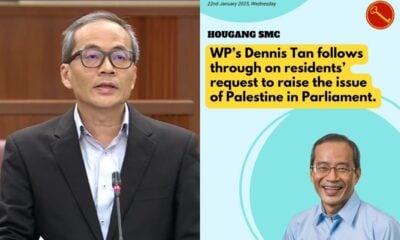
Workers’ Party MP Dennis Tan Lip Fong (Hougang SMC) spoke on Singapore’s green transition, support for adults with disabilities, and healthcare improvements during the Budget 2025 debate on 26 February 2025. He urged the government to accelerate climate efforts, enhance workplace inclusion for persons with disabilities, and expand healthcare subsidies.

During the Budget 2025 debate on 26 February 2025, Workers’ Party MP Dennis Tan Lip Fong (Hougang SMC) addressed key issues related to Singapore’s green transition, support for adults with disabilities, and healthcare policies, including elderly care and dental health.
He called for more ambitious climate action, stronger employment support for persons with disabilities, and enhanced healthcare subsidies.
Push for accelerated green transition
In his speech, Tan welcomed Singapore’s new 2035 Nationally Determined Contribution (NDC) under the United Nations Framework, which commits to reducing emissions to 45-50 million tonnes of carbon dioxide equivalent by 2035.
However, he questioned whether this target aligns with the Paris Agreement’s 1.5°C global warming limit and asked the government to clarify the expected warming impact of its emissions targets.
“If it isn’t aligned, how much warming is our plan consistent with—is it a 2°C warming world, 3°C warming world, and so on?” he asked.
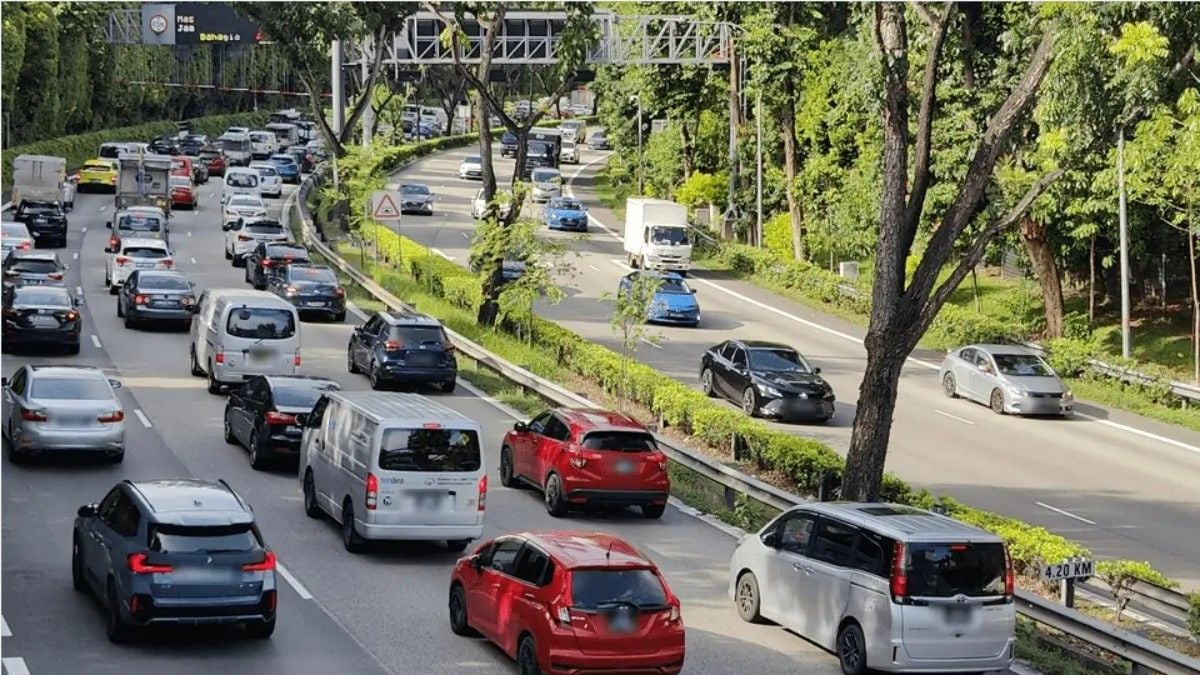
He also urged the government to accelerate negotiations on renewable energy imports, expand incentives for electric vehicles, and speed up the electrification of Singapore’s public transport and logistics fleets.
While acknowledging the newly announced Heavy Vehicle Zero Emission Scheme and Electric Heavy Vehicle Charger Grant, Tan stressed the need for further efforts to drive heavy vehicle electrification.
“I hope the government can incentivise a faster shift towards vehicle electrification for private vehicles, as well as expedite the electrification of our public fleets,” he said, pointing to the relatively slow progress in electrifying logistics vehicles such as lorries.
Tan raised concerns about the aviation sector’s emissions, particularly in light of the government’s additional S$5 billion allocation for Changi Airport Terminal 5.
“While Singaporeans may all look forward to our air hub expanding, the 50% increase in capacity will, if it goes according to plan, mean a staggering increase in flights and consequently aviation emissions,” he said.
He pressed the government to explain how its Sustainable Air Hub Blueprint would address this issue.
Regarding the petrochemical sector, he sought updates on the industry’s green transition, especially following Shell’s asset sales in Pulau Bukom and Jurong Island in 2024.
He also asked about manpower transition plans for workers affected by shifts in the sector.
Stronger support for persons with disabilities
Tan welcomed Prime Minister Lawrence Wong’s announcement of additional support for adults with disabilities, particularly in employment.
He noted that existing subsidies for workplace accommodations, job redesign, and assistive technology are beneficial but emphasised the need for broader societal understanding of disabilities.
He proposed incorporating concepts of reasonable accommodations in Singapore’s Character and Citizenship Education (CCE) curriculum to foster empathy and inclusivity among students from a young age.
“Reasonable accommodations are essential for persons with disabilities in entering the workforce and attaining and maintaining employment,” he said, adding that these efforts should be in line with the United Nations Convention on the Rights of Persons with Disabilities.
He also proposed introducing disability awareness education in schools. “Can MOE clarify or consider whether the concept of reasonable accommodations—or at least key aspects of it—are currently being taught to both children and youth with and without disabilities?” he asked.
Tan shared accounts from high-functioning autistic individuals who struggled in the workplace due to a lack of understanding and accommodation.
He urged SG Enable to enhance public education on workplace inclusivity and called for more efforts to encourage employers to adopt inclusive hiring practices.
Enhancing elderly care and healthcare subsidies
On elderly care, Tan reiterated his concerns about the resource constraints faced by Active Ageing Centres (AACs). He suggested that the government allocate more funding to ensure these centres can serve more seniors effectively.
“I hope MOH and other stakeholders can give some thought as to how centres can be given more resources so that they can take care of more residents,” he said.
He supported the increase in maximum subsidies for non-residential long-term care to 95% for households with per capita incomes below S$1,500 and for residential long-term care to 80%.
These measures align with the Workers’ Party’s past proposals, and Tan welcomed their inclusion in Budget 2025.
However, he continued to advocate for the removal of Annual Value (AV) as a means-testing criterion for healthcare subsidies.
“Firstly, healthcare affordability should not be tied to property values that are determined outside of one’s control, as they are influenced mainly by the rental prices of neighbouring units,” he argued.
He gave an example of how this could unfairly impact retirees. “Imagine a retiree couple who have lived in their low-value walk-up apartment for decades. As a result of gentrification and higher rents in their area, the annual value of their flat goes above $21,000—and just like that, they lose the entirety of the healthcare subsidies they had enjoyed,” he said.
He argued that tying healthcare affordability to property values is unfair, as AV is influenced by external rental market trends rather than an individual’s financial situation.
He cited data indicating that only 3% of households live in private properties with an AV above S$21,000 and no income, suggesting that removing AV as a means-testing factor would have a limited fiscal impact.
Call for improved dental healthcare access
Tan highlighted concerns over the affordability of dental care, noting that many Singaporeans seek cheaper treatment in Johor Bahru.
He called for expanded subsidies under the Community Health Assist Scheme (CHAS) to include CHAS Green cardholders and an increase in public dental clinic capacity to reduce waiting times.
He also renewed his call for oral health to be included in the Healthier SG programme.
Citing a letter by the Dean of the NUS Dental Faculty, Tan reiterated that prioritising preventive dental care over corrective treatments is essential for overall health.
“In his ST Forum letter of 22 November 2024, the Dean of the NUS Dental Faculty, Professor Chris Peck, said that the omission of dental care from Healthier SG ‘needs rectification’ with encouragement on prioritising prevention over corrective treatments,” Tan highlighted.
Tan concluded by expressing hope that the government would address his concerns in the Budget debate and Committee of Supply sessions.
“Although global geopolitics has changed dramatically over the past year, climate change is still the number one existential risk to the world and to Singapore,” he said.
He reaffirmed the Workers’ Party’s commitment to “ambitious climate action” and “good, effective climate policy.”
On disability and healthcare issues, he stressed the need for inclusivity and fairness. “A suitable working environment for disabled persons will require good understanding, empathy, and support from their colleagues,” he said.